Key takeaways
- Capture geometry: A miter saw throws debris in a wide upward arc behind the blade. Look for a hood tall and deep enough to intercept that spray at full bevel and maximum miter angle, not just at 90 degrees.
- Port compatibility: Most shop vacs use 2.5″ hose while collection hoods and saw ports often run 4″ or an odd proprietary size. Confirm the included adapter matches your actual equipment before you buy a second one.
- Integrated lighting: An enclosing hood inevitably shadows your cut line. Built-in LED or fluorescent lighting keeps layout marks visible and reduces the temptation to remove the hood for accuracy’s sake.
- Fabric versus rigid construction: Oxford fabric shrouds fold flat for storage and suit occasional users in shared spaces; rigid aluminum-and-panel systems mount permanently and hold their shape through years of production work.
- Health-relevant filtration: Containment only helps if your vacuum captures what it collects. Pair any hood with a HEPA or fine-dust filter bag, or you’ll simply relocate the smallest, most respirable particles into the room’s air supply.
What's inside
Fine wood dust doesn’t stay in the workshop. A single afternoon of crosscutting trim in an attached garage sends respirable particles drifting through door gaps, up stairwells, and eventually into the bedroom, where they settle on pillows and linger in the air you breathe for eight unguarded hours. As someone who spends most days advising people on sleep environments, I’ve lost count of the clients who blamed 3 a.m. congestion on pollen or pets when the real culprit was a miter saw parked twenty feet from the HVAC return.
This guide takes that overlooked connection seriously. Below you’ll find the dust collection hoods and adapters that actually contain miter saw debris at the source — hoods that surround the blade’s exhaust arc, shrouds with integrated lighting so you’re not squinting through a cloud, and adapters that finally make a shop vac hose fit your saw’s port properly. I’ve evaluated each on capture efficiency, fit across 10″ and 12″ saws, build quality, and how quickly they set up and stow away in a shared garage where woodworking and everyday life overlap.
As an Amazon Associate we earn from qualifying purchases.



🛒 Best Price Today on Amazon
Prime members get fast, free shipping on everything above, plus member-only deals. New members get a 30-day free trial — cancel anytime.
How to Choose a Dust Collector For Miter Saw (2026)
- Capture geometry: A miter saw throws debris in a wide upward arc behind the blade. Look for a hood tall and deep enough to intercept that spray at full bevel and maximum miter angle, not just at 90 degrees.
- Port compatibility: Most shop vacs use 2.5″ hose while collection hoods and saw ports often run 4″ or an odd proprietary size. Confirm the included adapter matches your actual equipment before you buy a second one.
- Integrated lighting: An enclosing hood inevitably shadows your cut line. Built-in LED or fluorescent lighting keeps layout marks visible and reduces the temptation to remove the hood for accuracy’s sake.
- Fabric versus rigid construction: Oxford fabric shrouds fold flat for storage and suit occasional users in shared spaces; rigid aluminum-and-panel systems mount permanently and hold their shape through years of production work.
- Health-relevant filtration: Containment only helps if your vacuum captures what it collects. Pair any hood with a HEPA or fine-dust filter bag, or you’ll simply relocate the smallest, most respirable particles into the room’s air supply.
The Best Dust Collector For Miter Saw (2026)s Reviewed
Rousseau 5000 Dust Solution
The Rousseau remains the reference standard for serious containment: a rigid, fully enclosing back panel and hood that intercepts the blade’s exhaust stream rather than merely hovering near it. It’s a permanent-station solution, so plan on a dedicated bench, but the reduction in airborne fines is dramatic enough to notice in adjacent living spaces.
Rousseau 5000-L Lighted Dust Solution
Identical containment architecture to the 5000, with integrated lighting that solves the one legitimate complaint about enclosed hoods — shadowed cut lines. If you’re building the Rousseau into a permanent shop station, the lighted version is the one I’d specify.
Tredre Miter Saw Dust Collection Hood with Light
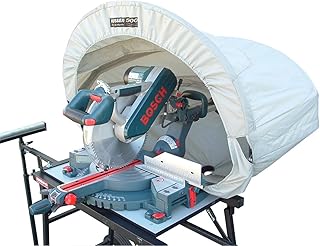
A well-considered middle path: a collapsible hood that fits both 10″ and 12″ saws, ships with a 4″-to-2.5″ shop vac adapter and its own storage bag, and includes a work light. For garage woodworkers who need the space back afterward, this is the most complete package here.
Miter Saw Dust Collection Hood with LED Light (Grey Oxford Fabric)
The grey Oxford fabric build is noticeably tougher than the thin nylon shrouds flooding this category, and it holds its shape under a strong vacuum draw instead of collapsing inward. A straightforward, durable choice at a sensible price point.
Improved Miter Saw Dust Collection Adapter
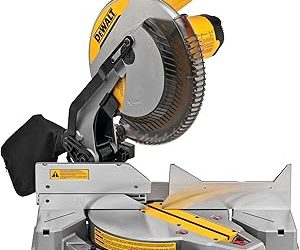
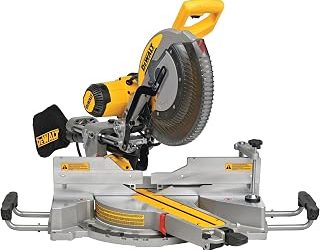
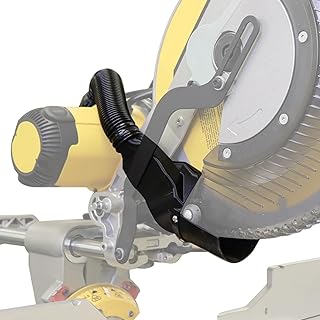
Not a hood but a fix — a five-in-one connector that finally mates common shop vac hoses to the DWS779 and DWS780 dust ports without tape and improvisation. If your saw already collects reasonably well and you’re just fighting a leaky connection, start here before spending more.
Frequently Asked Questions
Can miter saw dust really affect my sleep?
Indirectly, yes. Fine wood dust is a documented airway irritant, and nasal inflammation or congestion increases the likelihood of fragmented, mouth-breathing sleep. Reducing particulate load in a home where you also sleep is a reasonable, low-cost intervention.
How long should I wait after cutting before entering the space?
Respirable particles can stay suspended for hours in still air. Ventilate actively during and after cutting, and avoid leaving doors open between the shop and sleeping areas until the air has genuinely cleared.
Will a hood work with my saw’s built-in dust bag?
Usually you’ll bypass the bag entirely and route the port to a vacuum instead. Factory bags capture only coarse chips and let the finest, most respirable dust pass straight through.
Do I still need a respirator?
Yes. Source capture reduces exposure substantially but never eliminates it, so a properly fitted N95 or better remains standard practice during cutting.
Final Thoughts
For a permanent workshop station where containment matters most, the Rousseau 5000-L earns its price through rigid, genuinely enclosing capture plus usable task lighting. If you need a hood that folds away in a shared garage, the Tredre hood delivers the most complete kit, while the Improved Miter Saw Dust Collection Adapter is the smart minimal fix for DWS779 and DWS780 owners fighting nothing more than a bad hose connection.