Managing cash flow securely remains a vital priority for small business owners operating in 2026. Whether you run a weekend farmers market booth, a bustling brick-and-mortar storefront, or a mobile service business, physical currency requires dependable protection against opportunistic theft and accidental loss. Selecting the right locking cash box goes far beyond picking the cheapest option on a retail shelf; it requires balancing physical security, organizational layout, and daily checkout efficiency.
Purchasing an inadequate cash box often leads to jammed locking mechanisms, easily bypassed latches, or awkward internal compartments that slow down transactions during peak hours. To make an informed investment, you need to understand which structural features genuinely impact durability and security, and which are merely aesthetic choices. This decision guide breaks down the core elements that matter most when outfitting your small business with a reliable cash management solution.
1. Evaluating Locking Mechanisms: Key, Combination, or Digital
The locking mechanism is your first line of defense, and each type serves a different operational workflow. Key-operated locks are the traditional standard; they are fast to open and generally reliable, but they introduce the risk of lost keys or unauthorized access if keys are left unattended near the register. Combination locks eliminate the key-management headache, making them ideal for businesses with multiple rotating shifts or employees who might misplace small keys. However, mechanical combination wheels can wear down or become difficult to read in low-light environments like evening events. Digital keypad locks offer rapid entry and audit trails in advanced models, but they require regular battery maintenance. Consider your team structure and environment carefully before committing to a specific locking style.
2. Steel Gauge and Overall Construction Quality
A locking cash box is only as secure as the metal enclosing it. Many consumer-grade boxes are constructed from thin sheet metal that can be easily pried open with a basic screwdriver if left unattended. For a small business, look for boxes manufactured from heavy-gauge steel with seamless or reinforced welded corners. While heavier steel adds noticeable weight, it dramatically increases resistance to forced entry. Additionally, check the hinge design. Concealed or reinforced internal hinges prevent a thief from simply tapping out the hinge pins to gain access to the contents.
3. Internal Tray Layout and Currency Separation
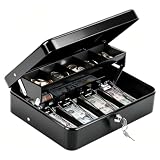
An organized cash box speeds up transactions and minimizes the risk of giving incorrect change. When evaluating trays, look for cantilevered or multi-tiered designs that automatically lift when the lid is opened, exposing coin compartments and under-tray storage space underneath. Bill slots should feature sturdy, heavy-duty spring clips that securely hold paper currency down, preventing bills from blowing away in outdoor settings or getting jumbled during transport. Ensure the coin compartments have rounded bottoms, which make it significantly easier to scoop out loose change quickly during a rush.
4. Portability and Spring-Loaded Handle Design
If your business requires you to transport your cash box between a vehicle, a storage area, and a sales booth, portability is paramount. Look for a recessed, spring-loaded carrying handle integrated into the lid. Recessed handles allow multiple cash boxes to be stacked efficiently on top of one another in a safe or storage cabinet without rocking or creating unstable towers. Avoid boxes with flimsy, protruding handles that easily bend, snap off, or snag on clothing and fabric bags during transport.
5. Security Tethering and Cable-Ready Slots
A common oversight in mobile retail environments is securing the box itself against grab-and-run theft. Even a heavy steel cash box can be lifted entirely off a table if it is not physically anchored. Many commercial-grade cash boxes feature a security slot designed to accommodate a steel tethering cable or anchor plate. By securing the box to a heavy table leg, vehicle frame, or permanent fixture, you drastically reduce the likelihood that someone can walk away with your entire day’s earnings in a single motion.
6. Avoiding Common Sizing and Capacity Mistakes
Buying a cash box that is either too small or unnecessarily massive is a frequent pitfall. Before purchasing, estimate your average daily cash volume, including the breakdown of large bills, small bills, and loose change. If your box is constantly overflowing, bills will jam the lid mechanism and damage the lock. Conversely, a box that is too large for your daily needs takes up excessive counter space and becomes needlessly heavy to transport. Measure your primary storage footprint—such as a drawer or safe—to ensure the exterior dimensions fit comfortably out of sight when not in use.
7. Knowing When to Invest in Commercial-Grade Features
It is tempting to save money by purchasing a basic household lockbox, but commercial operations demand higher endurance. Commercial-grade cash boxes feature powder-coated finishes that resist scratching, chipping, and rust from frequent handling and environmental exposure. They also feature precision-machined lock cylinders that withstand thousands of open-and-close cycles without failing. If your cash box is opened dozens of times every single day, investing in a heavy-duty model prevents premature wear and tear that would otherwise force an early replacement.
Related Guides
If you are ready to compare specific models currently dominating the market, take a look at our comprehensive roundup of the best locking cash boxes for small business to find top-tested options for your daily operations.
FAQ
Are key-operated or combination cash boxes better for employees?
Combination locks are generally better for environments with multiple rotating employees because you do not have to worry about issuing, tracking, and replacing physical keys. However, key locks are faster for single-operator businesses where the owner maintains strict control over the key at all times.
How can I prevent my cash box from being stolen at an outdoor market?
Look for a cash box that supports a security cable attachment or anchor slot. Tethering the box to a heavy, immovable table frame or fixture prevents thieves from picking up the entire unit and running away with it.
What gauge of steel should I look for in a business cash box?
While manufacturers do not always publish precise steel gauges for consumer products, you should look for terms like “heavy-duty steel construction” and check the weight of the box. A heavier box typically indicates thicker steel walls and better resistance to prying tools.
Can I replace the lock if I lose the key to my cash box?
Many manufacturers offer replacement keys if you retain your key code, which is usually stamped onto the lock face itself. For boxes without accessible code numbers, a locksmith can often pick or replace the cylinder, though doing so on cheaper models may cost more than buying a replacement box.
As an Amazon Associate we earn from qualifying purchases at no extra cost to you.