Key takeaways
- Tub material: magnetic hems only work on steel or cast iron tubs; they won’t attach to acrylic or fiberglass.
- Rod height: make sure the liner hangs below the rod and ends above the floor but below the tub lip.
- Curved rods: a curved rod gives extra shoulder room and changes how much of the liner hangs inside.
- Liner plus outer curtain: a liner on the inside and a decorative curtain outside is the classic arrangement. Some fabric liners double as the only curtain.
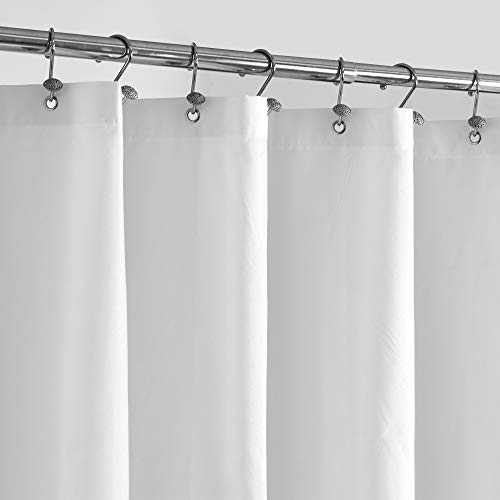
For most bathrooms, a PEVA or EVA liner is the budget-friendly waterproof choice, a heavier polyester fabric liner with a water-repellent finish suits shoppers who prefer a fabric feel and machine washing, and a magnetic-bottom or mildew-resistant liner suits damp bathrooms where the liner tends to billow. Pick the liner by material, weight, size and care, and check the maker’s stated waterproof and mildew-resistance claims rather than assuming them.
Our top picks


As an Amazon Associate we earn from qualifying purchases at no extra cost to you.
At a Glance: Shower Curtain Liner Types
| Type | Best for | Key stated features (per makers) | Limits |
|---|---|---|---|
| PEVA / EVA liner | Budget, everyday use | Waterproof plastic film; many are listed as PVC-free; some are heavier gauge | Can have a plastic odor at first; may cling or crease |
| Polyester fabric liner with water-repellent finish, such as Barossa Design and Zenna Home lines | Shoppers wanting a soft feel | Machine washable; water-repellent finish; some have mildew-resistant treatment | Repellent finish can wear; water-resistant is not always fully waterproof |
| Magnetic-bottom liner | Bathrooms where liners billow in | Magnets sewn into the hem hold the liner to a steel or iron tub | Magnets stick only to magnetic surfaces; acrylic or fiberglass tubs don’t hold them |
| Heavyweight vinyl or PVC-style liner | Long-lasting durability | Thicker, stays in place | Heavier; material concerns for some buyers |
| Clear liner with mesh pockets | Small shower storage | Clear body, mesh pockets | Pockets add weight and trap water |
| Stall-size liner | Narrow shower stalls | Narrower width, typically 36 by 72 inches | Does not fit a standard tub without gaps |
Names such as Barossa Design, Zenna Home and Gorilla Grip appear often in bath roundups, and specific lines change. The maker’s page and care label provide the up-to-date specs.
Waterproof, Water-Repellent and Mildew-Resistant Are Different
A plastic film liner like PEVA is waterproof by material. A fabric liner is typically water-repellent, meaning water beads on the surface and runs off, but heavy spray against the fabric for long periods can seep through. Mildew-resistant labels usually refer to a treatment of the liner; they slow mildew growth but do not replace cleaning and ventilation. Read the maker’s wording closely.
Key Features to Compare
Material
PEVA and EVA are popular PVC-free options. Fabric liners are polyester or nylon with a coating. Vinyl liners are heavier and long-lasting. Some buyers prefer to avoid PVC because of material and odor concerns; the maker’s description states what the liner is made of.
Weight and thickness
Heavier liners hang better and billow less. Some makers list thickness in gauge or mils. Lightweight liners are cheaper and may blow inward with the shower stream.
Size
Standard liners are commonly 70 by 72 inches or 72 by 72 inches. Extra-long, extra-wide and stall sizes also exist. Measure your tub or stall and the curtain rod height. A liner a few inches longer than the tub wall ledge usually keeps water in, while a liner that drags on the floor can pick up mildew.
Hooks, grommets and weights
Most liners have reinforced grommets at the top and use shower rings. Rustproof rings are sensible. Weighted hems or magnets help keep the liner still.
Antimicrobial and mildew-resistant treatments
Makers often list treated liners. These treatments are the maker’s claim, and regular cleaning still matters.
Fit and Compatibility Notes
- Tub material: magnetic hems only work on steel or cast iron tubs; they won’t attach to acrylic or fiberglass.
- Rod height: make sure the liner hangs below the rod and ends above the floor but below the tub lip.
- Curved rods: a curved rod gives extra shoulder room and changes how much of the liner hangs inside.
- Liner plus outer curtain: a liner on the inside and a decorative curtain outside is the classic arrangement. Some fabric liners double as the only curtain.
Care and Safety Notes
Follow the maker’s care label. Many fabric liners can go in a washing machine on a gentle cycle, while plastic film liners are often wiped or rinsed and sometimes can be washed gently if the label allows. Hang the liner open after each shower so it dries. Mildew spots can be a sign of poor ventilation; running the bathroom fan and keeping the liner spread out helps. Do not mix bleach with other cleaners. A wet floor is a slip hazard, so keep a non-slip mat in the tub and a bath mat outside. A new plastic liner may smell at first; airing it before use is commonly advised. If you notice irritation from odors, stop using it and ventilate.
Trade-offs by Budget Tier
| Tier | You usually get | You usually give up |
|---|---|---|
| Budget | Thin PEVA liner, basic grommets | Less durability, more billowing, may need replacing sooner |
| Mid-range | Weighted hem, magnets, thicker PEVA or coated fabric, mildew-resistant treatment | Treatment effects depend on the maker’s claim |
| Premium | Heavier fabric, hotel-style weight, reinforced hems | Cost; fabric needs washing |
Pick X If… Decision Table
| Pick this | If you… |
|---|---|
| PEVA liner | Want a low-cost waterproof liner you can replace when needed |
| Fabric liner with water-repellent finish | Prefer to machine wash and like a softer drape |
| Magnetic-hem liner | Have a steel tub and struggle with billowing |
| Heavyweight vinyl liner | Want a thick, long-lasting liner |
| Stall-size liner | Have a standalone shower stall |
| Liner with mesh pockets | Need extra shower storage and accept the added weight |
Alternatives
- Glass shower door or screen: a permanent, easy-to-wipe solution.
- Waterproof fabric curtain with no liner: a single layer, for simpler installation.
- Weighted hem tape or magnets: aftermarket weights to reduce billowing on an existing liner.
Common Mistakes
- Choosing a liner with a magnetic hem for a non-magnetic tub.
- Buying the wrong size and leaving gaps or dragging the hem.
- Leaving the liner bunched up when wet.
- Assuming water-repellent equals fully waterproof.
Choosing by Bathroom Setup
Standard bathtub with a straight rod
A standard-size liner of PEVA or coated fabric is the usual choice. If the liner billows, a weighted hem or magnets on a steel tub may help. Hang the liner inside the tub so that water runs back down into it.
Walk-in shower stall
Stall-size liners are narrower, and the right size depends on the opening. Measure the opening and the rod length rather than assuming the standard stall size fits.
Bathroom with poor ventilation
Mildew tends to appear where moisture lingers. A liner labeled mildew-resistant may slow growth, but opening a window, running the fan and spreading the liner out after use all matter. Some people choose a liner that is easy to machine wash and replace.
Rental or temporary bathrooms
Low-cost PEVA liners are easy to replace when you move. Tension rods hold the liner without drilling, though they require a good fit.
Cleaning Routine
A simple routine keeps liners looking better for longer. After each shower, pull the liner flat so both sides can dry. Once a week or two, wipe the lower hem where soap scum collects. For deeper cleaning, follow the maker’s label: many fabric liners go in the washer on a gentle cycle with mild detergent, and plastic liners can often be wiped with a mild solution. Avoid mixing cleaning products, especially bleach with ammonia or acids. If the liner has stubborn staining or odor that does not clear, replacement is usually simpler than repeated treatment.
Liner and Outer Curtain Pairings
A liner does the waterproof work, so the outer curtain can be chosen purely for looks. Cotton, linen-look and textured fabric curtains pair well with a clear or frosted PEVA liner. Some shoppers choose a single heavy fabric curtain with a water-repellent finish and skip the second layer; this works in a bathroom with a glass screen or a deep tub but may allow more splash. If you use two layers, hang them on separate rings so each can be removed and washed independently.
Frequently Asked Questions
Is PEVA better than vinyl?
They are different. PEVA and EVA are commonly sold as PVC-free alternatives and are generally lighter. Vinyl liners are heavier and long-lasting. The best choice depends on weight, odor sensitivity and durability preferences.
How often should I replace a shower curtain liner?
There is no fixed timeline. Replace it when it has stubborn mildew, tears or lingering odor even after cleaning, or follow the maker’s guidance on lifespan.
Can I wash a shower curtain liner?
Many fabric liners are machine washable on a gentle cycle, and some plastic liners can be too, depending on the label. Check the care instructions first and hang it to dry.
Why does my liner blow inward?
Airflow from the shower stream pulls light liners inward. A heavier liner, a weighted hem or magnets can reduce it. Adjusting the water pressure or temperature may also help.
What size liner do I need?
Standard tubs commonly use 70 by 72 or 72 by 72 inch liners, and stalls use narrower ones. Measure your tub and rod height and compare to the listed size.
Are mildew-resistant liners maintenance-free?
No. The treatment is the maker’s claim to slow growth, but you still need ventilation, drying and regular cleaning.