Key takeaways
- Behind a sofa: an arc lamp’s base sits behind the sofa end while its arm reaches over the seat.
- In a corner: a torchiere or tripod lamp fills dark corners and bounces light off walls and ceiling.
- Next to a reading chair: choose a swing-arm or adjustable-neck lamp and position it slightly behind and to one side of the chair.
- Clearance: keep shades and bulbs clear of curtains, paper, upholstery and other flammable materials, as the manual instructs.
- Cord routing: avoid running cords across a walkway or under a rug.
A tall floor lamp suits a living room best when its height, light spread and base footprint match the seating layout: an arc lamp fits over a sofa or armchair, a torchiere-style uplight fills a corner with ambient light, and a swing-arm or reading lamp suits a reading chair. For most living rooms, a lamp roughly between 60 and 75 inches tall with a dimmable or multi-level light is a practical starting point, with the specific height chosen to suit ceiling and furniture.
Our top picks
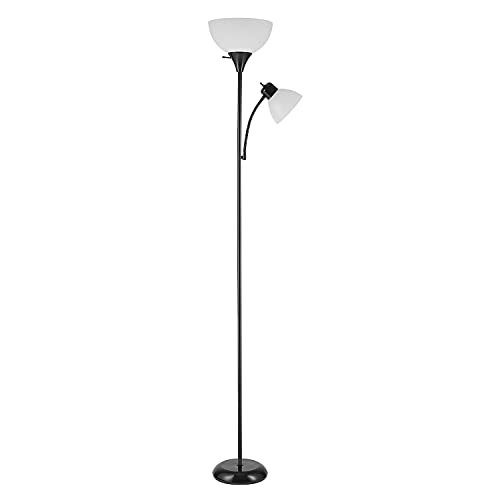


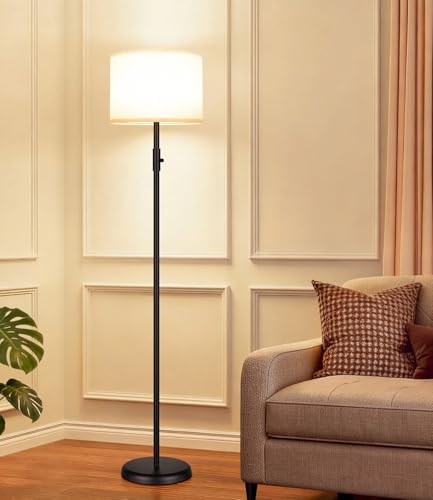
As an Amazon Associate we earn from qualifying purchases at no extra cost to you.
At a Glance: Tall Floor Lamp Styles
| Style | Best for | Key stated features (per makers) | Limits |
|---|---|---|---|
| Arc floor lamp, such as Brightech Sparq-style | Sofas and armchairs without a nearby side table | Curved arm extends light over seating; heavy base; some with dimmers | Large footprint; heavy to move |
| Torchiere / uplight | Corners and general ambient light | Light directed upward; many LED versions with dimming | Less task light; reflected light depends on ceiling color |
| Tripod floor lamp | Modern, mid-century or Scandinavian rooms | Wood or metal legs with fabric shade | Legs take floor space; check clearance |
| Multi-head tree lamp | Rooms needing flexible light | Adjustable heads, individual switches | Cluttered look; more bulbs |
| Slim LED column lamp | Tight spaces and narrow corners | Slim profile, integrated LED with color temperature modes | Integrated LED can be harder to service |
| Reading floor lamp with swing arm | Chairs, sofa ends, bookshelves | Adjustable arm and neck, focused light | Narrower coverage |
Names in this category change as lines are refreshed. Brands such as Brightech, Globe Electric, and Simple Designs are often mentioned in floor lamp roundups; the specific model details should be read from the maker’s page.
How Tall Should a Living Room Floor Lamp Be?
Many floor lamps for living rooms are listed by makers between roughly 58 and 75 inches. A common design guideline is that the bottom of the shade should sit around eye level when you are seated if you want to avoid glare, or the lamp should arc above the seating so the bulb is out of direct view. In a room with standard eight-foot ceilings, lamps in the 60 to 70 inch range tend to look in proportion. Rooms with high ceilings can handle taller or arched lamps.
Key Features to Compare
Light output and bulb type
Makers list brightness in lumens or in wattage equivalents. A living room needs layered lighting, so a single floor lamp is often part of a plan along with table lamps or ceiling lights. Brighter lamps are better for reading; softer lamps work for evenings. Integrated LED lamps do not require a bulb change, while socket-based lamps let you swap bulbs.
Dimming and controls
Look for an inline dimmer, a foot switch or a rotary switch, as listed. Some models offer remote control or smart-bulb compatibility. If you rely on a dimmer, choose bulbs the maker lists as dimmable.
Color temperature
Warm white is the common choice for living rooms. Lamps with selectable color temperature allow you to switch between warm evening light and cooler daytime light.
Base weight and stability
A heavy base is important on an arc or tall lamp. Marble bases are heavy and stable but harder to move. Metal bases are lighter. In homes with children or pets, favor a wider, heavier base.
Shade material
Fabric shades soften and diffuse light. Metal shades provide a more focused beam. Glass or opal shades offer an even glow.
Materials and finish
Powder-coated steel, brass-finish metal and wood are common. Match the finish to your other fixtures and hardware for a coherent look.
Placement and Fit Notes
- Behind a sofa: an arc lamp’s base sits behind the sofa end while its arm reaches over the seat.
- In a corner: a torchiere or tripod lamp fills dark corners and bounces light off walls and ceiling.
- Next to a reading chair: choose a swing-arm or adjustable-neck lamp and position it slightly behind and to one side of the chair.
- Clearance: keep shades and bulbs clear of curtains, paper, upholstery and other flammable materials, as the manual instructs.
- Cord routing: avoid running cords across a walkway or under a rug.
Care and Safety Notes
Follow the maker’s manual for the maximum bulb wattage and bulb type. Unplug before changing bulbs or cleaning. Dust fabric shades with a soft brush or lint roller. Replace any lamp with a damaged cord or plug. Look for safety markings such as UL or ETL where the maker states certification. Do not use a lamp near water. If your outlets or wiring seem overloaded, ask a licensed electrician. Tall lamps should sit on a stable, level floor and should be kept out of high-traffic spaces.
Trade-offs by Budget Tier
| Tier | You usually get | You usually give up |
|---|---|---|
| Budget | Simple metal column or tripod, basic switch | Lighter base, less refined finish, limited dimming |
| Mid-range | Dimmers, better finishes, steadier base, color temperature options | Larger size, heavier to move |
| Premium | Higher-grade materials such as marble, solid wood or hand-finished metal; designer styling | Cost; sometimes smaller range of bulb choices with integrated LEDs |
Pick X If… Decision Table
| Pick this | If you… |
|---|---|
| Arc floor lamp | Have a sofa or sectional with no space for a side table |
| Torchiere or uplight | Need soft ambient light for a corner or a dark room |
| Tripod lamp | Want a design statement in a modern or mid-century room |
| Swing-arm reading lamp | Read in a chair and need directed light |
| Slim LED column | Have limited floor space |
| Multi-head tree lamp | Want to light several areas from one lamp |
Alternatives
- Table lamps on console or side tables: more flexible when floor space is limited.
- Wall sconces: save floor space; may need wiring or plug-in sconces.
- Smart floor lamps: app-based control and color options, at a higher tier.
Common Mistakes
- Choosing a lamp that is too short for the seating, causing glare.
- Ignoring the base size, leaving the lamp easy to tip.
- Using a non-dimmable bulb with a dimmer.
- Relying on one lamp as the only light source.
Choosing by Room Layout
Small living rooms
Slim column or tripod lamps use little floor area and fit beside a sofa or in a corner. An integrated LED column lamp can give enough ambient light for a compact space, and some makers list color temperature modes so the same lamp can serve evenings and daytime tasks.
Open-plan living spaces
Open layouts often need lamps to mark out zones. An arc lamp over a sofa defines the seating area, while a torchiere in a corner softens the dining side. Because open spaces are larger, a single lamp rarely lights everything, so lighting guides suggest layering several sources at different heights.
Rooms with low or sloped ceilings
Uplights depend on bouncing light off the ceiling, so very low or dark ceilings reduce the effect. In these rooms a directional swing-arm or arc lamp can work better, and you should confirm the lamp’s top does not hit a sloped ceiling.
Rooms with pets or children
Choose a wide, heavy base and a cord you can route along the wall. Fabric shades that get knocked often are better replaced than propped up, so ask the maker about shade replacement options.
Shade and Light Quality Notes
The shade changes the look of the light more than many shoppers expect. A white fabric drum shade spreads light gently, a dark or metal shade creates a pool of light directly below, and a glass shade gives a brighter, more even glow. Lamps with a diffuser over an integrated LED aim to reduce glare. Color rendering is another point: makers sometimes list a color rendering index, and a higher value generally means colors look more natural under the lamp. If a maker does not list it, treat light quality claims cautiously.
Also think about how the lamp looks when switched off. A tall lamp is a piece of furniture for most of the day, so finish, proportion and the thickness of the stem matter. Slim stems suit light, modern rooms, while a heavier column or a wooden tripod suits a traditional or warm interior. Pairing metal finishes with other fixtures in the room, such as cabinet handles or picture frames, gives a more settled look.
Frequently Asked Questions
How tall should a floor lamp be next to a sofa?
Many guides suggest a lamp whose shade bottom is near eye level when seated, which usually means a lamp around 58 to 66 inches tall. Arc lamps are different: they place the light source above the seating.
Are arc floor lamps stable?
They depend on a heavy base for balance. Look for a base weight or material in the maker’s description, and keep arc lamps away from walkways, children and pets.
What bulb should I use?
Use the type and wattage listed by the maker. For dimming, choose bulbs marked dimmable. Warm white bulbs are common in living rooms.
Can I put a floor lamp behind a curtain?
Keep a safe distance between lit bulbs and fabric, as the manual specifies. LED bulbs run cooler than incandescent ones, but follow the instructions on clearance.
Do floor lamps need to be assembled?
Most come in sections that join with threaded poles or screws, and many can be assembled without special tools. Assembly instructions in the maker’s manual cover the steps.
How many lamps does a living room need?
Lighting guides often suggest layering several light sources at different heights. A single floor lamp usually works best together with a table lamp or overhead lighting, depending on room size.