Key takeaways
- Nightstands: measure the table top so the base fits with room for a phone and a glass of water. A lamp around the height of a seated person’s shoulder usually lights a book without glare, a common guideline in lighting advice.
- Desks: pair a desk lamp with ambient room light to reduce eye strain, as general ergonomic guidance suggests.
- Cord length: check that the cord reaches your outlet without stretching across a walkway.
- Bulbs: use only the type and wattage listed by the maker.
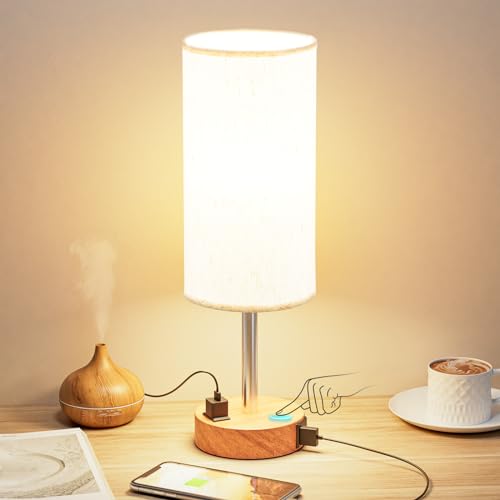
A touch table lamp suits bedside tables, desks and reading corners where you want to change brightness without hunting for a switch, and the best choice depends mostly on whether you want a base-touch metal lamp, a rechargeable cordless model or a plug-in lamp with a dimmable touch sensor. For a bedroom, pick a lamp with several brightness steps and a warm light setting. For a desk, look for adjustable color temperature and a stable base. For an elderly relative or a child’s room, a simple three-step touch lamp with a sturdy base is the easier option.
Our top picks


As an Amazon Associate we earn from qualifying purchases at no extra cost to you.
At a Glance: Touch Lamp Types
| Type | Best for | Key stated features (per makers) | Limits |
|---|---|---|---|
| Plug-in metal base lamp with touch sensor | Bedside, living room side tables | Touch the metal body to cycle brightness; many offer three or four steps | Works only on conductive surfaces; shade and bulb choice is limited |
| LED touch desk lamp | Homework, work, reading | Touch panel with dimming steps and color temperature modes; some have USB charging ports | Light is directional; panel can be sensitive to accidental touches |
| Rechargeable cordless touch lamp | Patios, shelves, rooms with no outlet nearby | Built-in battery, touch dimming; runtime depends on brightness, as stated by the maker | Needs charging; less output than a plug-in lamp |
| Touch-control lamp with standard socket | Shoppers who want to choose their own bulb | Touch dimmer in the lamp base for compatible bulbs; makers list bulb compatibility | Wrong bulb can flicker or fail to dim |
| Decorative ceramic or glass base with touch dimmer | Living rooms, guest rooms | Style first; dimming through the socket or a touch module | Heavier and more delicate; check shade size |
Lamp lines change regularly, so this guide describes categories and maker-stated features rather than endorsing a single model. Lamp families from brands such as Brightech, Globe Electric and Simple Designs appear often in lamp roundups; the specifics of a given model come from the maker’s own product page.
How Touch Sensing Actually Works
Most touch lamps use a capacitive sensor. The lamp detects the change when you touch a conductive part of the body, the base or a panel. Many lamps cycle through off, low, medium, high and off again, as listed by the maker. Because the sensor responds to touch, it can occasionally be triggered by pets, children, or by a damp cloth during cleaning. Lamps with a panel or button zone tend to avoid this better than lamps where the entire body is the switch.
Touch dimmers also depend on the bulb. A lamp that is built for standard incandescent-style bulbs may flicker or buzz with some LED bulbs. Check the maker’s statement of compatible bulbs and wattage limits. If a manual says “dimmable LED only,” follow it.
Key Features to Compare
Brightness steps
Three-step lamps are simple and familiar. Lamps with four or more steps give better control for night reading. A lamp with a memory function returns to its last setting, according to makers who include it.
Color temperature
Warm white is generally considered more comfortable for evening use, and cooler light is more common for task lighting. Desk lamps frequently offer a warm, neutral and cool mode. Makers list color temperature in kelvins.
Bulb type and wattage
Plug-in touch lamps commonly use E26 or E27 sockets. Do not exceed the maximum wattage printed on the socket or shade label. LED bulbs run cooler than older incandescent bulbs, but the label still governs.
Base and stability
A heavy, wide base reduces tipping. This matters in homes with children, pets or on narrow nightstands. Check the base footprint against the table surface.
Shade size and material
Fabric shades diffuse light and soften glare. Metal or glass shades give more directional light. Keep shades clear of the bulb as the maker’s manual specifies.
Charging ports
Some touch lamps add USB ports in the base. These are convenient bedside, though the output varies by model. The maker lists the port output.
Fit and Placement Notes
- Nightstands: measure the table top so the base fits with room for a phone and a glass of water. A lamp around the height of a seated person’s shoulder usually lights a book without glare, a common guideline in lighting advice.
- Desks: pair a desk lamp with ambient room light to reduce eye strain, as general ergonomic guidance suggests.
- Cord length: check that the cord reaches your outlet without stretching across a walkway.
- Bulbs: use only the type and wattage listed by the maker.
Safety and Care
Follow the manufacturer’s manual. Unplug the lamp before changing a bulb or cleaning it, and wipe with a dry or slightly damp cloth as the manual allows. Do not use a lamp with a damaged cord or plug; replace it. Check for a safety certification mark such as UL or ETL on the cord or label where the maker states it. Do not cover a lit lamp with fabric or paper. For any concerns about outlets, wiring or an overloaded circuit, speak with a licensed electrician. Rechargeable lamps should be charged with the cable that the maker supplies or specifies.
Trade-offs by Budget Tier
| Tier | You usually get | You usually give up |
|---|---|---|
| Budget | Basic three-step touch dimming, simple metal or plastic body | Fewer brightness levels, lighter bases, limited bulb compatibility |
| Mid-range | More steps, USB ports, color temperature options, sturdier bases | Larger size; styling can be plain |
| Premium | Better materials, decorative glass or ceramic, quality finishes | Cost and fragility; touch function may still be a basic module |
Pick X If… Decision Table
| Pick this | If you… |
|---|---|
| Plug-in metal touch lamp | Want a simple bedside lamp with fixed brightness steps |
| LED touch desk lamp with color modes | Read or work at a desk in the evening |
| Rechargeable cordless touch lamp | Have no outlet nearby or want to move the lamp around |
| Standard socket lamp with touch module | Want to choose bulbs and shade yourself |
| Decorative glass or ceramic touch lamp | Care about style in a living room or guest room |
Alternatives
- Standard lamp with inline dimmer or smart bulb: offers finer dimming and scheduling, and works with a lamp you already own.
- Lamp with a rotary dial: more precise brightness control than stepped touch.
- Clip-on or wall-mounted reading light: frees up bedside surface space.
Common Mistakes
- Using a non-dimmable bulb in a touch dimmer lamp.
- Choosing a lamp with a small base for a crowded nightstand.
- Exceeding the maker’s maximum wattage.
- Ignoring shade size, which affects how much of the room is lit.
Choosing by Room
Bedroom
A bedside touch lamp is most useful when you wake in the dark and want to reach the lamp without fumbling for a small switch. Look for a lowest setting that is dim enough not to disturb a partner, a warm light mode and a base that leaves space for a phone and a glass. Lamps with a USB port reduce cable clutter on the nightstand, though makers list the port output and it may be modest.
Home office and study
Desk lamps with touch panels commonly offer several color modes and brightness levels. Lighting guides usually suggest placing the lamp on the side opposite your writing hand to reduce shadows, and using a diffuse ambient light in the room so the lamp is not the only bright spot. Choose an adjustable arm if you switch between paper and screen work.
Living room and guest room
Decorative touch lamps with ceramic or glass bases suit side tables. Because the look is the priority, check the shade diameter against the base and the table width. A pair of matching lamps on either side of a sofa or bed is a classic arrangement, and touch control means guests do not need to find a switch.
Elderly relatives and children
Stepped touch dimming is often easier than small rocker switches for people with limited finger strength. Keep cords tidy and out of walking paths, choose a stable base and keep bulbs cool-running where the maker’s manual allows.
Frequently Asked Questions
Why does my touch lamp turn on by itself?
Capacitive sensors can respond to static, moisture, pets or a nearby object touching the lamp body. Move the lamp away from the object, wipe off any damp, and check the bulb. If it continues, stop using the lamp and contact the maker.
Can I use any LED bulb in a touch lamp?
Not always. Some touch dimmers are designed for incandescent-style bulbs and can cause flickering with LEDs. Use the bulb type and wattage that the maker lists as compatible.
Are touch lamps safe for children’s rooms?
Many are used in children’s rooms, but a stable base and a good cord arrangement matter more than the touch feature. Keep cords out of reach, use a cool-running LED bulb where the lamp allows it, and follow the manual.
Do cordless touch lamps last all evening?
Runtime depends on brightness and on the battery size. Makers usually state runtime at different settings; lower settings last longer. Plan to recharge it regularly.
What color temperature is best for a bedroom?
Warm white is the common choice for bedrooms in lighting guides, because it feels softer in the evening. Cooler light is more often chosen for desks and workspaces.
Can a touch lamp work on a wooden base?
The sensor is built into the lamp, and the maker’s design determines where you touch. Lamps that require touching a metal body will not respond to a purely wooden surface; check the product description.