Key takeaways
- Wood stud walls: the most secure for heavy loads, using screws that reach into the stud.
- Drywall with no stud: heavier loads need anchors suited to the weight, such as toggle-type anchors, and loads should stay within the maker’s stated limits.
- Plaster, brick or concrete: need masonry anchors and the proper drill bit.
- Rental walls: check the lease before drilling.
Wall mounted bookshelves suit small rooms and tidy displays, and the right type depends on what you load onto them: floating shelves work for light decor and a few books, ledge-style picture shelves suit frames and paperbacks, and bracket-supported or rail-mounted shelves handle heavier book collections. The wall, not the shelf, is the limit, so match the shelf’s stated weight capacity and mounting method to your wall type and studs.
Our top picks

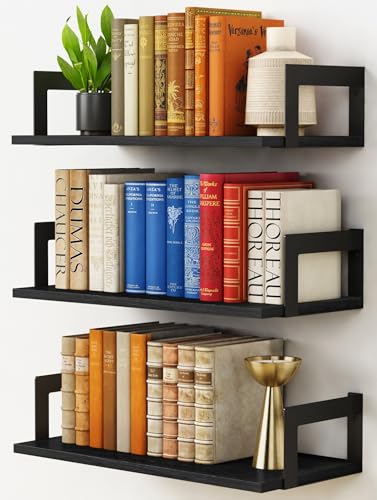


As an Amazon Associate we earn from qualifying purchases at no extra cost to you.
At a Glance: Wall Mounted Bookshelf Types
| Type | Best for | Key stated features (per makers) | Limits |
|---|---|---|---|
| Floating shelves, such as Amada Homefurnishing and Wallniture lines | Decor, a few books, clean look | Hidden brackets; sets of two or three; wood, MDF or engineered boards | Weight limit often lower than bracket shelves; needs stud or proper anchors |
| Picture ledge shelves, such as IKEA MOSSLANDA style | Framed art, paperbacks, children’s books | Shallow ledge with front lip | Shallow; not for large hardbacks |
| Cube / grid wall shelves | Display and mixed storage | Modular boxes, various finishes | Weight per cube is limited; many fasteners |
| Rail or track shelving systems, such as IKEA LACK wall shelf or similar | Flexible, adjustable storage | Brackets or rails mounted to studs; shelves slide | Visible hardware; requires careful mounting |
| Bracket-supported shelves (wood on metal brackets) | Heavier book loads | Visible brackets; sturdy | More visible; needs several fixings |
| Invisible or concealed book shelves, such as Umbra Conceal | A floating book look | Hidden bracket makes books appear to float; designed for stacks | Low capacity; only the books hide the bracket |
Brands such as IKEA, Umbra, Amada Homefurnishing and Wallniture appear in shelf roundups. Models and finishes change, so confirm dimensions and weight limits on the maker’s page.
Weight Capacity and Wall Type
Makers list a maximum load, often per shelf, and the figure depends on the wall type and hardware used. A weight rating that assumes a stud may be much lower in drywall with plastic anchors. Books are heavy; a full shelf of hardcovers can weigh more than a floating shelf’s rating. A rule from many installation guides is to anchor into studs where possible, use anchors rated for the load in drywall and follow the maker’s directions precisely.
- Wood stud walls: the most secure for heavy loads, using screws that reach into the stud.
- Drywall with no stud: heavier loads need anchors suited to the weight, such as toggle-type anchors, and loads should stay within the maker’s stated limits.
- Plaster, brick or concrete: need masonry anchors and the proper drill bit.
- Rental walls: check the lease before drilling.
Key Features to Compare
Depth and spacing
Paperbacks fit on shelves around 4 to 6 inches deep, while large hardbacks and art books need about 9 to 12 inches. Allow vertical spacing for the tallest book, usually 10 to 12 inches. Makers list depth and thickness.
Material
Solid wood is sturdy but heavier. MDF and engineered boards with veneers are common in lower tiers. Metal brackets and rails add strength. Check the maker’s material description.
Mounting hardware
Makers often include screws and anchors, but the included hardware may not suit every wall. Check whether the included anchors match your wall type.
Length and layout
Longer shelves need more support points. A stud finder helps position fixings. Use a level, because slight tilt is visible with books.
Finish and style
White, black, natural wood and walnut finishes are common. Match your trim and furniture. A shelf with a front lip keeps small items from sliding off.
Fit and Placement Notes
- Above a desk or bed: consider what could fall. Keep heavy items low and avoid placing shelves directly above a pillow.
- Above a sofa: leave enough clearance so a seated person does not bump their head.
- In a hallway: keep shelf depth shallow to avoid snagging.
- Children’s rooms: use shallow ledges, keep books lightweight and fix them securely.
- Near wiring or pipes: use a stud finder with wire detection and avoid drilling into walls where wiring may run. If unsure, hire a professional.
Safety and Care Notes
Follow the installation manual and do not exceed the stated load. Check fixings occasionally for loosening and tighten if needed. Wipe wood and veneer surfaces with a slightly damp cloth and dry them. Avoid placing shelves where steam or moisture may swell the board. Wall-mounted furniture can fall if it is overloaded or poorly fixed, so take mounting seriously, especially in homes with children and pets.
Trade-offs by Budget Tier
| Tier | You usually get | You usually give up |
|---|---|---|
| Budget | Sets of MDF floating shelves, picture ledges | Lower weight ratings, thinner boards, basic included hardware |
| Mid-range | Thicker boards, sturdier brackets, rail systems, more finish options | Visible hardware or heavier shelves |
| Premium | Solid wood, hidden steel supports, designer finishes | Cost; heavier; more demanding installation |
Pick X If… Decision Table
| Pick this | If you… |
|---|---|
| Floating shelf set | Want a clean look for decor and a few light books |
| Picture ledge | Display frames and paperbacks or children’s books |
| Rail or track system | Want adjustable, heavier storage |
| Bracket-supported wood shelf | Store a large book collection |
| Concealed bracket book shelf | Want the floating-books look with a small stack |
| Cube wall shelves | Mix books with baskets and decor |
Alternatives
- Freestanding bookcase: no drilling and higher capacity; takes floor space.
- Over-door or over-toilet shelving: for narrow spaces without wall mounting.
- Built-in shelving: a custom option for a carpenter to fit.
Common Mistakes
- Overloading a floating shelf beyond the rated weight.
- Using the wrong anchor for the wall type.
- Ignoring stud locations.
- Not leveling the shelf before drilling the second hole.
- Choosing too shallow a shelf for the books you own.
Choosing by Room
Living room
A row of floating shelves or a rail system can display books, plants and framed photos above a sofa or console. Mix book stacks with decor so the load is spread, and keep heavier items on lower shelves.
Bedroom
Shelves beside the bed hold a current reading stack. Avoid placing them directly over a pillow, and keep loads light there. Concealed-bracket book shelves fit this use well when the maker’s capacity is respected.
Home office
Rail or bracket shelves above a desk free the surface for work. Use stud-mounted fixings for reference books and binders, which are heavier than they look.
Children’s room
Shallow picture ledges let children see book covers, which makes picking a book easier. Keep shelves at a reachable height, avoid heavy objects and mount securely.
Installation Steps in Brief
- Choose the location and use a stud finder to mark studs.
- Mark the shelf height with a level.
- Drill pilot holes, using the right bit for the wall type.
- Fit anchors if the maker’s directions call for them.
- Fix the bracket or rail and check it with a level.
- Slide the shelf on or attach it, tighten fixings and load gradually.
Always follow the manual that comes with the shelf. If a wall may contain wiring or pipes, or you are not confident drilling into it, a qualified handyman or electrician can do the work safely.
Styling and Loading Tips
Place the heaviest books closest to the wall brackets or the stud line and lighter decor toward the ends. Leave some empty space on each shelf, because a fully packed shelf looks heavy and adds load. Use bookends on long shelves to keep stacks upright. Group items in odd numbers and vary heights for a balanced look. Dust shelves regularly, because a thin wall shelf shows dust quickly, and check fixings after the first few weeks as new loads can settle.
Frequently Asked Questions
How much weight can a floating bookshelf hold?
It depends on the model, the wall and the hardware. Makers list a maximum, and the real limit may be lower in drywall without studs. Stay within the stated limit and mount into studs where you can.
Do I need to find studs?
For heavier loads such as full rows of books, installation guides generally advise mounting into studs. For very light decor, appropriate anchors may be enough, as the maker says.
How deep should a bookshelf be?
Paperbacks fit about 4 to 6 inches, while larger books need about 9 to 12 inches. Measure your tallest and largest books before choosing.
Can I install wall shelves in a rental?
Check your lease first. If drilling is not allowed, consider a freestanding bookcase or ask the landlord about permitted options.
Are invisible bookshelves safe?
They are designed for light stacks of books, and makers list a capacity. They rely on a hidden bracket, so respect the limit and mounting guidance.
How do I keep shelves level?
Use a spirit level when marking holes, check again before final tightening and use all included fixings. Recheck after loading the shelf.