Key takeaways
- Purification method: Look for the words “steam distilled” or “steam purified.” Reverse-osmosis, spring, and “purified drinking” water all retain some mineral content and will still leave scale or white dust behind.
- Bottle size vs. tank size: Match the bottle to your nightly draw. A 12 oz bottle suits most CPAP chambers exactly; 16.9 oz and 20 oz bottles fit larger bedside humidifiers without leaving half-used water sitting open.
- Seal integrity and material: Individually sealed, BPA-free bottles with leakproof caps protect against contamination in transit and in a suitcase. Unsealed or resealed containers are a genuine hygiene risk in warm, humid equipment.
- Supply math: Count total ounces, not bottles. Divide by your nightly usage to get real days of coverage, then buy for the trip length or restock interval you actually keep.
- Travel compliance: If you fly with equipment, TSA-friendly sizing and clear medical labeling save time at screening. Domestic manufacturing and lot coding also make quality issues traceable.
What's inside
Ask ten people what belongs in a humidifier tank and you’ll get ten confident answers, most of them wrong. Tap water seems harmless — it comes out of the same faucet you drink from — but the dissolved calcium, magnesium, and trace minerals it carries don’t stay in the tank. An ultrasonic humidifier aerosolizes them into a fine mineral dust that settles on nightstands, screens, and, more importantly, gets pulled into your airway with every breath. Evaporative and warm-mist units handle minerals more gracefully, but they pay the price in scale: chalky crust on the heating element, a wick that stiffens within weeks, and a slow decline in output that most people mistake for a broken machine. Add a CPAP humidifier chamber to the equation and the stakes rise again, because that water sits warm and still for hours in a sealed environment.
The short answer, and the one nearly every manufacturer prints in the manual, is distilled water — steam-purified, mineral-free, and boring in the best possible way. What complicates matters is logistics: a gallon jug is fine at home, useless on a flight, and awkward for anyone filling a small bedside chamber every night. That’s why this 2026 guide focuses on portioned, sealed distilled water in travel-friendly bottles. Below you’ll find the options worth buying, a short checklist for judging any bottled distilled water, and honest answers to the questions that come up most often in sleep consultations.
As an Amazon Associate we earn from qualifying purchases.



🛒 Best Price Today on Amazon
Prime members get fast, free shipping on everything above, plus member-only deals. New members get a 30-day free trial — cancel anytime.
How to Choose a Water To Put In Humidifier (2026)
- Purification method: Look for the words “steam distilled” or “steam purified.” Reverse-osmosis, spring, and “purified drinking” water all retain some mineral content and will still leave scale or white dust behind.
- Bottle size vs. tank size: Match the bottle to your nightly draw. A 12 oz bottle suits most CPAP chambers exactly; 16.9 oz and 20 oz bottles fit larger bedside humidifiers without leaving half-used water sitting open.
- Seal integrity and material: Individually sealed, BPA-free bottles with leakproof caps protect against contamination in transit and in a suitcase. Unsealed or resealed containers are a genuine hygiene risk in warm, humid equipment.
- Supply math: Count total ounces, not bottles. Divide by your nightly usage to get real days of coverage, then buy for the trip length or restock interval you actually keep.
- Travel compliance: If you fly with equipment, TSA-friendly sizing and clear medical labeling save time at screening. Domestic manufacturing and lot coding also make quality issues traceable.
The Best Water To Put In Humidifier (2026)s Reviewed
Distilled Water for CPAP Machines & Humidifiers, 6-Pack 20 oz
Steam-purified and filtered in the USA, this six-pack delivers roughly twelve days of use in a standard chamber, and the 20 oz bottles are generous enough to top off a small room humidifier too. The BPA-free bottles are the sensible default for anyone who wants one product covering both machines.
Distilled Water 24-Pack, 16.9 oz Travel Bottles
The 24-bottle case is the value play for extended trips or anyone who’d rather restock quarterly than monthly, and the 16.9 oz format is familiar enough to pack without thinking. Compatible with ResMed and Respironics chambers as well as personal humidifiers.
Dura Cleanse Distilled Water for CPAP, 6-Pack 20 oz
Dura Cleanse leans into travel: leakproof, TSA-compliant, BPA-free bottles with a clean twelve-day supply per pack. If your equipment moves as often as you do, the cap design alone justifies the pick.
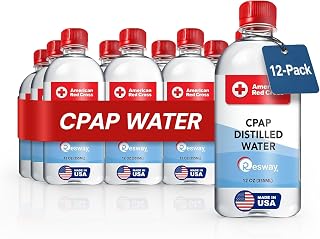
American Red Cross CPAP Distilled Water, 12-Pack 12 oz
Twelve smaller bottles mean twelve fresh seals, which is exactly what you want for a humidifier chamber that should be emptied and refilled daily. The 12 oz portion matches typical overnight consumption almost perfectly, so nothing sits open.
Snugell Distilled Water, 12-Pack 12 oz
Snugell stretches to roughly fifteen days per pack and is made in the USA, with bottles small enough to slot into a CPAP travel case. A strong choice for light users and anyone who values sealed single-night portions over bulk.
Frequently Asked Questions
Can I use tap water in a humidifier just once?
Occasionally, in an evaporative unit, without disaster — but expect scale on the wick and heating element. In an ultrasonic humidifier, even one tank produces mineral dust you’ll be breathing and wiping off surfaces.
Is filtered or bottled drinking water good enough?
No. Pitcher filters and most bottled waters remove taste and some contaminants while leaving dissolved minerals intact. Only distillation reliably removes them.
Should I add essential oils or tablets to the tank?
Not unless your manufacturer explicitly allows it. Oils degrade plastics and gaskets, and additives in a CPAP chamber can irritate airways directly.
How often should I empty and refill the tank?
Daily. Standing water grows biofilm regardless of purity, so dump leftovers each morning, rinse, dry, and start fresh at night.
Final Thoughts
For most households, the 6-Pack 20 oz Distilled Water is the easiest all-purpose answer, covering both a CPAP chamber and a bedside unit with the same case. Daily CPAP users who prefer a fresh seal every night should choose the American Red Cross 12 oz 12-pack, while frequent travelers will appreciate the leakproof, TSA-ready Dura Cleanse bottles. Any of the three keeps minerals out of your air and scale out of your machine — which is the entire job.