Key takeaways
- Pile height: Stay under roughly half an inch. Low pile lets chairs slide without snagging and prevents crumbs from burrowing into the fibers where they’re hard to extract. Shag, high-loop, and thick handknots belong anywhere but under a table.
- Size before style: Measure your table, then add 24–30 inches on every side so back chair legs stay on the rug when pushed out. A 6×9 suits most rectangular six-seaters; an 8×10 is the safer choice for eight seats or leaf extensions.
- Washability: Machine-washable rugs have genuinely matured — the good ones now use a separate thin body plus a grippy underlayer, so the top layer goes in a home washer. For a room where food is guaranteed, this beats spot-cleaning promises.
- Grip and thickness: A non-slip backing matters more here than anywhere else, because standing up from a chair applies lateral force. Thin, flexible rugs also reduce the trip lip at the edge — worth noting if anyone in the household navigates in low light at night.
- Pattern strategy: Vintage, distressed, and medallion designs are the pragmatist’s choice: busy mid-tone patterning camouflages inevitable marks far better than solid cream or charcoal, both of which show every drip.
What's inside
Most dining room rugs fail for the same reason: they were chosen with the eyes and not the body. Buyers fall for a color online, then discover the pile is too deep for chair legs to glide over, the backing shifts every time someone stands up, or a single spilled glass of red wine turns a $200 purchase into a permanent regret. Dining rooms are the hardest-working soft-surface zone in the house — food, traffic, chair drag, kids, pets — and yet they’re often furnished with rugs designed for bedrooms.
I spend most of my professional life thinking about rest and recovery environments, and one thing that carries over from the bedroom to the dining room is this: comfort is mostly acoustics, texture, and calm. A good dining rug absorbs the clatter of dishes, softens the echo that makes long dinners tiring, and grounds the room visually so the space feels settled rather than sharp. This guide covers the rug constructions that actually survive dining use in 2026 — low-pile washables, faux wool vintage weaves, and stain-resistant flatweaves — plus the sizing math that most shoppers get wrong, and honest notes on six popular models.
As an Amazon Associate we earn from qualifying purchases.




🛒 Best Price Today on Amazon
Prime members get fast, free shipping on everything above, plus member-only deals. New members get a 30-day free trial — cancel anytime.
How to Choose the Right Type of Rug for a Dining Room (2026)
- Pile height: Stay under roughly half an inch. Low pile lets chairs slide without snagging and prevents crumbs from burrowing into the fibers where they’re hard to extract. Shag, high-loop, and thick handknots belong anywhere but under a table.
- Size before style: Measure your table, then add 24–30 inches on every side so back chair legs stay on the rug when pushed out. A 6×9 suits most rectangular six-seaters; an 8×10 is the safer choice for eight seats or leaf extensions.
- Washability: Machine-washable rugs have genuinely matured — the good ones now use a separate thin body plus a grippy underlayer, so the top layer goes in a home washer. For a room where food is guaranteed, this beats spot-cleaning promises.
- Grip and thickness: A non-slip backing matters more here than anywhere else, because standing up from a chair applies lateral force. Thin, flexible rugs also reduce the trip lip at the edge — worth noting if anyone in the household navigates in low light at night.
- Pattern strategy: Vintage, distressed, and medallion designs are the pragmatist’s choice: busy mid-tone patterning camouflages inevitable marks far better than solid cream or charcoal, both of which show every drip.
The Best Types of Rugs for Dining Rooms (2026), Reviewed
Soalmost Washable Area Rug 8×10, Beige
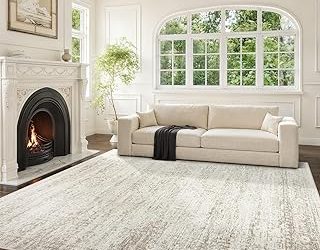
A sensible default for larger dining sets: the 8×10 footprint clears chair pull-out on a standard rectangular table, and the low pile plus lightweight, foldable body makes it one of the easier large rugs to actually get into a washer. The soft beige reads warm rather than stark, though it will demand prompt attention after dark spills.
6×9 Washable Dark Green Oriental Rug
The best camouflage pick in the group — deep green with traditional Oriental patterning hides crumbs, shadows, and the occasional splash better than any light neutral. The 6×9 size fits six-seat tables comfortably, and the flat construction keeps chairs moving smoothly.
Washable 6×8 Stain-Resistant Beige Rug
Aimed squarely at households with pets and young children, this one leans on water-resistant treatment and a low, dense surface that wipes rather than absorbs. The 6×8 is a slightly tighter footprint, so measure carefully with round or square tables where clearance is asymmetrical.
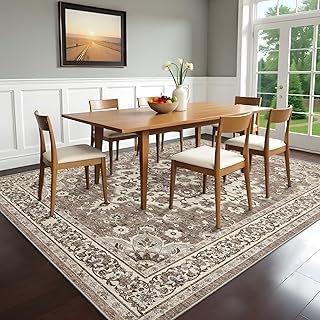
Homemate Washable 6×9 Faux Wool Rug
Faux wool is the sweet spot for dining rooms — it delivers the muted, slightly heathered look of a real wool vintage rug without the moth risk or dry-clean-only maintenance. Soft underfoot, quiet acoustically, and genuinely foldable for washing.
Washable 8×10 Ultra-Soft Faux Wool Rug
If you want the plushest hand-feel that’s still dining-appropriate, this is it: noticeably soft, non-shedding, and large enough for eight seats. Excellent sound damping, which makes lingering dinners feel calmer and less fatiguing.
Frequently Asked Questions
Is a rug under a dining table actually a good idea?
Yes, provided it’s low pile and correctly sized. It reduces noise, protects hard flooring from chair-leg scuffs, and visually anchors the table. Skip it only if you have a habitually messy setup and no washable option.
What size rug do I need for a six-person table?
A 6×9 is the standard answer for a rectangular six-seater. Confirm by adding at least 24 inches to each side of your tabletop measurement.
How often should a dining rug be washed?
Vacuum weekly, spot-treat immediately, and run a full wash every three to four months in an active household — more often with toddlers or shedding pets.
Do washable rugs stay in place?
Most include a non-slip layer that holds on hard floors. On tile or polished wood, adding a thin rug pad eliminates any remaining creep.
Final Thoughts
For most dining rooms, the Homemate 6×9 faux wool offers the best balance of texture, quietness, and easy washing, while the dark green 6×9 Oriental is the smartest choice if hiding real-life mess is your priority. Larger tables should size up to the Soalmost 8×10 beige for full chair clearance.