Key takeaways
- Size to the pushed-back chair, not the table: Measure your tabletop and add 24 to 30 inches on every side so rear chair legs stay on the rug when someone stands. As a rule, an 8×10 suits a six-to-eight seat rectangular table, a 6×9 fits a four-to-six seater, and a 5×7 works only for round, square, or bistro-scale tables.
- Keep the pile under a quarter inch: Low pile lets chair glides slide instead of catching, and it releases crumbs to a vacuum rather than swallowing them. Anything shaggy or high-loop belongs in a bedroom, not under a table.
- Treat machine washability as non-negotiable: Spot cleaning drives soil deeper. A rug you can fold into a front-loader is a rug whose allergen load actually resets — meaningful if anyone in the house wakes congested or shares air with the dining space.
- Pick colors that behave under warm, dim light: Beiges, taupes, and deep greens hold their character at 2700K and hide the inevitable crumb. Bright whites bounce evening light in a way that works against wind-down, and they show every stain besides.
- Check the backing, then air it out: Look for a genuine non-slip underside or plan on a thin rug pad. Whatever you buy, unroll it in a ventilated space for a day or two before it lives near where you eat and sleep.
What's inside
Most rooms forgive a mediocre rug. A dining room does not. Four to eight chairs drag across the same eighteen inches of fiber every single day, crumbs work their way into the pile, and one tipped glass of red can end the relationship permanently. Yet shoppers still choose dining rugs the way they choose throw pillows — by the photograph — and then discover that the chair legs snag, the pile traps dust, and the whole thing has to be dragged outside twice a year for a hosing down that never quite works.
I spend most of my working life assessing sleep environments, and the dining room turns out to matter more than people expect. It is the last hard-surfaced, brightly lit room many households occupy before bed, it is often a shared wall or open plan neighbor to a bedroom, and its textiles contribute to the dust and dander load that circulates through the rest of the home overnight. A good dining rug softens evening acoustics, tames overhead glare, and — critically — goes in a washing machine. Below are the picks I recommend most often in 2026, plus the buying criteria I use to separate the genuinely livable from the merely photogenic.
As an Amazon Associate we earn from qualifying purchases.


🛒 Best Price Today on Amazon
Prime members get fast, free shipping on everything above, plus member-only deals. New members get a 30-day free trial — cancel anytime.
How to Choose a Rug for the Dining Room (2026)
- Size to the pushed-back chair, not the table: Measure your tabletop and add 24 to 30 inches on every side so rear chair legs stay on the rug when someone stands. As a rule, an 8×10 suits a six-to-eight seat rectangular table, a 6×9 fits a four-to-six seater, and a 5×7 works only for round, square, or bistro-scale tables.
- Keep the pile under a quarter inch: Low pile lets chair glides slide instead of catching, and it releases crumbs to a vacuum rather than swallowing them. Anything shaggy or high-loop belongs in a bedroom, not under a table.
- Treat machine washability as non-negotiable: Spot cleaning drives soil deeper. A rug you can fold into a front-loader is a rug whose allergen load actually resets — meaningful if anyone in the house wakes congested or shares air with the dining space.
- Pick colors that behave under warm, dim light: Beiges, taupes, and deep greens hold their character at 2700K and hide the inevitable crumb. Bright whites bounce evening light in a way that works against wind-down, and they show every stain besides.
- Check the backing, then air it out: Look for a genuine non-slip underside or plan on a thin rug pad. Whatever you buy, unroll it in a ventilated space for a day or two before it lives near where you eat and sleep.
The Best Dining Room Rugs (2026) Reviewed
Ultra Soft Faux Wool Washable Rug (8×10)
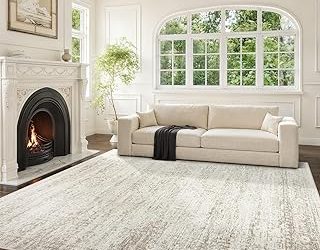
This is the most complete package on the list: faux wool that feels warm underfoot, a vintage pattern busy enough to camouflage daily use, and a low pile that keeps chairs moving freely. The 8×10 footprint gives a six-seat table the clearance it needs without crowding a sideboard.
Soalmost Washable Beige Area Rug (8×10)
A quieter, more architectural take on the same size class, with a soft beige ground that reads calm rather than clinical under warm bulbs. It is genuinely lightweight and foldable, which matters more than people realize when wash day arrives.
Dark Green Oriental Washable Rug (6×9)
The smartest stain strategy here is color, and this deep green oriental absorbs the visual noise of a working dining room better than any neutral. At 6×9 it suits a four-to-six seat table, and the traditional motif keeps it from looking like a compromise.
cotiled Distressed Traditional Rug (5×7)
Small dining spaces are usually served badly, and this is the exception — a softly distressed beige oriental scaled for round tables, breakfast nooks, and apartment dining corners. Confirm your clearance before ordering; 5×7 is unforgiving with a rectangular table.
Farmhouse Dark Taupe Geometric Rug (6×9)
Dark taupe is the most practical dining shade available, and the distressed geometric design gives it more spine than a plain neutral. Stain resistant, low pile, and washable, it is the pick I suggest for households with young children or frequent guests.
Frequently Asked Questions
What size rug do I need for a table that seats six?
An 8×10 in almost every case. A standard six-seat rectangular table runs roughly 72 by 38 inches, and adding 24 to 30 inches of clearance per side lands you squarely in 8×10 territory. A 6×9 works only if your table is compact or pushed toward a wall.
Are washable rugs durable enough for daily dining use?
Modern low-pile washables hold up well, provided you respect the care label: cold water, gentle cycle, and air drying. The failure point is almost always heat, which distorts backings and can shrink the weave.
Do I still need a rug pad if the rug is non-slip?
On hardwood or tile, a thin pad is still worth it. Built-in grip stops sliding, but a pad adds a small cushion that reduces chair-leg impact noise — useful if the dining area sits above or beside a bedroom.
How often should I wash a dining room rug?
Vacuum twice weekly and launder every two to three months, or monthly during allergy season. Dining rugs collect food debris and dust that circulate through the house, so a regular reset does more for indoor air quality — and for anyone who wakes up stuffy — than most people expect.
Final Thoughts
For a full-size table, the Ultra Soft Faux Wool 8×10 is the best all-around choice, balancing comfort, camouflage, and easy laundering. If your household is hard on floors, the Farmhouse Dark Taupe 6×9 is the most forgiving thing here, while the Dark Green Oriental 6×9 delivers the same practicality with considerably more presence.