Key takeaways
- Wire gauge over outlet count: Look for 12 AWG conductors. A 16-gauge cord — standard on slim office strips — heats up under a continuous 12.5-amp draw, and voltage drop makes the heater’s own thermostat behave erratically.
- A true 20A rating, not 15A: A heater at 12.5 amps sits at 83% of a 15-amp strip’s ceiling before you plug in anything else. A 20-amp unit leaves genuine headroom, which is what prevents nuisance trips at 2 a.m.
- Third-party certification: ETL or UL listing means the housing, breaker, and cord were actually tested together. Treat an uncertified strip as unusable for any heating appliance.
- Joules for electronics, amperage for appliances: Joule ratings describe surge absorption for sensitive devices. They tell you nothing about thermal capacity, so don’t read 3,780 joules as evidence a strip can host a heater.
- One heater, one circuit, nothing daisy-chained: Never run a heater alongside another high-draw device, never plug one strip into another, and keep the cord uncoiled and out from under rugs or bed skirts.
What's inside
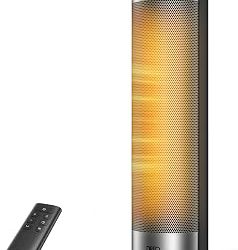
Anyone who has woken at 3 a.m. to a cold bedroom knows how much thermal comfort shapes sleep quality. Core body temperature has to fall to initiate sleep, but a room that drifts below the mid-60s Fahrenheit pushes the body into micro-arousals and shivering — so a small heater running on a thermostat has become standard equipment in drafty bedrooms, nurseries, and finished basements. The problem arrives at the outlet. A 1,500-watt heater draws roughly 12.5 amps continuously, and that steady load is exactly what ordinary power strips are not built to carry. Melted receptacles, tripped breakers, and the faint hot-plastic smell that jolts you awake are all symptoms of the same mismatch.
Before anything else, the honest expert answer: every space heater manual, along with the NFPA and CPSC, instructs you to plug the heater directly into a wall receptacle — no strip, no surge protector, no extension cord. Nothing in this guide overrides that. What follows is for the real-world situations you still have to solve: a heavy-duty, high-gauge strip for a garage or shop where a dedicated outlet genuinely isn’t reachable, and proper surge protection for the sleep gear that shares that room — sound machines, CPAP units, chargers, lamps, and monitors. Below we cover what the specifications actually mean, which models are built for sustained appliance loads, and which ones belong on the nightstand instead.
As an Amazon Associate we earn from qualifying purchases.


How to Choose a/an Surge Protector For Space Heater (2026)
- Wire gauge over outlet count: Look for 12 AWG conductors. A 16-gauge cord — standard on slim office strips — heats up under a continuous 12.5-amp draw, and voltage drop makes the heater’s own thermostat behave erratically.
- A true 20A rating, not 15A: A heater at 12.5 amps sits at 83% of a 15-amp strip’s ceiling before you plug in anything else. A 20-amp unit leaves genuine headroom, which is what prevents nuisance trips at 2 a.m.
- Third-party certification: ETL or UL listing means the housing, breaker, and cord were actually tested together. Treat an uncertified strip as unusable for any heating appliance.
- Joules for electronics, amperage for appliances: Joule ratings describe surge absorption for sensitive devices. They tell you nothing about thermal capacity, so don’t read 3,780 joules as evidence a strip can host a heater.
- One heater, one circuit, nothing daisy-chained: Never run a heater alongside another high-draw device, never plug one strip into another, and keep the cord uncoiled and out from under rugs or bed skirts.
The Best Surge Protector For Space Heater (2026)s Reviewed
CCCEI Heavy Duty 8-Outlet Metal Power Strip with USB
The metal housing, wide-spaced receptacles, and grounded heavy-gauge cord make this the most sensible choice when a shop heater or utility heater truly cannot reach a wall outlet. The USB ports are a convenience for a phone or white-noise device, though the heater should still be the only high-draw item connected.
CCCEI Heavy Duty 20A with Individual Switches
This is the pick if you’re going to use a strip at all: 12-gauge wire, a genuine 20-amp rating, and per-outlet switches that let you cut power to the heater without unplugging anything. Wall-mounting it keeps the cord off the floor, which matters more than most buyers realize.
CCCEI Heavy Duty 6-Outlet Metal Plug Extender
A leaner version of the same engineering — fewer outlets, same rugged metal construction and generous spacing for bulky heater plugs and transformers. Fewer receptacles is arguably a feature here, since it discourages the overloading that causes most failures.
Belkin 12-Outlet Surge Protector
With 3,780 joules and a flat 8-foot plug, this is an excellent bedroom hub for your CPAP, sleep tracker, lamp, and chargers — and it belongs behind the nightstand, not under the heater. Keep the heater on its own wall receptacle and let this handle everything delicate.
ALESTOR 12-Outlet with 4 USB Ports
2,700 joules, twelve outlets, and four USB ports cover a dorm room or home office comprehensively at a modest price. Treat it strictly as electronics protection; the light-gauge cord isn’t intended for a continuous heating load.
Frequently Asked Questions
Can I plug a space heater into a surge protector?
Manufacturers say no, and that guidance is worth following. If circumstances leave you no alternative, use only a 20-amp, 12-gauge, certified heavy-duty unit with nothing else connected — and check the plug for warmth during the first hour.
Why does my breaker trip when the heater runs?
The circuit is near capacity. Move other loads off it, and if it recurs, have an electrician evaluate the circuit rather than swapping in a larger strip.
Is a heater safe to run all night for sleep?
Modern units with tip-over protection and overheat cutoff are designed for it, but keep three feet of clearance, use the thermostat rather than maximum output, and pair it with a working smoke alarm.
Do surge protectors wear out?
Yes. The internal MOVs degrade with each surge, so replace units after a major event or roughly every three to five years.
Final Thoughts
If you need serious capacity in a garage or workshop, the CCCEI Heavy Duty 20A with Individual Switches is the most defensible option, with the CCCEI 8-Outlet Metal Strip a close second. For the bedroom itself, plug the heater straight into the wall and give the Belkin 12-Outlet the job it’s actually built for — protecting the CPAP, sound machine, and chargers that quietly keep your sleep on track.