Key takeaways
- Rust inhibition: Look for a formula built specifically to stop existing oxidation, not just cover it. Rust doesn’t stop spreading under a decorative topcoat — it keeps working from underneath until the paint lifts in sheets.
- Binder chemistry: Oil-based alkyds cure into a harder, more chip-resistant shell on bare metal and tolerate temperature swings better than most fast-dry acrylics. Acrylics win on recoat speed and low odor if you’re working near an open window.
- Finish sheen: Gloss sheds water and pollen fastest and wipes clean with a rag. Flat and textured finishes hide dents, weld seams, and old pitting far more forgivingly — worth choosing if your frames have history.
- Trigger design and spray angle: Patio furniture is mostly curved tubing and lattice undersides. A comfort trigger that sprays upside down saves your index finger and, more importantly, gets paint onto the surfaces that rust first.
- Coverage math: A typical four-chair bistro set eats two to three cans. Buy multi-packs from a single lot number so your sheen and tint match across pieces — mismatched blacks are surprisingly obvious in low evening light.
What's inside
Most people renovate their patio for looks. I’ve spent a decade helping clients build environments that support rest, and I’d argue the stakes are higher than aesthetics: an outdoor space you actually enjoy sitting in becomes a wind-down zone, a place to decompress before bed instead of scrolling indoors under blue light. Flaking, rust-streaked metal furniture does the opposite — it reads as a chore you haven’t finished, and unfinished chores are terrible company at dusk.
The good news is that refinishing metal patio furniture is one of the highest-return, lowest-skill projects available to a homeowner. The bad news is that the paint aisle is full of cans that look interchangeable and behave nothing alike. Below, I break down what actually matters for wrought iron, aluminum, and tubular steel left out in weather, then review the formulas that have held up best across seasons of sun, sprinkler overspray, and freeze-thaw cycles.
As an Amazon Associate we earn from qualifying purchases.




🛒 Best Price Today on Amazon
Prime members get fast, free shipping on everything above, plus member-only deals. New members get a 30-day free trial — cancel anytime.
How to Choose a/an Spray Paint For Metal Patio Furniture (2026)
- Rust inhibition: Look for a formula built specifically to stop existing oxidation, not just cover it. Rust doesn’t stop spreading under a decorative topcoat — it keeps working from underneath until the paint lifts in sheets.
- Binder chemistry: Oil-based alkyds cure into a harder, more chip-resistant shell on bare metal and tolerate temperature swings better than most fast-dry acrylics. Acrylics win on recoat speed and low odor if you’re working near an open window.
- Finish sheen: Gloss sheds water and pollen fastest and wipes clean with a rag. Flat and textured finishes hide dents, weld seams, and old pitting far more forgivingly — worth choosing if your frames have history.
- Trigger design and spray angle: Patio furniture is mostly curved tubing and lattice undersides. A comfort trigger that sprays upside down saves your index finger and, more importantly, gets paint onto the surfaces that rust first.
- Coverage math: A typical four-chair bistro set eats two to three cans. Buy multi-packs from a single lot number so your sheen and tint match across pieces — mismatched blacks are surprisingly obvious in low evening light.
The Best Spray Paint For Metal Patio Furniture (2026)s Reviewed
Rust-Oleum Stops Rust, Semi-Gloss Black
This is my default recommendation for older wrought iron that’s already showing orange freckles: the oil-based film cures dense and stays flexible enough to survive seasonal expansion. Semi-gloss is the sweet spot — enough sheen to shed rain, not enough to spotlight every imperfection in a forty-year-old frame.
Rust-Oleum Painter’s Touch 2X Ultra Cover, Flat Black
The fast-dry formula lets you build coats in an afternoon rather than a weekend, which matters when you’re racing a forecast. Flat black is quietly the most restful finish you can put on a patio, since it absorbs glare instead of throwing hard reflections back at you at golden hour.
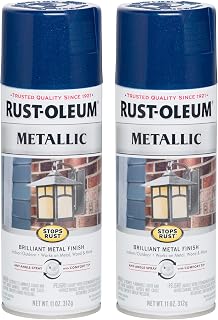
Rust-Oleum Stops Rust Metallic, Cobalt Blue (2-Pack)
A genuinely good option if you want one accent piece to anchor the space without repainting the entire set. The metallic flake gives depth that flat color can’t, and the two-pack is realistically what a single chair-and-side-table pair requires.
Rust-Oleum Stops Rust Multi-Color Textured, Aged Iron
The most forgiving product on this list by a wide margin. Its speckled texture swallows pitting, sanding scratches, and uneven prep, making it the right pick for salvaged or thrift-store frames you don’t want to strip to bare metal.
Rust-Oleum Universal All Surface Metallic, Oil Rubbed Bronze
Strong adhesion across mixed materials means you can carry one color over metal frames, plastic feet, and a wooden tabletop in the same session. The bronze tone warms up a space at night in a way pure black doesn’t.
Frequently Asked Questions
Do I need to sand before painting?
Yes — scuff off loose rust and chalky old paint with a wire brush or 120-grit, then wipe with a degreaser and let it dry fully. Prep, not paint, determines how long the finish lasts.
Is primer necessary?
On sound metal, a dedicated rust-stopping paint can go on directly. On heavily pitted or freshly stripped steel, a rusty-metal primer is cheap insurance.
How long before I can sit on it?
Dry to the touch means little. Give oil-based finishes a full 24 hours before light use and several days before anything gets left sitting on the surface in humid weather.
What conditions should I paint in?
Aim for 55–85°F, low humidity, and shade. Direct sun flashes solvents off too quickly and leaves a gritty, under-cured film.
Final Thoughts
For most metal patio sets, the Stops Rust Semi-Gloss Black is the reliable workhorse, the Aged Iron Textured finish rescues pieces too far gone for smooth paint, and the Universal Oil Rubbed Bronze delivers the warmest evening atmosphere if you want your patio to feel like somewhere you actually unwind.