Key takeaways
- Noise floor at bedside: Anything above roughly 40 dB will register as intrusive in a space where your head may sit four feet from the unit. Look for published decibel figures rather than vague “whisper quiet” claims, and favor PTC ceramic elements over older coil designs, which tick and pop as they expand.
- Thermostat resolution: A heater that swings four degrees between cycles will fragment your sleep even if you never fully wake. Digital thermostats with single-degree setpoints and an ECO mode hold a far tighter band than mechanical dials, which is the single most underrated sleep feature on this list.
- Safety hardware for a moving home: Tip-over shutoff is non-negotiable in a vehicle where floors flex and pets wander. Pair it with overheat protection and a cool-touch housing, and keep three feet of clearance from bedding, curtains, and upholstery.
- Electrical headroom: A 1500W heater pulls roughly 12.5 amps. On a 30-amp hookup that leaves little room for an air conditioner, microwave, or second heater, so a switchable 750W setting is more useful than it sounds — and often plenty for overnight holding.
- Footprint and mounting: Low-profile bases resist tipping on the road; wall-mounted units free up walkway space entirely. Measure your intended spot before buying, and confirm the cord reaches an outlet without running under a rug or across a doorway.
What's inside
Sleeping in an RV means sleeping inside a thin aluminum shell with a fraction of the insulation a house has. Once the sun drops, cabin temperature can slide ten or fifteen degrees in under an hour, and that drop tends to land right in the middle of your deepest sleep cycle. Most travelers respond by piling on blankets, but the real problem isn’t insufficient bedding — it’s an unstable thermal environment. Human sleep architecture depends on a gentle overnight decline in core body temperature, and erratic swings in ambient air disrupt that curve, which is why so many campers wake at 3 a.m. without knowing why.
The factory furnace isn’t much better. It’s loud, it cycles hard, and it burns propane you’d rather save for cooking and hot water. A well-chosen electric heater holds a narrow temperature band quietly and cheaply while you’re on shore power. This guide looks at the models genuinely suited to RV living in 2026 — evaluated on decibel output at sleeping distance, thermostat precision, tip-over and overheat protection, physical footprint in a tight floorplan, and total amp draw on a 30-amp pedestal.
As an Amazon Associate we earn from qualifying purchases.




How to Choose a/an Rv Space Heater (2026)
- Noise floor at bedside: Anything above roughly 40 dB will register as intrusive in a space where your head may sit four feet from the unit. Look for published decibel figures rather than vague “whisper quiet” claims, and favor PTC ceramic elements over older coil designs, which tick and pop as they expand.
- Thermostat resolution: A heater that swings four degrees between cycles will fragment your sleep even if you never fully wake. Digital thermostats with single-degree setpoints and an ECO mode hold a far tighter band than mechanical dials, which is the single most underrated sleep feature on this list.
- Safety hardware for a moving home: Tip-over shutoff is non-negotiable in a vehicle where floors flex and pets wander. Pair it with overheat protection and a cool-touch housing, and keep three feet of clearance from bedding, curtains, and upholstery.
- Electrical headroom: A 1500W heater pulls roughly 12.5 amps. On a 30-amp hookup that leaves little room for an air conditioner, microwave, or second heater, so a switchable 750W setting is more useful than it sounds — and often plenty for overnight holding.
- Footprint and mounting: Low-profile bases resist tipping on the road; wall-mounted units free up walkway space entirely. Measure your intended spot before buying, and confirm the cord reaches an outlet without running under a rug or across a doorway.
The Best Rv Space Heater (2026)s Reviewed
Xtreme Heaters Boat Cabin RV Space Heater
Built specifically for boat cabins and RVs, this is the most purpose-fit unit here: a squat, stable base, top-mounted air intake that resists blockage from bedding, and both tip-over and overheat cutoffs. The 750W setting is the one to use overnight — it holds a small bedroom comfortably while leaving amperage for everything else.
DREO Space Heater with Thermostat (34dB, Gold)
At a rated 34 dB, this is quiet enough to sit within arm’s reach of a pillow, and the 12-hour timer plus remote means you can adjust the setpoint without leaving your bunk. The precise digital thermostat is what earns it a place here — it cycles gently rather than blasting and coasting.
GiveBest Smart Wall Heater
Wall mounting is a genuine advantage in a narrow RV aisle, and the Alexa integration plus 24-hour timer let you schedule a pre-dawn warm-up so the cabin is habitable before you get out of bed. Confirm you’re mounting into solid structure, not thin paneling, and keep the required clearances.
DREO Oscillating Space Heater
The 70-degree oscillation matters more in an RV than in a house, because it prevents the stratified hot-and-cold pockets that form in a long, narrow cabin. ECO mode and five settings give you fine control over how much heat you’re actually paying for.
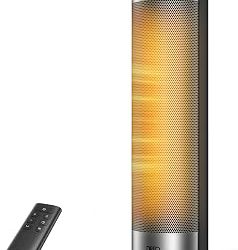
Lasko 1500W Ceramic Tower Heater
A tall, slim tower takes up minimal floor area and distributes warmth at torso height rather than at ankle level, with widespread oscillation, a thermostat, and a timer. Secure or stow it before driving, as its height makes it the least road-stable option here.
Frequently Asked Questions
Is a propane heater safe to run while sleeping?
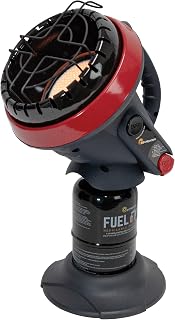
No. Unvented propane units like the Mr. Heater Little Buddy consume oxygen and produce carbon monoxide and moisture, so they should only be used while awake, with active ventilation, and near a working CO alarm. They’re excellent for taking the chill off a morning setup — never for overnight use.
What temperature should I set for sleep?
Most people sleep best between 60 and 67°F. In an RV, aim for the upper end and let the thermostat hold it steadily rather than chasing warmth with a higher setpoint.
Can I run two electric heaters at once?
On a 30-amp hookup, generally not at full power. Two units on 750W each is workable if nothing else substantial is running; verify your pedestal rating first.
Will an electric heater cause condensation?
Dry electric heat doesn’t add moisture, but warming the air raises the dew point at cold window surfaces. Crack a roof vent slightly and run a ceiling fan to keep interior humidity moving.
Final Thoughts
For most RV sleepers, the Xtreme Heaters cabin model is the soundest primary choice — it’s engineered for exactly this environment and its low-profile stability suits a vehicle that moves. If bedside silence is your priority, the 34 dB DREO is hard to beat, and the GiveBest wall heater is the smartest pick for anyone fighting for floor space in a tight floorplan.