Key takeaways
- Suction measured in Pascals: Litter granules are dense and often wedge into carpet pile or floor grout. Look for 5,000 Pa as an absolute floor and 10,000 Pa or more if you have any medium-pile rugs near the litter box.
- Sealed HEPA filtration: Clay and bentonite dust is respirable and lingers in air for hours. A HEPA-rated filter housed in a properly sealed chamber prevents the vacuum from redistributing what it just collected — the single most important factor for bedroom air quality.
- Anti-tangle brush design: Rubber or comb-style brushrolls handle cat hair without wrapping, and they resist the abrasive wear that litter inflicts on bristle brushes. This is a longevity issue as much as a performance one.
- Self-emptying base capacity: Litter fills a small onboard bin astonishingly fast. A base rated for 30 days or multiple weeks of debris means you handle dust once a month rather than every other evening.
- Noise output and scheduling flexibility: Anything above roughly 65 dB will disrupt sleep onset through a closed door. Choose a model with a quiet mode plus granular scheduling so cleaning happens mid-morning, not while you are trying to fall asleep.
What's inside
Litter tracking is one of those household problems that quietly compounds. A single trip out of the box scatters granules across three rooms, and by the time you notice, the grit has migrated into hallway runners, under bed frames, and into the seams of upholstered furniture. As someone who spends most of my working hours studying sleep environments, I pay particular attention to what happens overnight: fine clay dust and litter debris become airborne with every footstep, settle onto bedding, and contribute to the low-grade nasal congestion and restless breathing that so many cat owners assume is just “allergy season.” Cleaner floors are not a cosmetic concern. They are part of a bedroom that lets you breathe.
This guide evaluates robot vacuums specifically against the demands of cat litter: heavy, abrasive granules that jam weak brushrolls, clog thin filters, and overwhelm small dustbins within days. I have prioritized suction strength, filtration quality, self-emptying capacity, and — critically for anyone whose cleaning schedule overlaps with bedtime — how much noise the machine produces while it works. Below you will find the models worth your money in 2026, followed by a buying framework and answers to the questions I hear most often.
As an Amazon Associate we earn from qualifying purchases.



How to Choose a Robot Vacuum For Cat Litter (2026)
- Suction measured in Pascals: Litter granules are dense and often wedge into carpet pile or floor grout. Look for 5,000 Pa as an absolute floor and 10,000 Pa or more if you have any medium-pile rugs near the litter box.
- Sealed HEPA filtration: Clay and bentonite dust is respirable and lingers in air for hours. A HEPA-rated filter housed in a properly sealed chamber prevents the vacuum from redistributing what it just collected — the single most important factor for bedroom air quality.
- Anti-tangle brush design: Rubber or comb-style brushrolls handle cat hair without wrapping, and they resist the abrasive wear that litter inflicts on bristle brushes. This is a longevity issue as much as a performance one.
- Self-emptying base capacity: Litter fills a small onboard bin astonishingly fast. A base rated for 30 days or multiple weeks of debris means you handle dust once a month rather than every other evening.
- Noise output and scheduling flexibility: Anything above roughly 65 dB will disrupt sleep onset through a closed door. Choose a model with a quiet mode plus granular scheduling so cleaning happens mid-morning, not while you are trying to fall asleep.
The Best Robot Vacuum For Cat Litter (2026)s Reviewed
eufy C28 Robot Vacuum and Mop Combo
At 15,000 Pa with a HydroJet roller mop and fully automated mop washing and drying, the C28 is the most complete answer to litter-box mess I have tested — it lifts granules and then removes the dust film they leave behind. The zero-tangle roller is genuinely effective on long-haired breeds, and self-emptying plus self-refilling means near-zero hands-on contact with allergens.
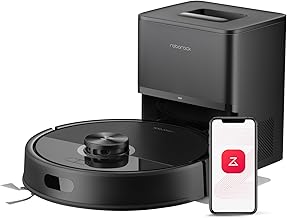
roborock Q7 M5+ Robot Vacuum and Mop
Seven to nine weeks of self-emptying capacity is the standout figure here, and it matters enormously for litter, which fills bins faster than any other household debris. PreciSense LiDAR navigation is accurate enough to send the robot around the litter box on a tight schedule without disturbing the rest of your floorplan.
Shark AV2501S AI Ultra Robot Vacuum
Matrix Clean drives the robot over high-traffic zones in an overlapping grid rather than a single pass, which is exactly what scattered litter requires. The 30-day bagless HEPA self-empty base and self-cleaning brushroll make it my recommendation for allergy-sensitive households and bedrooms with adjacent litter areas.
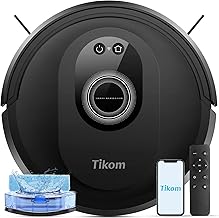
Tikom G8000 Max Robot Vacuum and Mop Combo
With 5,000 Pa and a 150-minute runtime, the G8000 Max is the value option that still clears litter reliably from hard floors and low-pile carpet. There is no self-emptying base, so plan on manual bin duty — ideally outdoors or in a well-ventilated space.
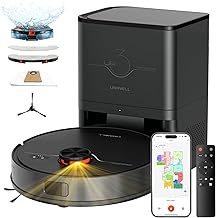
7000Pa LiDAR Robot Vacuum with Self-Empty Station
This one earns its place on noise alone: it runs quietly enough for daytime use in a home with a sleeping shift worker, while 7,000 Pa and a self-empty station handle litter volume without complaint. Customizable no-go zones and Alexa control make it a sensible pick for multi-floor households.
Frequently Asked Questions
Will a robot vacuum damage itself picking up cat litter?
Not if it is built for the job. Litter is abrasive, so rubber anti-tangle brushrolls and sealed filter chambers hold up far better than traditional bristle designs, which shed and clog within months.
Can I run it right beside the litter box?
Yes, and a daily pass over that zone is the highest-value cleaning you can schedule. Use no-go zones to keep the robot from entering the box itself or bumping an automatic unit’s sensors.
Does this actually improve sleep?
Indirectly but meaningfully. Reducing settled dust in bedrooms lowers overnight nasal inflammation, which is a common and under-recognized driver of fragmented sleep and mouth breathing in pet owners.
Do I need a mopping function?
For litter, mopping is the finishing step that removes the fine clay residue vacuuming leaves behind. If anyone in the home has respiratory sensitivity, treat it as essential rather than optional.
Final Thoughts
For most cat households, the eufy C28 is the strongest overall choice thanks to its suction, tangle-free roller, and hands-off mop maintenance. The roborock Q7 M5+ is the better pick if you want the longest possible gap between emptying the base, while the Shark AV2501S AI Ultra remains my recommendation for allergy-prone sleepers who need HEPA filtration and repeated-pass cleaning around the litter area.