Key takeaways
- Decibel rating: Anything above 80 dBA carries through drywall and shared walls. Look for 60–70 dBA if your workspace sits under or beside a bedroom, and treat manufacturer figures as measured at a distance — real-world loudness at arm’s length is higher.
- Tank size vs. task: A 6-gallon pancake tank handles trim work, framing nailers, and inflation without constant cycling. Under 2 gallons, the motor restarts frequently, which is the noise pattern most likely to wake a light sleeper.
- Oil-free pump: For occasional home use, oil-free means no draining, no top-offs, and no mess. You trade a little longevity under heavy commercial cycles — irrelevant for most households.
- Cordless vs. corded: Battery inflators are genuinely quieter in practice because you can carry them away from the house. Corded tank compressors deliver sustained volume for tools but anchor you to an outlet.
- Auto shut-off and digital gauges: Preset pressure control matters more than you’d think for air mattresses — overinflation creates a hard, unsupportive surface, and manual guessing at midnight rarely goes well.
What's inside
Most people shopping for a home air compressor are thinking about tire pressure and brad nails. As someone who spends their working life studying how households sleep, I’d argue there’s a second axis nobody puts on the spec sheet: how much a machine disrupts the rest of the house. A 90-decibel motor kicking on in an attached garage at 6 a.m. is functionally an alarm clock for everyone upstairs, and the guest air mattress you inflate at 11 p.m. determines whether your visitors wake up rested or wrecked.
This guide looks at compressors through both lenses — real capability for home projects, plus noise output, portability, and how well each unit handles bedding, mattresses, and late-evening jobs. Below you’ll find the models worth your money in 2026, a short buying framework, and answers to the questions I hear most from readers setting up a garage or workshop next to living space.
As an Amazon Associate we earn from qualifying purchases.


🛒 Best Price Today on Amazon
Prime members get fast, free shipping on everything above, plus member-only deals. New members get a 30-day free trial — cancel anytime.
How to Choose a/an Rated Air Compressor For Home Use (2026)
- Decibel rating: Anything above 80 dBA carries through drywall and shared walls. Look for 60–70 dBA if your workspace sits under or beside a bedroom, and treat manufacturer figures as measured at a distance — real-world loudness at arm’s length is higher.
- Tank size vs. task: A 6-gallon pancake tank handles trim work, framing nailers, and inflation without constant cycling. Under 2 gallons, the motor restarts frequently, which is the noise pattern most likely to wake a light sleeper.
- Oil-free pump: For occasional home use, oil-free means no draining, no top-offs, and no mess. You trade a little longevity under heavy commercial cycles — irrelevant for most households.
- Cordless vs. corded: Battery inflators are genuinely quieter in practice because you can carry them away from the house. Corded tank compressors deliver sustained volume for tools but anchor you to an outlet.
- Auto shut-off and digital gauges: Preset pressure control matters more than you’d think for air mattresses — overinflation creates a hard, unsupportive surface, and manual guessing at midnight rarely goes well.
The Best Rated Air Compressor For Home Use (2026)s Reviewed
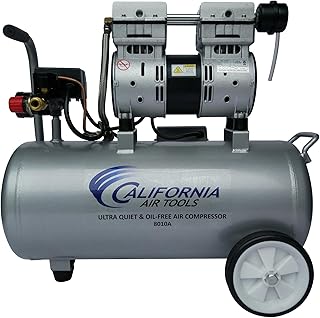
California Air Tools 8010A Ultra Quiet
At a claimed 60 dBA, this 8-gallon aluminum-tank unit is the clear pick for anyone whose workspace shares a wall or ceiling with a sleeping area — it registers closer to a conversation than a power tool. The 1.0 HP oil-free motor spins slowly, which is precisely why it’s both quiet and unhurried; expect longer fill times in exchange for household peace.
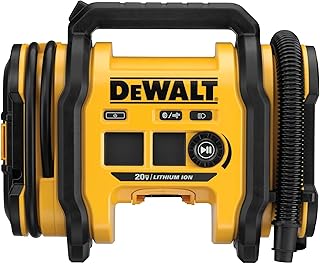
DEWALT DCC020IB 20V MAX Tire Inflator
A cordless, tool-only inflator that runs off DEWALT batteries you may already own, with automatic shut-off at your target pressure and an LED work light for garage-floor visibility. It’s my default recommendation for topping off tires and firming up a guest air mattress without dragging a tank inside.
DEWALT DWFP55126 Pancake Compressor, 6 Gallon
The workhorse of the group: 165 max PSI and 2.6 SCFM at 90 PSI means it keeps a finish nailer fed through a full afternoon of trim or a small roofing job. It is not a quiet machine, so schedule it for daylight hours and keep the door between it and the bedrooms closed.
BOSTITCH BTFP02012-WPK Kit
A 6-gallon, 150 PSI oil-free pancake that lands noticeably lower on the noise scale than most units in its class, bundled with hose and accessories so you’re working the day it arrives. Good value for a first compressor in a mixed-use garage.
ETENWOLF VORTEX S6 Cordless Inflator
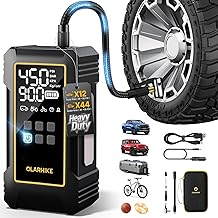
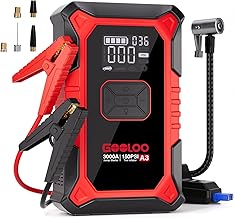
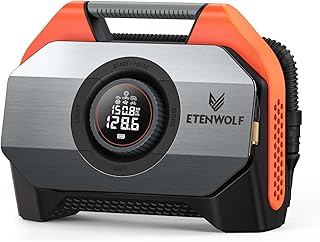
Dual cylinders and a 19,200 mAh pack give this one a 100% duty cycle, meaning it won’t force a cooldown partway through a truck tire or a queen-size mattress. The LED backlight and untethered operation make it the most practical option for late-evening inflation jobs away from an outlet.
Frequently Asked Questions
Can I use a compressor to inflate an air mattress?
Yes, with caution. Air mattresses need high volume at very low pressure, so use a low-pressure accessory nozzle or a dedicated inflator with a digital preset — never connect a mattress directly to a charged 150 PSI tank.
How loud is too loud for a garage next to a bedroom?
Sleep is reliably disrupted by intermittent noise above roughly 45 dB at the sleeper’s ear. Since walls and floors typically absorb 20–30 dB, a 60 dBA compressor is usually tolerable through a door; an 85 dBA unit generally isn’t.
Do I need a big tank for household jobs?
Rarely. Six gallons covers inflation, brad and finish nailing, blowing out dust, and light framing. Larger tanks matter only for air-hungry tools like sanders and spray guns.
Is oil-free worth the tradeoff?
For home use, almost always. You skip maintenance entirely, and typical household duty cycles never approach the wear threshold where oil-lubricated pumps pull ahead.
Final Thoughts
If your compressor lives anywhere near where people sleep, buy the California Air Tools 8010A and don’t look back — 60 dBA changes what hours of the day the machine is usable. For project capability, the DEWALT DWFP55126 remains the most reliable 6-gallon pancake on the market, and the cordless DEWALT DCC020IB is the small, quiet companion that will end up doing 80% of your actual inflating.