Key takeaways
- Output matched to your space: 40,000 BTU is genuinely sufficient for a two-to-four-person seating cluster within about six feet. The jump to 48,000–50,000 BTU matters on exposed decks, in coastal wind, or when you’re heating a longer table. Oversizing an enclosed courtyard mostly wastes propane.
- Glass tube quality: Quartz tolerates thermal shock — the sudden cold rain on hot glass scenario — far better than standard tempered glass. Check tube diameter and wall thickness if listed, and confirm replacements are sold separately. A heater you can’t re-glass is disposable.
- Triple safety protection, verified: Look for three specific mechanisms working together: a thermocouple flame-failure device, an anti-tilt cutoff, and an oxygen depletion sensor. Marketing copy uses the phrase loosely; the product manual will tell you which three you’re actually getting.
- Frame material and finish: Stainless steel resists corrosion where powder-coated steel eventually blisters, particularly near pools and salt air. If you’re set on black, prioritize coating quality and plan to store the unit covered.
- Wheels, cover, and tank access: A 20 lb tank plus frame is awkward to move without casters, and units you can’t reposition get used less. A fitted weather cover included in the box is a small thing that meaningfully extends service life.
What's inside
Most people shopping for a pyramid patio heater think they’re solving a temperature problem. From where I sit — I’ve spent the better part of a decade advising clients on evening routines and circadian health — they’re usually solving a *transition* problem. The hours between dinner and bed are the ones that determine how quickly you fall asleep, and for most households those hours are spent indoors under bright ceiling lights, staring at screens, in a room held at a flat 71°F. Then October arrives, the patio goes unused, and the one part of the evening that actually helped — cool air, dim amber light, no notifications — quietly disappears until spring.
A pyramid heater is worth considering precisely because of what it doesn’t do. It doesn’t flood a space with light. It throws a narrow column of flame behind a quartz tube, radiating warmth outward at seated height while the surrounding air stays cool — which happens to mirror the conditions your body wants before sleep. This guide covers what actually matters when choosing one: real output versus advertised BTU, glass and burner construction, safety systems, portability, and the wind tolerance that determines whether you’ll use it in November or resent it. Below are the models I’d point a client toward for 2026.
As an Amazon Associate we earn from qualifying purchases.


🛒 Best Price Today on Amazon
Prime members get fast, free shipping on everything above, plus member-only deals. New members get a 30-day free trial — cancel anytime.
How to Choose a Pyramid Patio Heater (2026)
- Output matched to your space: 40,000 BTU is genuinely sufficient for a two-to-four-person seating cluster within about six feet. The jump to 48,000–50,000 BTU matters on exposed decks, in coastal wind, or when you’re heating a longer table. Oversizing an enclosed courtyard mostly wastes propane.
- Glass tube quality: Quartz tolerates thermal shock — the sudden cold rain on hot glass scenario — far better than standard tempered glass. Check tube diameter and wall thickness if listed, and confirm replacements are sold separately. A heater you can’t re-glass is disposable.
- Triple safety protection, verified: Look for three specific mechanisms working together: a thermocouple flame-failure device, an anti-tilt cutoff, and an oxygen depletion sensor. Marketing copy uses the phrase loosely; the product manual will tell you which three you’re actually getting.
- Frame material and finish: Stainless steel resists corrosion where powder-coated steel eventually blisters, particularly near pools and salt air. If you’re set on black, prioritize coating quality and plan to store the unit covered.
- Wheels, cover, and tank access: A 20 lb tank plus frame is awkward to move without casters, and units you can’t reposition get used less. A fitted weather cover included in the box is a small thing that meaningfully extends service life.
The Best Pyramid Patio Heaters of 2026, Reviewed
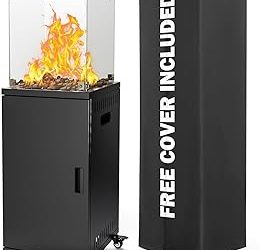
Pamapic 48,000 BTU Pyramid Heater
At 87 inches with a full-length quartz tube, this is the most convincing “focal point” heater here — the flame column sits high enough to radiate over a table rather than into it. The included cover is a genuine value add given how much of a pyramid heater’s lifespan depends on staying dry.
NAVINE 48,000 BTU Pyramid Patio Heater
A well-balanced pick for the common case: a mid-sized patio, four to six people, frequent repositioning. The wheels are sturdier than most in this bracket, and the black finish disappears against dark decking after dusk, which keeps visual stimulation low late in the evening.
48,000 BTU Stainless Steel Pyramid Pool Heater
The one I’d recommend for poolside or humid coastal installations, where the stainless frame earns its price over two or three seasons of chlorine and salt exposure. Output is generous enough for open, breezy surroundings.
HEXAGO 40,000 BTU Pyramid Heater
The most sensible choice for small patios and balconies, and the one I recommend most often — pulse ignition is reliably more consistent than piezo strikers, and the adjustable flame lets you dial warmth down as the night progresses. Lower BTU here is a feature, not a compromise.
BTExpert 48,000 BTU Pyramid Heater
The double-layer stainless burner is the standout: it produces a steadier flame in gusty conditions than single-layer designs, which matters if your evenings are windy. Built with light commercial use in mind, so residential duty cycles barely tax it.
Frequently Asked Questions
How long does a propane tank last?
Expect roughly 8 to 10 hours from a standard 20 lb tank at full output on a 48,000 BTU unit, and noticeably longer if you run a reduced flame — which most people do after the first twenty minutes.
Is firelight better than patio lighting before bed?
Broadly, yes. Flame light is warm-spectrum and low-intensity, so it’s far less likely to suppress melatonin than white LED floodlights. Using a heater as your primary evening light source outdoors is a small, easy win for sleep onset.
Can I use one under a covered patio?
Only with substantial overhead clearance — typically eight feet minimum, per most manuals — and open sides for ventilation. Never operate one in a garage, screened enclosure, or tent.
Do these work in wind?
Pyramid heaters are more wind-sensitive than mushroom-style units because the flame is visible and vertical. Sustained wind above roughly 10 mph will destabilize the flame; position the heater against a wall or windbreak.
Final Thoughts
For most homes, the HEXAGO 40,000 BTU is the right-sized, best-value entry and the model I’d suggest first. If you’re heating a larger or more exposed space, the Pamapic 48,000 BTU offers the best combination of height, tube quality, and included cover, while the stainless steel 48,000 BTU pool heater is the durability pick for anyone dealing with poolside humidity or coastal air. Any of the three will do the real job here: making the cool, dim, screen-free part of your evening available year-round.