Key takeaways
- Burn time per fill: Look for a hopper that sustains two to four hours on a single load. Anything shorter turns a wind-down ritual into a chore, since refueling means opening the unit, disrupting the flame, and standing up mid-conversation.
- Glass column quality: The tube is the whole experience. Borosilicate is worth paying for — it handles thermal shock, stays clearer over a season, and resists the cloudy haze that cheaper glass develops after a dozen burns.
- Radiant reach, not BTU alone: Pellet heaters warm by radiation, so they heat what they can see. A 70,000 BTU rating means little if the column is short; match height and column diameter to how far back your seating actually sits.
- Ash management: A removable ash tray and an adjustable air inlet are the difference between five minutes of cleanup and twenty. Skip models that require tipping the whole body to empty.
- Mobility and weather protection: Lockable casters, a carry handle, and a stainless rain cap let you reposition the unit as the wind shifts and leave it out between uses without corrosion.
What's inside
Most people shopping for an outdoor heater are actually shopping for a reason to stay outside a little longer. In my work on evening routines, the single most common complaint I hear isn’t insomnia — it’s that the day never ends properly. Dinner blurs into email, email blurs into the couch, and the body never receives a clear signal that the day is closing. The patio is one of the few places that signal can still happen naturally, and cold is usually the thing that shuts it down by early October.
That’s the practical case for a pellet patio heater. Unlike propane towers, which throw invisible heat and a faint industrial hum, pellet units burn compressed wood in a vertical column and give you a visible, moving flame at roughly eye level — warm, amber, low in blue wavelengths, and genuinely pleasant to sit near in the last hour before bed. Below I’ve assessed the leading 2026 models on burn time, flame quality, real-world heat delivery, cleanup, and the safety details that matter when a unit will be running near seated adults. Here are the ones worth your money.
As an Amazon Associate we earn from qualifying purchases.




🛒 Best Price Today on Amazon
Prime members get fast, free shipping on everything above, plus member-only deals. New members get a 30-day free trial — cancel anytime.
How to Choose a Pellet Patio Heater (2026)
- Burn time per fill: Look for a hopper that sustains two to four hours on a single load. Anything shorter turns a wind-down ritual into a chore, since refueling means opening the unit, disrupting the flame, and standing up mid-conversation.
- Glass column quality: The tube is the whole experience. Borosilicate is worth paying for — it handles thermal shock, stays clearer over a season, and resists the cloudy haze that cheaper glass develops after a dozen burns.
- Radiant reach, not BTU alone: Pellet heaters warm by radiation, so they heat what they can see. A 70,000 BTU rating means little if the column is short; match height and column diameter to how far back your seating actually sits.
- Ash management: A removable ash tray and an adjustable air inlet are the difference between five minutes of cleanup and twenty. Skip models that require tipping the whole body to empty.
- Mobility and weather protection: Lockable casters, a carry handle, and a stainless rain cap let you reposition the unit as the wind shifts and leave it out between uses without corrosion.
The Best Pellet Patio Heaters (2026) Reviewed
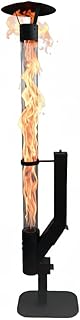
70″ Pellet Patio Heater with Glass Tube Flame
At 70 inches, this is the tallest column here, and the extra height puts the flame at standing eye level — ideal for gatherings where people mill around rather than sit. The rocket-stove draft keeps the flame lively and consistent, which is what makes it hold attention instead of fading into background scenery.
70,000 BTU Wood Pellet Patio Heater with Viewing Window
The strongest heat-per-dollar pick, and the one I’d choose for a wide deck or a semi-commercial space like a café patio. The wheels are a genuine feature rather than a spec-sheet line: at this output, being able to roll the unit two feet away from a guest who’s overheating is worth a lot.
BPS 56 Inch Smokeless Patio Pellet Heater
The best-balanced option for smaller patios and the one I recommend most often for nightly use. The near-smokeless burn matters more than buyers expect — smoke in your hair and clothes is an irritant that follows you indoors and undermines the calm you just spent an hour building.
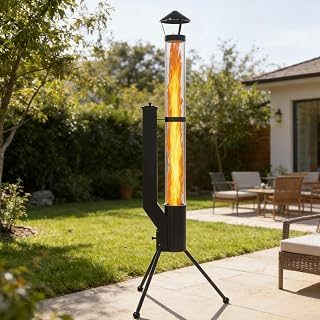
64″ Wood Pellet Patio Heater with Stainless Rain Cap
The most thoughtfully engineered unit for people who will actually use it several times a week. Lockable caster wheels, a carry handle, a proper ash tray, and an adjustable air inlet give you fine control over burn rate, which extends hopper life on milder evenings.
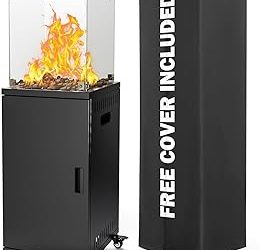
51″ Stainless Steel Wood Pellet Fire Pit
The most refined of the group, with a German-engineered borosilicate column that produces a notably clean, steady flame. Its shorter stature makes it the best choice for seated conversation circles and covered areas with limited overhead clearance.
Frequently Asked Questions
Do pellet heaters actually produce meaningful warmth?
Yes, but directionally. Expect comfortable radiant warmth within roughly six to eight feet, concentrated on whatever faces the column. They won’t heat an open yard the way a patio-wide propane system does.
How long does one hopper of pellets last?
Typically two to four hours depending on model, air-inlet setting, and pellet density. Hardwood pellets burn longer and cleaner than softwood blends and are worth sourcing deliberately.
Are they safe to sit near in the evening?
They are open-flame combustion appliances, so use them outdoors only, never under a low or enclosed ceiling, and maintain the manufacturer’s clearances from walls, furniture, and fabric. The glass column gets extremely hot — brief it clearly to guests and keep children and pets at a defined distance.
Will a fire this close to bedtime disrupt sleep?
Firelight is dim and warm-spectrum, so it exerts far less influence on melatonin than indoor lighting or a phone screen. The bigger benefit is behavioral: a fixed outdoor interval, screen-free, followed by moving indoors to a cooler bedroom supports the natural drop in core body temperature that precedes sleep onset.
Final Thoughts
For most homes, the BPS 56 Inch is the smartest all-around buy — smokeless, well-proportioned, and easy to run nightly without turning into a project. Choose the 70,000 BTU model if you’re heating a large or commercial patio, or the 51-inch stainless unit if flame quality and a seated, conversational setup matter more to you than raw output.