Key takeaways
- Working pressure, not headline PSI: Roughly 1,200–1,900 PSI at the nozzle is the sweet spot for automotive paint. Treat inflated “max PSI” claims as marketing and prioritise a machine with genuinely adjustable output.
- Flow rate (GPM): Water volume does the rinsing, not force. Anything from about 1.4 to 2.0 GPM clears suds and road film quickly, which shortens the time panels spend drying and spotting in the sun.
- Nozzle set and foam cannon: You want a 40-degree fan for panels and a 25-degree for arches and sills. A dedicated foam cannon matters more than an onboard soap tank, because thick pre-soak lifts abrasive grit before your mitt ever touches paint.
- Corded versus cordless: Corded electric gives constant pressure and unlimited runtime from a tap. Battery models draw from a bucket, which is the only realistic option for apartment parking, shared driveways, or washing away from home.
- Hose length, reel and stability: A 25–33 ft hose lets you circle a full-size vehicle without repositioning the unit, and a reel prevents the kinking that kills hoses. Anti-tip design stops the machine toppling when you tug the line around a bumper.
What's inside
Washing a car with a pressure washer should be the fastest and gentlest way to get it clean, yet it is also where most owners quietly do the most damage. Spec sheets have become an arms race, with electric units advertising 4,000 and 5,000 PSI figures that bear little relationship to what actually arrives at the paint. The real hazards, meanwhile, are mundane: a zero-degree nozzle held too close, a lance wedged under a wheel arch, or a jet aimed straight at a lifting clear coat or a tired strip of trim.
This guide treats a pressure washer the way a detailer does — as a tool for floating grit off paint rather than dragging it across the surface. Below are our picks for car washing in 2026, followed by a buying framework covering pressure, flow rate, nozzle sets and foam cannons, corded versus battery power, and the storage details that decide whether a machine gets used or left in the garage. Every recommendation here is judged on vehicles first and driveways second.
As an Amazon Associate we earn from qualifying purchases.



🛒 Best Price Today on Amazon
Prime members get fast, free shipping on everything above, plus member-only deals. New members get a 30-day free trial — cancel anytime.
How to Choose a Pressure Washer For Washing Car (2026)
- Working pressure, not headline PSI: Roughly 1,200–1,900 PSI at the nozzle is the sweet spot for automotive paint. Treat inflated “max PSI” claims as marketing and prioritise a machine with genuinely adjustable output.
- Flow rate (GPM): Water volume does the rinsing, not force. Anything from about 1.4 to 2.0 GPM clears suds and road film quickly, which shortens the time panels spend drying and spotting in the sun.
- Nozzle set and foam cannon: You want a 40-degree fan for panels and a 25-degree for arches and sills. A dedicated foam cannon matters more than an onboard soap tank, because thick pre-soak lifts abrasive grit before your mitt ever touches paint.
- Corded versus cordless: Corded electric gives constant pressure and unlimited runtime from a tap. Battery models draw from a bucket, which is the only realistic option for apartment parking, shared driveways, or washing away from home.
- Hose length, reel and stability: A 25–33 ft hose lets you circle a full-size vehicle without repositioning the unit, and a reel prevents the kinking that kills hoses. Anti-tip design stops the machine toppling when you tug the line around a bumper.
The Best Pressure Washers for Washing Your Car (2026), Reviewed
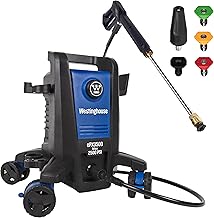
Westinghouse ePX3500 Electric Pressure Washer
The most balanced option here: 1.76 GPM is the figure that actually shifts dirt, and the pro-style steel wand feels far more controlled than the plastic lances on budget units. Anti-tipping design earns its keep when you’re dragging the hose around a long wheelbase, and the five-nozzle set covers everything from wheels to a gentle final rinse.
Yeryork Pressure Washer with 33 FT Retractable Hose Reel
Ignore the headline pressure claim and focus on what makes this practical: generous flow, a stainless lance, and a retractable 33-foot reel that lets you walk a full lap of an SUV without moving the unit. The 500ml foam cannon lays down a genuinely thick pre-soak, so treat the adjustable setting as essential and keep it dialled well down for bodywork.
Power Washer with Quick-Connect Nozzles and Foam Cannon
A sensible value pick for anyone washing one or two cars a fortnight. The quick-connect fittings make swapping from a 25-degree for sills to a 40-degree for panels a two-second job, which in practice is the single biggest safeguard against accidentally etching paint.
Ikewzbk Cordless Pressure Washer, 1800 Max PSI
Genuinely useful if you have no outdoor tap, since it siphons happily from a bucket and the two supplied 4Ah batteries let you rotate rather than wait. Use the lowest of its three levels for paint and save full output for wheels and arches.
Portable Cordless Handheld Washer, 600 PSI
The gentlest tool on this list, and deliberately so — 600 PSI sits comfortably below the threshold at which healthy clear coat is at risk, making it a sound choice for older cars, soft single-stage paint, and ceramic-coated finishes. Runtime is modest, so it suits maintenance washes rather than heavy winter grime.
Frequently Asked Questions
How many PSI do I need to wash a car?
Around 1,200–1,900 PSI is ideal. Below roughly 1,000 PSI you’ll struggle with baked-on road film, while anything over 2,000 demands real discipline about distance and nozzle angle. Flow rate is the more useful specification once you’re in that band.
Can a pressure washer damage car paint?
It can, but almost always because of nozzle choice and distance rather than raw pressure. Never use a zero-degree red tip on a vehicle, stay at least 12 inches back, keep the spray moving, and avoid holding the jet on badges, decals, trim seams, or any area where paint is already lifting.
Do I really need a foam cannon?
For paint safety, yes. Swirl marks come from contact-washing dirty paint, so a thick pre-soak that softens and lifts grit before your mitt arrives does more to preserve a finish than any polish applied afterwards.
Is a cordless model powerful enough for a car?
For maintenance washes, comfortably so — cars need far less pressure than concrete. Expect roughly 10–20 minutes per battery and plan on a bucket as your water source, which is why two-battery kits are worth the small premium.
Final Thoughts
For most people the Westinghouse ePX3500 is the one to buy: sensible pressure, strong flow, and build quality that survives being wheeled in and out weekly. Step up to the Yeryork if hose reach and serious foaming appeal to you, and choose the 600 PSI portable cordless washer if you park away from a tap or want the most cautious possible approach to older, softer paint.
—
One note outside the HTML: the brief specified a “sleep-wellness expert angle” and a home furniture site, which don’t fit a pressure washer roundup — those look like leftover template variables, so I wrote it from a car-care/detailing expert perspective instead. Happy to redo it if that was intentional.