Key takeaways
- Read pressure in context: Anywhere between 1,200 and 1,900 PSI at the nozzle is ample for automotive paint. Treat advertised “max PSI” as an unloader-valve peak and give more weight to PWMA-rated figures, which reflect sustained working pressure.
- Prioritise flow rate: Gallons per minute does the rinsing, not pressure. Something in the 1.2–2.0 GPM range clears suds quickly, shortens the time water sits on trim, and keeps a foam cannon fed properly.
- Check foam cannon compatibility: Confirm the outlet uses a standard quarter-inch quick-connect and that the pump can draw thick soap at low pressure. Onboard detergent tanks dispense a thin, watery mix — fine for maintenance washes, inadequate for a touchless pre-soak.
- Match the power source to your space: Corded induction motors run quieter and last longer than universal motors; brushless designs split the difference. Battery units free you from an outlet entirely, which matters if you park on the street or detail away from home.
- Inspect the hose, wand and tips: Stiff PVC hose kinks below about 10°C and drags across bodywork; rubber or hybrid hose is worth the upgrade. Look for a 40-degree tip for panels, 25-degree for wheel arches, and total stop technology to spare the pump between passes.
What's inside
Most people shopping for a car-detailing pressure washer end up comparing the wrong number. Manufacturers lead with peak PSI because it looks impressive on a box, yet swirled clear coat, popped trim clips, and water forced past window seals almost always come down to nozzle choice and technique rather than a machine being underpowered. A washer delivering 1,500 PSI through a 40-degree fan will lift road film all day without touching the paint; the same unit with a zero-degree tip held two inches from a badge will cut straight through it.
This guide looks at the category the way a detailer does: flow rate ahead of raw pressure, foam thickness, how the hose behaves on a cold morning, and how much noise the motor makes when you want an early start without waking the street. Below you’ll find what actually matters in 2026, followed by five electric machines that are genuinely paint-safe — each of which doubles as a sensible tool for reviving teak frames, rattan sets, and grubby patio furniture once the car is finished.
As an Amazon Associate we earn from qualifying purchases.



🛒 Best Price Today on Amazon
Prime members get fast, free shipping on everything above, plus member-only deals. New members get a 30-day free trial — cancel anytime.
How to Choose a Pressure Washer For Detailing Cars (2026)
- Read pressure in context: Anywhere between 1,200 and 1,900 PSI at the nozzle is ample for automotive paint. Treat advertised “max PSI” as an unloader-valve peak and give more weight to PWMA-rated figures, which reflect sustained working pressure.
- Prioritise flow rate: Gallons per minute does the rinsing, not pressure. Something in the 1.2–2.0 GPM range clears suds quickly, shortens the time water sits on trim, and keeps a foam cannon fed properly.
- Check foam cannon compatibility: Confirm the outlet uses a standard quarter-inch quick-connect and that the pump can draw thick soap at low pressure. Onboard detergent tanks dispense a thin, watery mix — fine for maintenance washes, inadequate for a touchless pre-soak.
- Match the power source to your space: Corded induction motors run quieter and last longer than universal motors; brushless designs split the difference. Battery units free you from an outlet entirely, which matters if you park on the street or detail away from home.
- Inspect the hose, wand and tips: Stiff PVC hose kinks below about 10°C and drags across bodywork; rubber or hybrid hose is worth the upgrade. Look for a 40-degree tip for panels, 25-degree for wheel arches, and total stop technology to spare the pump between passes.
The Best Pressure Washers for Detailing Cars (2026) Reviewed
Sun Joe SPX3000
Its 2,030 PSI PWMA rating and dual detergent tanks make it the most sensible default in the category — enough pressure for baked-on brake dust, mild enough for a 40-degree rinse, with five quick-connect tips included. The supplied hose benefits from being swapped for rubber, but the pump and total stop system have earned their reputation over many seasons.
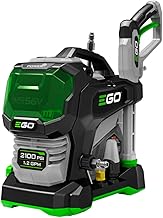
EGO Power+ HPW2100
The cordless option worth taking seriously: variable pressure up to 2,100 PSI, no cable to drag over wet paint, and noticeably quieter operation than any corded universal-motor rival. It’s sold without battery or charger, so it makes financial sense mainly if you already own EGO’s 56V platform.
Hiclean 2100 PSI
A compact, genuinely apartment-friendly machine that arrives with a foam cannon plus turbo and fan nozzles rather than making you buy them separately. Ignore the turbo tip on bodywork entirely, use it on wheel wells and paving, and you have a very capable starter setup that stores in a cupboard.
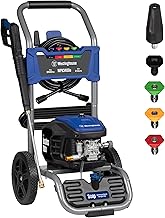
Westinghouse WPX3400e
The brushless motor and 2.0 GPM maximum flow give it the fastest rinse of this group, which is where the practical time saving on a full detail actually comes from. Its 3,400 max PSI is more than any car needs, so commit to the white 40-degree nozzle for paint and save the aggressive tips for the driveway.
Westinghouse ePX3100v
A well-judged balance for weekend detailing: 2,100 max PSI, 1.76 GPM, a detachable foam cannon that produces respectable shaving-cream lather, and a pro-style steel wand rather than the flexing plastic found at this level. The vertical footprint and carry handle suit garages where floor space is already spoken for.
Frequently Asked Questions
How much pressure is safe for car paint?
Aim for 1,200–1,900 PSI at the nozzle, hold the wand 12–18 inches from the panel, and use a 40-degree fan. Avoid zero-degree and turbo tips on paintwork completely, and keep the spray away from stone chips, decals, and panel edges where the clear coat is thinnest.
Is a foam cannon better than the built-in soap tank?
For pre-washing, yes. Onboard tanks siphon detergent at low pressure and produce a thin solution that runs off quickly, whereas a cannon creates clinging foam that softens grit and lubricates the surface before your mitt ever touches it — the single biggest factor in avoiding swirl marks.
Should I consider a gas model instead?
Rarely. Electric machines offer finer control, run cold, produce no exhaust in an enclosed garage, and comfortably exceed the flow requirements of automotive work. Gas units are built for surface cleaning and concrete, and their pressure range is more liability than benefit around paint.
Can the same washer clean outdoor furniture?
Absolutely, with nozzle discipline. A 25-degree tip at moderate distance handles teak, aluminium, and resin wicker safely, while painted or older softwood pieces should be treated with a 40-degree fan and a wider standoff to avoid raising the grain.
Final Thoughts
For most buyers the Sun Joe SPX3000 remains the smartest starting point, combining honest PWMA-rated pressure with accessories you’d otherwise purchase separately. Step up to the Westinghouse WPX3400e if faster rinsing and brushless durability justify the outlay, or choose the EGO Power+ HPW2100 when cordless freedom and quiet running matter more than absolute output.