Key takeaways
- Pressure, not peak pressure: Paint and clear coat are happiest between roughly 1,200 and 1,900 PSI at the nozzle. A 2,300–2,500 PSI machine is fine — it simply means you’ll work with a wider-angle tip and keep some distance. Treat 5,000 PSI ratings as headroom for concrete, not an invitation to point it at a fender.
- Flow rate does the rinsing: GPM carries dirt away; PSI only loosens it. Anything at or above about 1.6 GPM rinses a sedan quickly and evenly. Low-flow cordless units clean well but ask for patience on a full vehicle.
- Foam cannon quality: Thick, clinging foam is what lets you clean without touching the paint. A dedicated cannon with an adjustable metering knob will always beat an onboard soap tank fed through the wand, though onboard tanks are far more convenient for quick jobs.
- Stability and hose behaviour: A washer that tips over mid-wash, or a hose that coils itself into memory kinks, will drag itself across your paint. Anti-tip designs, a real hose reel, and a wide wheelbase are genuine paint-protection features.
- Noise and start-up habits: Electric induction and universal motors both run far quieter than gas, and total-stop systems cut the motor between trigger pulls. If you wash early or live close to neighbours, this is the difference between a calm morning and an argument.
What's inside
Most people buy a pressure washer for their car, then discover the machine they chose was really built for stripping paint off a deck. The result is predictable: swirl marks, a stripped wax layer, water forced past a door seal, or a trim clip that never sits flush again. Car washing is the gentlest job a pressure washer will ever be asked to do, and the specs that matter — regulated pressure, sane flow rate, a foam cannon that actually foams — are not the specs printed largest on the box.
This guide approaches the problem the way a detailer does, not the way a spec sheet does. We look at where the useful pressure band sits for automotive paint, why gallons per minute quietly matters more than PSI, how noise and hose management determine whether you’ll actually use the thing on a Sunday morning without waking the household, and which of the six machines below earn a place in a garage. Cards appear first; the reasoning follows.
As an Amazon Associate we earn from qualifying purchases.




🛒 Best Price Today on Amazon
Prime members get fast, free shipping on everything above, plus member-only deals. New members get a 30-day free trial — cancel anytime.
How to Choose a/an Pressure Washer For Cleaning Cars (2026)
- Pressure, not peak pressure: Paint and clear coat are happiest between roughly 1,200 and 1,900 PSI at the nozzle. A 2,300–2,500 PSI machine is fine — it simply means you’ll work with a wider-angle tip and keep some distance. Treat 5,000 PSI ratings as headroom for concrete, not an invitation to point it at a fender.
- Flow rate does the rinsing: GPM carries dirt away; PSI only loosens it. Anything at or above about 1.6 GPM rinses a sedan quickly and evenly. Low-flow cordless units clean well but ask for patience on a full vehicle.
- Foam cannon quality: Thick, clinging foam is what lets you clean without touching the paint. A dedicated cannon with an adjustable metering knob will always beat an onboard soap tank fed through the wand, though onboard tanks are far more convenient for quick jobs.
- Stability and hose behaviour: A washer that tips over mid-wash, or a hose that coils itself into memory kinks, will drag itself across your paint. Anti-tip designs, a real hose reel, and a wide wheelbase are genuine paint-protection features.
- Noise and start-up habits: Electric induction and universal motors both run far quieter than gas, and total-stop systems cut the motor between trigger pulls. If you wash early or live close to neighbours, this is the difference between a calm morning and an argument.
The Best Pressure Washer For Cleaning Cars (2026)s Reviewed
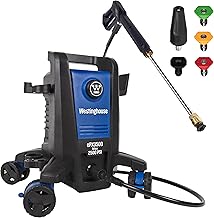
Westinghouse ePX3500
The most complete all-rounder here: 2,500 max PSI paired with 1.76 GPM gives you enough flow to rinse a whole car in one pass, and the anti-tipping base plus steel wand feel a class above the usual plastic assemblies. The onboard soap tank handles routine washes, and a separate foam cannon turns it into a proper touchless setup.
Sun Joe SPX3000
A deservedly popular workhorse, and the honest 2,030 PSI PWMA rating tells you more than the 2,500 headline figure does. Its twin detergent tanks are genuinely useful — wheel cleaner in one, shampoo in the other — and the total-stop system keeps it quiet between passes.
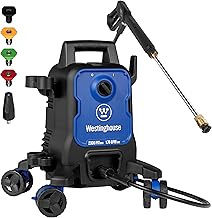
Westinghouse ePX3100
Effectively the ePX3500 with 200 PSI shaved off, which is irrelevant for cars and helpful for your budget. If vehicles are the main job and driveways are occasional, this is the smarter buy of the two Westinghouse units.
Cordless 1450 PSI Handheld Washer
The right tool for anyone without an outdoor tap: it draws from a bucket, weighs almost nothing, and its 1,450 PSI sits comfortably inside the safe band for paint. Expect to work in sections and keep a spare battery on hand for a full vehicle.
4-Nozzle Washer with Foam Cannon (Bright Green)
A sensible entry point that arrives with the four tips and the foam cannon you’d otherwise buy separately, so there’s no shopping list on day one. Build quality is basic rather than bad — fine for a weekly wash, less so for daily heavy use.
Frequently Asked Questions
What PSI is safe for car paint?
Around 1,200–1,900 PSI at the nozzle is the sweet spot. Higher-rated machines are safe if you fit a 25° or 40° tip and hold roughly 12 inches from the panel.
Do I really need a foam cannon?
If you care about swirl marks, yes. Pre-soaking with thick foam lifts most grit before a mitt ever touches the surface, which is where nearly all wash-induced scratching originates.
Is a cordless washer powerful enough?
For cars, comfortably so. The limitation is runtime and flow rate, not pressure — plan on two batteries for a family SUV.
Can I use hot water?
Only if the manufacturer permits it, and never above the stated inlet limit. Most consumer electric units are cold-feed only, and hot water will destroy the pump seals.
Final Thoughts
For most buyers the Westinghouse ePX3500 is the machine to get, with the ePX3100 offering nearly identical car-washing performance for less. Choose the Sun Joe SPX3000 if dual detergent tanks and proven long-term reliability appeal more than a steel wand, and keep the cordless handheld in mind if you’re washing without a hose bib.