Key takeaways
- Decibels in context: A rating of 50–55 dBA at 23 feet is roughly a quiet conversation; anything at 65 dBA or above will intrude through a closed window. Remember decibels are logarithmic — a 10-point difference sounds about twice as loud to the human ear.
- Battery vs. gas: Lithium power stations are silent apart from a small cooling fan, making them the only category safe and comfortable to run indoors. Gas inverters cost far less per watt-hour but must stay outside, well away from windows.
- Inverter technology and ECO mode: True inverter units vary engine speed with demand, so overnight loads like a fridge and a CPAP machine keep the motor near idle instead of screaming at full throttle.
- Realistic wattage: Add your running watts, then leave 25% headroom for startup surges. A refrigerator, a few lamps, a router, and a fan usually fit comfortably inside 2000W.
- Safety and placement hardware: Insist on a CO sensor that shuts the unit down automatically, plus handles or wheels light enough that you can actually move it 20 feet from the house rather than settling for 5.
What's inside
Anyone who has slept through a power outage in summer knows the real problem isn’t the heat — it’s the noise. A generator rumbling outside the bedroom window at 72 decibels sits right in the frequency range that keeps the brain in light, fragmented sleep, even when you don’t fully wake. As a sleep-wellness writer, I spend most of my time helping people quiet their bedrooms: heavier curtains, softer bed frames, rugs that absorb footfall. A loud generator undoes all of it in one night, and the fatigue that follows tends to linger for days.
This guide approaches portable generators the way I’d approach any bedroom appliance — by asking how it behaves at 2 a.m. Below you’ll find the quietest portable units worth considering in 2026, including inverter generators with genuinely refined engines and battery power stations that produce no combustion noise at all. I’ve noted where each model earns its place, which ones belong closest to the house, and which are better parked at the far end of the driveway.
As an Amazon Associate we earn from qualifying purchases.


🛒 Best Price Today on Amazon
Prime members get fast, free shipping on everything above, plus member-only deals. New members get a 30-day free trial — cancel anytime.
How to Choose a Portable Quiet Generator (2026)
- Decibels in context: A rating of 50–55 dBA at 23 feet is roughly a quiet conversation; anything at 65 dBA or above will intrude through a closed window. Remember decibels are logarithmic — a 10-point difference sounds about twice as loud to the human ear.
- Battery vs. gas: Lithium power stations are silent apart from a small cooling fan, making them the only category safe and comfortable to run indoors. Gas inverters cost far less per watt-hour but must stay outside, well away from windows.
- Inverter technology and ECO mode: True inverter units vary engine speed with demand, so overnight loads like a fridge and a CPAP machine keep the motor near idle instead of screaming at full throttle.
- Realistic wattage: Add your running watts, then leave 25% headroom for startup surges. A refrigerator, a few lamps, a router, and a fan usually fit comfortably inside 2000W.
- Safety and placement hardware: Insist on a CO sensor that shuts the unit down automatically, plus handles or wheels light enough that you can actually move it 20 feet from the house rather than settling for 5.
The Best Portable Quiet Generators of 2026, Reviewed
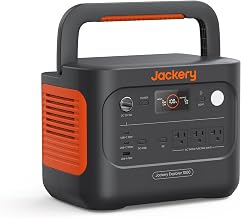
Jackery Explorer 1000 v2
This is the unit I recommend to light sleepers first: 1070Wh of LiFePO4 capacity with no exhaust, no fumes, and no engine note — just an occasional fan you’ll stop noticing within a night. It comfortably carries a CPAP, a fan, and phone charging through until morning, and the one-hour fast charge means you can top it up between storm bands.
DJI Power 2000
At 2048Wh and 3000W of stable output, this is the battery station for households that want the fridge, the router, and a bedroom air conditioner running without a whisper of combustion noise. It’s heavier and pricier than the Jackery, but the compact footprint and quick recharge make it the strongest silent option for whole-night, whole-room backup.
2500W Super Quiet Inverter Generator
Among the gas units here, this one strikes the best balance between output and restraint — ECO mode drops the engine to a low, steady hum that’s tolerable at the far side of a yard. The built-in CO shutoff and genuinely light chassis mean you can position it properly instead of compromising for convenience.
Oxseryn 2800W Portable Inverter Generator
At 39 pounds with a 1.1-gallon tank and fuel shutoff, this is a sensible pick if you need real wattage but expect to carry the generator between the house, the campsite, and the trailer. Run it in ECO mode overnight and keep it downwind — the fuel shutoff also spares you the smell of stale gas in the garage.
2000W Portable Inverter Generator
The most affordable way into quiet inverter power, and enough for the essentials: refrigerator, lights, medical devices, and a fan. The CO minder and fuel shutoff are the features that matter most here, and the modest engine size works in your favor acoustically.
Frequently Asked Questions
How far from the house should a gas generator sit?
At least 20 feet, with the exhaust pointed away from doors and windows. This is a carbon monoxide requirement first and a sleep consideration second — though the distance helps enormously with both, since sound pressure drops sharply with every few feet.
Can I run a generator in the bedroom or garage?
Never a gas generator, under any circumstances, even with the garage door open. Battery power stations like the Jackery or DJI produce no exhaust and are designed for indoor use, which is precisely why they suit bedrooms.
Will a battery station last all night?
For sleep-critical loads, yes. A CPAP typically draws 30–60W, so a 1000Wh station can run one for multiple nights; adding a refrigerator or air conditioner is what pushes you toward 2000Wh capacity.
Does ECO mode actually reduce noise?
Meaningfully, yes. By matching engine speed to load rather than holding a fixed RPM, ECO mode can trim several decibels during low-demand overnight hours — enough to move a generator from intrusive to merely present.
Final Thoughts
If protecting your sleep is the priority, start with the Jackery Explorer 1000 v2 for silent bedside-safe backup, or step up to the DJI Power 2000 when you need to carry heavier household loads through the night. For those who need extended fuel-based runtime, the 2500W Super Quiet Inverter is the most considerate neighbor of the gas options here — and pairing it with a small battery station for overnight hours gives you the quietest possible setup.