Key takeaways
- Seat-to-table clearance: Aim for 10–12 inches between the seat surface and the underside of the tabletop. Less than that and you’ll perch forward; more and you’ll shrug upward. Both patterns create the low-grade neck and shoulder tension people carry straight into bed.
- Back support over bench seating: Benches maximize capacity and look wonderful, but they offer no lumbar support. If your household lingers over dinner — which is exactly the habit you want — pair a bench on one side with genuinely supportive chairs on the other.
- Material transparency: Solid wood, engineered wood, acacia veneer, and MDF all behave differently over a decade. None is disqualifying, but a listing that names its materials plainly is a listing you can trust on the rest of its specs too.
- Footprint versus flow: Leave 36 inches of walking clearance around the table. Cramped circulation makes a room feel subtly stressful, and rooms that feel stressful get used less. Extendable tables solve this elegantly in tight spaces.
- Surface warmth and light behavior: Matte and mid-tone finishes scatter light softly, which matters if you dim the room in the evening. High-gloss surfaces bounce overhead light directly into your eyes — the opposite of what you want after sunset.
What's inside
As someone who spends most of my professional life talking about sleep, I’ve learned that the bedroom is rarely where poor rest begins. It begins at the table. Late, rushed, hunched-over dinners eaten standing at a counter or balanced on a couch cushion push digestion later into the night, keep cortisol elevated past sunset, and blur the boundary between “day mode” and “wind-down mode” that your circadian system depends on. A dining room set is not furniture for eating. It is infrastructure for the evening ritual that tells your body the day is closing.
The trouble is that shopping for one is genuinely confusing. Listings blur solid wood with veneer, seat six people at a table built for four, and quote heights that leave you eating with your shoulders up around your ears. This guide takes a different angle: I evaluate dining sets the way I’d evaluate a mattress or a pillow — on ergonomics, seat depth, surface height, material honesty, and whether the whole arrangement invites you to linger rather than escape. Below are the sets I’d recommend to a client trying to build a calmer, earlier, more restorative dinner habit in 2026.
As an Amazon Associate we earn from qualifying purchases.


🛒 Best Price Today on Amazon
Prime members get fast, free shipping on everything above, plus member-only deals. New members get a 30-day free trial — cancel anytime.
How to Choose a Place To Buy Dining Room Set (2026)
- Seat-to-table clearance: Aim for 10–12 inches between the seat surface and the underside of the tabletop. Less than that and you’ll perch forward; more and you’ll shrug upward. Both patterns create the low-grade neck and shoulder tension people carry straight into bed.
- Back support over bench seating: Benches maximize capacity and look wonderful, but they offer no lumbar support. If your household lingers over dinner — which is exactly the habit you want — pair a bench on one side with genuinely supportive chairs on the other.
- Material transparency: Solid wood, engineered wood, acacia veneer, and MDF all behave differently over a decade. None is disqualifying, but a listing that names its materials plainly is a listing you can trust on the rest of its specs too.
- Footprint versus flow: Leave 36 inches of walking clearance around the table. Cramped circulation makes a room feel subtly stressful, and rooms that feel stressful get used less. Extendable tables solve this elegantly in tight spaces.
- Surface warmth and light behavior: Matte and mid-tone finishes scatter light softly, which matters if you dim the room in the evening. High-gloss surfaces bounce overhead light directly into your eyes — the opposite of what you want after sunset.
The Best Place To Buy Dining Room Set (2026)s Reviewed
HIPIHOM 70.9″ Dining Table Set with 2 Benches
At nearly six feet long, this walnut-finish rectangular table comfortably seats six to eight, and the double-bench configuration makes it the most sociable option here — ideal for households where dinner is genuinely communal rather than sequential. Just be aware that backless benches suit shorter, livelier meals better than two-hour lingering, so consider adding two supportive end chairs.
Ashley Skempton 7-Piece Dining Set
The 60-inch two-tone Skempton is my default recommendation for most families: solid and engineered wood with acacia veneer, cushioned polyester seating, and a scale that fits real dining rooms without dominating them. The padded seats are the quiet advantage — they remove the physical excuse to leave the table early.
RIVOVA Black Velvet Dining Chairs, Set of 6
If you already own a table you love, upgrading only the seating is the highest-leverage change you can make. These curved-backrest velvet chairs provide the mid-back contact that flat wooden seats lack, and the black wood legs read as intentional against almost any tabletop tone.
iPormis 5-Piece Extendable Dining Set
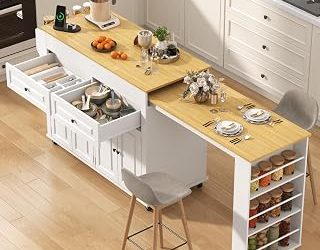
The most space-intelligent set on this list: a mid-century metal-and-MDF table that extends to host four to eight, with two benches and two square stools that tuck fully away. For apartments, this is how you protect the 36 inches of clearance that keeps a small dining area from feeling like an obstacle course.
Ashley Rokane 7-Piece Dining Set
Rokane’s warm brown finish and substantial proportions give a dining room the visual weight that makes it feel like a destination rather than a pass-through. It seats six properly — not optimistically — and the matte surface behaves beautifully under dimmed evening lighting.
Frequently Asked Questions
Does eating at a table really affect sleep?
Indirectly but meaningfully. A seated, seated-together dinner tends to happen earlier, last longer, and involve less distracted overeating than counter or couch eating. Finishing your last substantial meal two to three hours before bed is one of the more reliable levers in sleep hygiene.
Bench or chairs for a family with kids?
Benches win on capacity and cleanup; chairs win on posture and boundaries. A hybrid — bench on the wall side, chairs facing out — is what I recommend most often, and sets like the Ashley 6-piece with bench are built for exactly that compromise.
Is engineered wood a dealbreaker?
No. Engineered wood and quality veneers resist seasonal expansion better than some solid hardwoods and keep costs sane. What matters more is joinery, leg construction, and honest material labeling.
What table size do I need for six people?
Roughly 60 inches for six seated comfortably, and 70 inches or more if you want six to eight without elbow negotiation. Measure your room first, then subtract 72 inches for clearance on both sides.
Final Thoughts
For most homes, the Ashley Skempton 7-piece hits the best balance of cushioned comfort, honest materials, and sensible scale. Choose the HIPIHOM 70.9″ set if you host frequently and want length to spare, or the iPormis extendable set if you’re building an evening dinner ritual inside a small footprint — the surest way to make that ritual stick is to remove every physical reason to cut it short.