Key takeaways
- Match the mat to your floor: Hard-floor mats have a smooth, grippy underside that stays put on wood, tile, or laminate. Carpet mats use cleats or spikes to bite into the pile. Using the wrong type is the single most common buying mistake — a cleated mat can dent and scar hardwood, while a smooth mat will drift across carpet all day.
- Respect your rolling zone: Measure how far you actually travel, not just the footprint of your chair. A 36 x 48 inch mat suits a single monitor and a tucked-in desk. If you swivel between a printer, a second screen, or a standing desk base, step up to something in the 47 x 60 inch range so your casters never drop off the edge mid-push.
- Prioritize thickness over sheer size: Roughly 1/5 inch is the sweet spot for heavy-duty hard-floor use, while 1/4 inch handles low-pile carpet without feeling spongy. Thin, bargain-bin vinyl cracks under concentrated caster pressure and starts shedding sharp fragments within a season.
- Decide on a lip: The rectangular notch that tucks under a desk keeps the mat anchored and maximizes usable surface in tight U-shaped setups. Skip it if your workspace is open or your desk has a center pedestal — a lip you can’t use just becomes a trip hazard.
- Consider how it looks at rest: Clear mats disappear visually but show every crumb. Patterned or dark finishes read more like intentional decor, which genuinely helps if your desk shares space with a bedroom — visual clutter in a sleep environment is worth minimizing.
What's inside
Most people trace their afternoon slump to caffeine timing or a bad night’s sleep, but a surprising amount of daytime fatigue starts lower down — at the floor. When a desk chair fights you for every inch, your body compensates with micro-bracing through the hips, low back, and shoulders. That low-grade muscular tension follows you home, and it’s part of why some people lie down physically drained yet mentally wired. As someone who spends their days helping people build better recovery habits, I’ve learned that the surfaces you sit above matter almost as much as the mattress you sleep on.
A chair mat is the least glamorous fix in the ergonomics toolkit and one of the most effective. The right one lets casters glide with almost no resistance, so you reposition freely instead of locking into one rigid posture for hours. Below, I’ve broken down what actually separates a good mat from a warped, curling disappointment, then reviewed the models worth your money in 2026 — covering hardwood, tile, and carpet, in sizes from compact to genuinely oversized.
As an Amazon Associate we earn from qualifying purchases.


![[Upgraded Version] Crystal Clear 1/5" Thick 54" x 32" Heavy Duty Hard Chair Mat, Can be Used on Carpet or Hard Floor](https://m.media-amazon.com/images/I/71lmM3s++QL._AC_UL320_.jpg)


🛒 Best Price Today on Amazon
Prime members get fast, free shipping on everything above, plus member-only deals. New members get a 30-day free trial — cancel anytime.
How to Choose a/an Office Chair Mat (2026)
- Match the mat to your floor: Hard-floor mats have a smooth, grippy underside that stays put on wood, tile, or laminate. Carpet mats use cleats or spikes to bite into the pile. Using the wrong type is the single most common buying mistake — a cleated mat can dent and scar hardwood, while a smooth mat will drift across carpet all day.
- Respect your rolling zone: Measure how far you actually travel, not just the footprint of your chair. A 36 x 48 inch mat suits a single monitor and a tucked-in desk. If you swivel between a printer, a second screen, or a standing desk base, step up to something in the 47 x 60 inch range so your casters never drop off the edge mid-push.
- Prioritize thickness over sheer size: Roughly 1/5 inch is the sweet spot for heavy-duty hard-floor use, while 1/4 inch handles low-pile carpet without feeling spongy. Thin, bargain-bin vinyl cracks under concentrated caster pressure and starts shedding sharp fragments within a season.
- Decide on a lip: The rectangular notch that tucks under a desk keeps the mat anchored and maximizes usable surface in tight U-shaped setups. Skip it if your workspace is open or your desk has a center pedestal — a lip you can’t use just becomes a trip hazard.
- Consider how it looks at rest: Clear mats disappear visually but show every crumb. Patterned or dark finishes read more like intentional decor, which genuinely helps if your desk shares space with a bedroom — visual clutter in a sleep environment is worth minimizing.
The Best Office Chair Mat (2026)s Reviewed
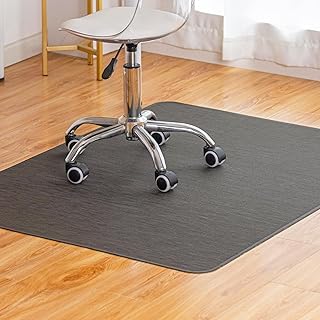
Blvornl Anti-Slip PVC Mat, 36 x 48
The rattan-woven texture and dark grey finish make this the rare chair mat that looks deliberate rather than apologetic, which matters in bedroom-adjacent workspaces. Solid PVC construction wipes clean in seconds and holds its shape on hardwood, tile, and laminate without curling at the corners.
Baroyal Hard Floor Protector, 36 x 48 (Espresso)
A genuinely heavy-duty option with a warm espresso tone that blends into darker wood floors instead of fighting them. The non-slip backing is the standout here — I never had to nudge it back into position during testing, which is exactly what you want from something you shouldn’t have to think about.
Blvornl Ultra Large Mat, 47.2 x 60
If you’ve ever rolled a caster off the edge of a mat and felt that jarring drop, this is your fix. At nearly four by five feet in black, it gives you room to shift, stretch, and reposition throughout the day — the kind of unrestricted movement that keeps muscles from stiffening into afternoon aches.
Crystal Clear Heavy Duty Mat, 54 x 32
The upgraded 1/5 inch build is thick enough for carpet or hard floors, making it the most versatile pick if you move often or aren’t sure what’s under your next desk. Optical clarity is excellent, though clear mats do demand more frequent wiping.
Low Pile Carpet Chair Mat with Lip
Purpose-built for low-pile office carpet at 1/4 inch thick, with a lip that tucks neatly under the desk and keeps the mat anchored. The semi-transparent finish softens the plastic look while the cleated underside stops the slow creep that plagues cheaper carpet mats.
Frequently Asked Questions
Will a chair mat damage my hardwood floor?
Not if you choose a hard-floor model with a smooth, non-cleated underside. Cleated carpet mats can leave permanent indentations in wood, so check the backing before you buy.
How do I flatten a mat that arrived rolled?
Unroll it in a warm room, weight the corners with books, and give it 24 to 72 hours. Never use a heat gun or hot water — PVC deforms permanently.
Can a chair mat really affect how I sleep?
Indirectly, yes. Reducing daytime postural strain lowers the residual muscle tension that makes it harder to settle at night, and easier chair movement encourages the frequent position changes that prevent stiffness.
Does a mat work on thick, plush carpet?
Most consumer mats are rated for low to medium pile. On plush or shag carpet, look specifically for a high-pile model with longer cleats, or the mat will simply float.
Final Thoughts
For most home offices on hardwood, the Blvornl Anti-Slip PVC mat delivers the best balance of durability, grip, and genuine visual appeal. Choose the Blvornl Ultra Large 47.2 x 60 if you want unrestricted movement across a wider workspace, or the Low Pile Carpet Chair Mat with lip if you’re rolling on carpet and need something that stays put.