Key takeaways
- Seat pan depth and edge shape: You want two to three finger-widths between the seat edge and the back of your knee, and a front edge that curves downward. A flat, deep pan digs into the underside of the thigh and starves circulation, which is exactly what makes hips feel stiff by evening.
- Hip angle above 90 degrees: Sitting bolt upright clamps the hip joint shut. Look for a tilt mechanism or a seat that can angle slightly forward so your torso-to-thigh angle opens to 100–110 degrees, taking tension off the flexors and the front of the capsule.
- Pressure relief under the sit bones: Memory foam and pocket-spring cushioning matter more than thickness. A coccyx cutout or saddle-shaped contour redirects load onto the fleshier parts of the pelvis rather than concentrating it on two bony points.
- Weight rating with margin: Choose a chair rated well above your body weight. Overloaded foam bottoms out within months, and once the cushion collapses, your pelvis tilts asymmetrically — a common trigger for one-sided hip pain.
- Lumbar support that reaches the pelvis: Support placed too high does nothing for the hips. Adjustable or inflatable lumbar pads let you position the pressure at the belt line, where it actually holds the pelvis neutral.
What's inside
Hip pain rarely announces itself at 9 a.m. It shows up around hour four of a workday, as a deep ache in the outer hip or a hot line running from the tailbone down the back of the thigh — and then it follows you to bed. As someone who spends most of my working life studying recovery and rest quality, I can tell you that the seat you occupy for eight hours is one of the most underrated variables in how well you sleep. Compressed hip flexors, a pelvis tipped backward for hours, and a seat pan pressing into your sit bones all leave the tissue irritated and twitchy long after you stand up.
This guide approaches office seating the way I’d approach a mattress: as a pressure-management problem first, an adjustability problem second. Below you’ll find chairs and cushions selected for how they distribute load across the pelvis, how much they let the hip angle open, and how forgiving they are for heavier bodies and longer sitting stints. I’ve also included what to check before you buy, plus answers to the questions I hear most from clients whose nighttime hip pain traces straight back to their desk.
As an Amazon Associate we earn from qualifying purchases.


How to Choose an Office Chair For Hip Pain (2026)
- Seat pan depth and edge shape: You want two to three finger-widths between the seat edge and the back of your knee, and a front edge that curves downward. A flat, deep pan digs into the underside of the thigh and starves circulation, which is exactly what makes hips feel stiff by evening.
- Hip angle above 90 degrees: Sitting bolt upright clamps the hip joint shut. Look for a tilt mechanism or a seat that can angle slightly forward so your torso-to-thigh angle opens to 100–110 degrees, taking tension off the flexors and the front of the capsule.
- Pressure relief under the sit bones: Memory foam and pocket-spring cushioning matter more than thickness. A coccyx cutout or saddle-shaped contour redirects load onto the fleshier parts of the pelvis rather than concentrating it on two bony points.
- Weight rating with margin: Choose a chair rated well above your body weight. Overloaded foam bottoms out within months, and once the cushion collapses, your pelvis tilts asymmetrically — a common trigger for one-sided hip pain.
- Lumbar support that reaches the pelvis: Support placed too high does nothing for the hips. Adjustable or inflatable lumbar pads let you position the pressure at the belt line, where it actually holds the pelvis neutral.
The Best Office Chairs For Hip Pain (2026) Reviewed
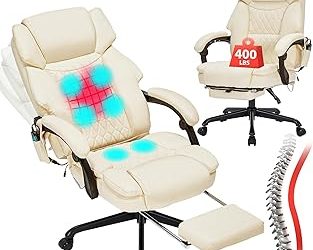
GTPLAYER Big and Tall Gaming Chair
The 3D saddle-shaped cushion is the standout here — it cradles the pelvis rather than letting it slide forward, and the pocket-spring layer resists the flattening that ruins cheaper foam seats. The 400 lb rating and footrest make it a strong pick if you take reclined breaks during the day.
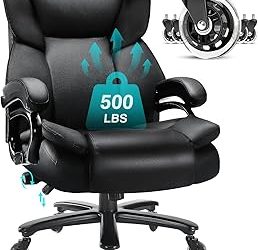
CIOMAN 500lbs Big and Tall Executive Chair
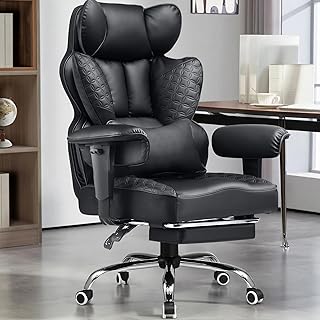
The inflatable lumbar bladder is genuinely useful, letting you dial support in at exactly your belt line instead of guessing. With a wide cushion, a 500 lb capacity, and a rocking function that keeps the hips moving, this is my recommendation for larger frames and all-day sitting.
Lexeme X Large Memory Foam Seat Cushion
A smart upgrade if your chair is otherwise fine but the seat has gone flat. The oversized footprint suits wider hips better than most coccyx pads, and the tailbone relief cutout takes meaningful pressure off the sacrum during long sessions.
Ergonomic Mesh Office Chair with 4D Arms
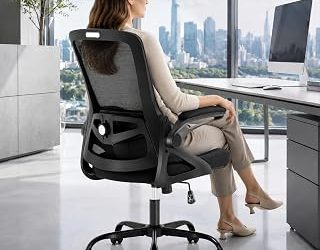
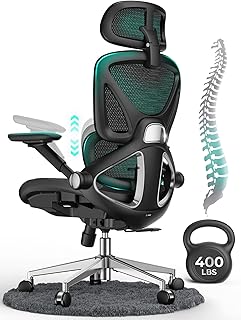
Breathable mesh plus a three-level tilt backrest gives you the open hip angle that most task chairs lack, and the 4D flip-up arms let you get close to the desk without hiking your shoulders. Best suited to average-build users who run warm.
Ergonomic Office Chair for Back & Neck Pain Relief
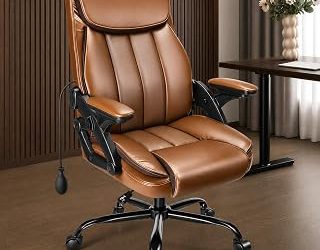
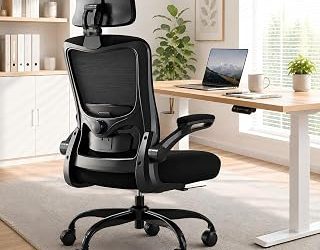
The virgin foam seat holds its shape noticeably better than shredded-foam alternatives, and the 2D lumbar adjustment covers both height and depth. The tilt-and-rock function makes it easy to unload the hips for a few minutes without leaving your desk.
Frequently Asked Questions
Can an office chair really affect my sleep?
Indirectly, yes. Hip flexors held short for eight hours stay short at night, which pushes many people into restless position changes and early-morning aching. Reducing daytime compression often improves how easily you settle.
Should I choose a cushion or a whole new chair?
If your chair still adjusts properly and only the seat foam has failed, a quality cushion is the efficient fix. If the backrest can’t support your pelvis or the seat is too deep, replace the chair.
Why does only one hip hurt?
Usually asymmetry: a collapsed seat corner, a wallet in one pocket, or a habit of leaning on one armrest. Check that your weight sits evenly on both sit bones before blaming the joint.
How often should I get up?
Aim for a brief position change every 30 minutes and a genuine standing break each hour. No chair replaces movement — it simply makes the sitting intervals less costly.
Final Thoughts
For most readers dealing with hip pain, the CIOMAN 500lbs Executive Chair offers the best combination of pelvic support, cushion width, and long-term durability, while the GTPLAYER Big and Tall Chair is the better choice if you value its saddle-shaped seat and footrest for reclined recovery breaks. If you’re working with a chair that’s structurally sound, start with the Lexeme X Large Memory Foam Cushion — it’s the lowest-cost intervention with the highest chance of noticeable overnight relief.