Key takeaways
- Buy capacity headroom, not exact fit: Choose a chair rated at least 100–150 pounds above your body weight. Static ratings are measured under controlled load, not the dynamic force of sitting down quickly or leaning back, so margin is what keeps a cylinder from sinking after month three.
- Prioritize cushion architecture over cushion thickness: A four-inch slab of cheap foam compresses into a two-inch pancake. Independently wrapped pocket springs beneath high-density foam distribute load across the seat pan and resist the permanent divot that causes pelvic tilt and, eventually, evening back pain.
- Inspect the base and cylinder class: Look for a five-point steel or reinforced nylon base with a wide footprint and a Class 4 gas lift. Rubber or PU-coated casters roll quieter, protect flooring, and reduce the micro-jolts that keep you fidgeting.
- Demand adjustable lumbar, not sculpted plastic: A fixed lumbar bump positioned for a 5’8″ frame does nothing for a 6’2″ one. Height- or depth-adjustable support lets you place pressure exactly at L3–L5, where sustained sitting does its damage.
- Check seat width, recline range, and armrest clearance: A 21-inch or wider seat pan prevents thigh compression, a 135-degree recline lets you unload the discs periodically, and flip-up arms make it easy to tuck under a desk without twisting your torso to get in.
What's inside
Most chairs sold as “office chairs” are engineered around an assumed occupant of roughly 250 pounds. Above that threshold, the failure points arrive in a predictable order: the seat foam bottoms out within a few months, the gas cylinder starts drifting downward mid-afternoon, and the base develops a subtle wobble that your body compensates for without ever telling you. As someone who spends most of my working life studying recovery and sleep architecture, I see the downstream effect constantly — people who sit poorly all day arrive at bedtime with hip flexor tightness, low-back irritation, and a nervous system that never quite downshifted. Restless nights often begin in a chair, not a bed.
This guide focuses on seating built specifically for larger frames, evaluated on the criteria that actually predict long-term comfort: honest weight ratings, cushion construction, cylinder and base class, lumbar adjustability, and whether the chair reclines far enough to give your spine genuine relief during the day. Every option below is rated for 400 pounds or more, and each earned its place by holding up under eight-hour workdays rather than showroom sitting.
As an Amazon Associate we earn from qualifying purchases.


🛒 Best Price Today on Amazon
Prime members get fast, free shipping on everything above, plus member-only deals. New members get a 30-day free trial — cancel anytime.
How to Choose an Office Chair For Heavy People (2026)
- Buy capacity headroom, not exact fit: Choose a chair rated at least 100–150 pounds above your body weight. Static ratings are measured under controlled load, not the dynamic force of sitting down quickly or leaning back, so margin is what keeps a cylinder from sinking after month three.
- Prioritize cushion architecture over cushion thickness: A four-inch slab of cheap foam compresses into a two-inch pancake. Independently wrapped pocket springs beneath high-density foam distribute load across the seat pan and resist the permanent divot that causes pelvic tilt and, eventually, evening back pain.
- Inspect the base and cylinder class: Look for a five-point steel or reinforced nylon base with a wide footprint and a Class 4 gas lift. Rubber or PU-coated casters roll quieter, protect flooring, and reduce the micro-jolts that keep you fidgeting.
- Demand adjustable lumbar, not sculpted plastic: A fixed lumbar bump positioned for a 5’8″ frame does nothing for a 6’2″ one. Height- or depth-adjustable support lets you place pressure exactly at L3–L5, where sustained sitting does its damage.
- Check seat width, recline range, and armrest clearance: A 21-inch or wider seat pan prevents thigh compression, a 135-degree recline lets you unload the discs periodically, and flip-up arms make it easy to tuck under a desk without twisting your torso to get in.
The Best Office Chairs For Heavy People (2026), Reviewed
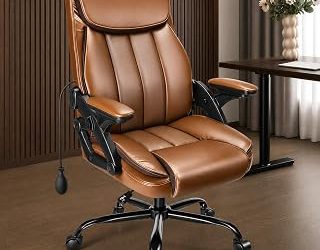
650lbs Big and Tall Leather Executive Chair
This is the most reassuring chair in the group for anyone who has broken a previous seat, pairing a genuinely stout frame with thick padding and adjustable lumbar support that stays put through a full workday. The quiet rubber casters are a small detail that matters more than buyers expect in shared or open-plan spaces.
600lbs Heavy Duty Chair with 5D Flip Arms
The standout here is adjustability: 5D armrests move in enough directions to accommodate broad shoulders and varied desk heights, which is the difference between neutral shoulders and eight hours of low-grade trapezius tension. Pocket-spring cushioning underneath keeps the seat from flattening out over time.
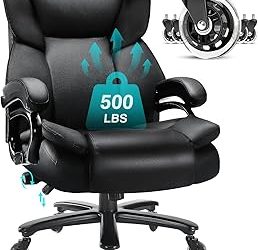
500lbs Big and Tall Chair with Adjustable Lumbar Support
A well-balanced pick for buyers in the 250–350 pound range who want pocket-spring comfort without an oversized footprint. The lumbar adjustment range is generous, and the high back offers real head and neck contact when you lean back rather than the token headrest most chairs provide.
400lbs Executive Chair with Flip-Up Armrests
The smartest value option, with breathable PU leather that runs noticeably cooler than heavier upholstery — worth considering if you overheat easily, since thermoregulation during the day influences how readily you cool down at night. Flip-up arms make it practical in tight home-office setups.
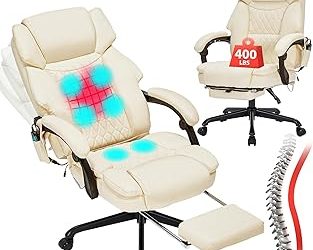
Massage Chair with Foot Rest and Heat
Six-point vibration and lumbar heat won’t substitute for movement, but gentle warmth genuinely helps relax paraspinal muscles, and the retractable footrest turns this into a legitimate twenty-minute recovery station between tasks. A strong choice for anyone managing chronic lower-back stiffness.
Frequently Asked Questions
Can my office chair really affect my sleep?
Indirectly, yes. Poor seated posture produces hip flexor shortening and lumbar irritation that surface as difficulty settling into a comfortable sleeping position, and daytime discomfort raises baseline muscle tension that carries into the evening.
How much weight capacity should I look for?
Add at least 100 pounds to your body weight. Ratings reflect static load under ideal conditions, so a 400-pound chair is best suited to users around 275–300 pounds for multi-year durability.
Are pocket-spring seats worth the premium?
For heavier users, clearly. Springs share load across the pan instead of concentrating it under the sit bones, which delays the foam collapse that ruins most chairs within a year.
Leather or mesh for big and tall seating?
Mesh breathes better but rarely offers the tensile strength needed at high capacities. Padded PU leather with a ventilated backrest design is usually the more durable compromise.
Final Thoughts
For most buyers, the 650lbs Big and Tall Leather Executive Chair offers the widest safety margin and the most consistent all-day support, while the 600lbs Heavy Duty Chair with 5D Flip Arms is the better fit if precise armrest positioning matters to your setup. If recovery is your priority — and it should be, given how directly daytime tension shapes nighttime rest — the Massage Chair with Foot Rest and Heat earns its keep.