Key takeaways
- Steel gauge and load rating: Lower gauge numbers mean thicker steel. Look for 16- to 18-gauge frames and a stated load capacity — anything rated near 1,750 lbs will shrug off engine components without the top bowing over time.
- Drawer glides: Ball-bearing slides are non-negotiable. They open smoothly under load and, just as importantly, close without the metallic bang that carries through drywall at 10 p.m. Test for full extension so back-of-drawer tools aren’t lost tools.
- Caster quality and noise: Cheap hard-plastic wheels chatter across concrete. Prioritize large-diameter casters with at least two locking swivels; quieter rolling protects both your floors and anyone sleeping upstairs.
- Worktop material: Solid hardwood tops absorb impact, dampen sound, and won’t telegraph vibration the way bare steel does. Wood is also gentler on finished parts you set down mid-repair.
- Security and organization extras: A single central lock, pegboards, hooks, and an integrated power strip turn a box into a workstation — and make “everything back in its place” the easiest option rather than the disciplined one.
What's inside
Most garage projects don’t fall apart because of the wrench — they fall apart because of the fifteen minutes spent hunting for it. Sockets migrate into coffee cans, screwdrivers vanish under drop cloths, and what should have been a two-hour brake job stretches past midnight. That kind of low-grade friction has a cost beyond the calendar: it follows you inside, keeps your mind running laps after you’ve shut the lights off, and quietly eats into the wind-down time your body actually needs. As someone who spends most days talking to people about why they can’t switch off at night, I’ve come to see a chaotic workshop as a sleep problem wearing coveralls.
A well-built mechanic tool chest is the fix, and it does more than hold steel. It gives every tool a home so cleanup is a two-minute ritual instead of a decision-heavy chore, it rolls quietly enough that a late evening in the garage doesn’t wake the house, and it locks — which matters if you share a home with curious kids. Below, I’ve assessed six rolling chests and cabinets on build quality, drawer engineering, mobility, and how well they support a calm, repeatable end-of-session routine. Whether you need a compact roller for a single-car bay or a 72-inch workbench command center, there’s a match here.
As an Amazon Associate we earn from qualifying purchases.




🛒 Best Price Today on Amazon
Prime members get fast, free shipping on everything above, plus member-only deals. New members get a 30-day free trial — cancel anytime.
How to Choose a/an Mechanic Tool Chest (2026)
- Steel gauge and load rating: Lower gauge numbers mean thicker steel. Look for 16- to 18-gauge frames and a stated load capacity — anything rated near 1,750 lbs will shrug off engine components without the top bowing over time.
- Drawer glides: Ball-bearing slides are non-negotiable. They open smoothly under load and, just as importantly, close without the metallic bang that carries through drywall at 10 p.m. Test for full extension so back-of-drawer tools aren’t lost tools.
- Caster quality and noise: Cheap hard-plastic wheels chatter across concrete. Prioritize large-diameter casters with at least two locking swivels; quieter rolling protects both your floors and anyone sleeping upstairs.
- Worktop material: Solid hardwood tops absorb impact, dampen sound, and won’t telegraph vibration the way bare steel does. Wood is also gentler on finished parts you set down mid-repair.
- Security and organization extras: A single central lock, pegboards, hooks, and an integrated power strip turn a box into a workstation — and make “everything back in its place” the easiest option rather than the disciplined one.
The Best Mechanic Tool Chest (2026)s Reviewed
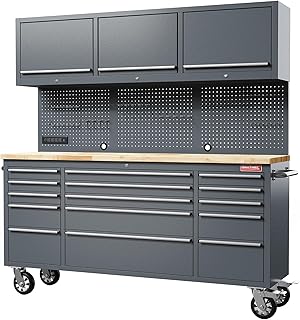
HAUTMEC 72″ Rolling Tool Chest (HT0428)
This is the full command center: 15 lockable drawers, three upper cabinets, 16-gauge steel, and a solid oak top that soaks up hammer strikes instead of ringing. The ETL-listed power strip and 51-hook pegboard mean chargers and hand tools stay off the bench, which is exactly why closing up shop takes minutes rather than a resigned sigh.
Garvee 60″ Rolling Tool Chest, 10 Drawers
A 1,750-lb load rating and built-in charging station make this the sweet spot for serious home mechanics who don’t have room for a 72-inch unit. Drawer depth is well varied, so bulky impact wrenches and thin wrench organizers each get an appropriate home.
19-Drawer Rolling Tool Chest with Wood Top
Nineteen drawers plus two upper cabinets gives you genuine one-tool-per-slot organization, which is the single biggest predictor of whether a system survives past month three. The wood top and heavy-duty casters make it a mobile workbench as much as storage.
Metal Rolling Garage Storage Cabinet with Pegboard
For those who store more bulk items than precision tools, this cabinet’s tall interior, dual pegboards, and ten hooks handle sprays, cordless kits, and cables that never fit neatly in drawers. The included workbench liner is a thoughtful touch that cuts sliding and rattling.
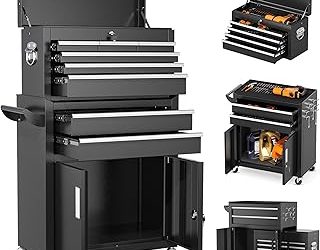
4-Drawer Rolling Tool Chest with Lock
Compact, lockable, and genuinely portable, this is the right call for apartment garages, shared spaces, or a second roller you park beside the vehicle. The lock is the standout feature for households with children.
Frequently Asked Questions
How many drawers do I actually need?
Count your tool categories, not your tools. Most home mechanics land comfortably between 8 and 12 drawers; go higher only if you’re committed to one category per drawer.
Is a wood top better than steel?
For home use, generally yes. Hardwood dampens noise and vibration, resists denting parts you set down, and can be sanded and re-oiled rather than replaced.
Will a rolling chest damage my garage floor?
Quality large casters distribute weight well, but on epoxy or sealed concrete, keep the wheels clean of grit and lock them when stationary to avoid scuffing.
Can I move a loaded chest by myself?
Short repositioning, yes. For relocating a fully loaded 60-inch or larger unit, empty the top drawers first to lower the center of gravity and recruit a second person.
Final Thoughts
If you have the wall space and want one purchase to last a decade, the HAUTMEC 72″ chest is the clear winner on steel, storage, and workspace integration. The Garvee 60″ delivers nearly the same capability in a friendlier footprint, while the compact 4-Drawer Rolling Tool Chest is the smart, lockable pick for tighter garages — and any of the three will hand you back the quiet, orderly end to a workday that actually lets you sleep.