Key takeaways
- Match the fixture to your pitch: Purpose-built sloped housings typically accommodate roughly 0–45 degrees, while gimbal trims correct for pitch by tilting the lamp itself. Measure your slope with a phone inclinometer before buying, and remember that a fixture rated for 30 degrees on a 40-degree ceiling will spill light where you least want it.
- Insist on selectable color temperature: A 5-CCT switch is the single most valuable feature in a sleep space. Set 2700K in bedrooms and landings for evening use, and reserve 4000K or 5000K for stairwells, closets, and craft corners where visual clarity outranks circadian calm.
- Check the low end of the dimming range: Marketing copy loves “dimmable,” but the useful specification is how far down it goes. Fixtures that reach 5 percent output let you navigate a loft at 3 a.m. without triggering a full alerting response; anything that bottoms out at 20 percent will flood the room.
- Prioritize recessed depth and anti-glare optics: Deeply regressed lenses and baffled trims keep the diode itself hidden from view. On a slope, your line of sight to the light source is far more direct than on a flat ceiling, so shielding is not a luxury feature.
- Verify safety and moisture ratings: IC-rated housings can contact insulation directly, which is standard in attic conversions. Damp-rated trims belong in sloped bathroom ceilings and enclosed showers, and ETL or UL certification should be non-negotiable for anything wired into a joist bay.
What's inside
Slanted ceilings create a lighting problem that most fixtures were never engineered to solve. Hang a standard flush mount on a 30-degree pitch and it cants sideways like a listing ship; drop in an ordinary recessed can and the beam fires diagonally across the room, straight into the eyeline of anyone lying in bed. From a sleep-wellness perspective this matters more than aesthetics. Light that strikes the retina at a low, oblique angle in the evening is unusually effective at suppressing melatonin, which is precisely the opposite of what you want in an attic bedroom, a converted loft, or a finished A-frame where the ceiling slopes down toward the pillow.
This guide approaches slanted-ceiling lighting the way a sleep clinician would: prioritizing glare control, adjustable color temperature, and deep dimming range alongside the obvious mechanical requirement that the fixture actually sit correctly on a pitch. Below you will find sloped-specific canless downlights, gimbal retrofits that swivel the beam back to vertical, angled semi-flush fixtures for lower pitches, and track systems that let you aim light at walls and ceilings instead of faces. Each pick is evaluated for how it performs at 10 p.m., not just at noon.
As an Amazon Associate we earn from qualifying purchases.


How to Choose a Light For Slanted Ceiling (2026)
- Match the fixture to your pitch: Purpose-built sloped housings typically accommodate roughly 0–45 degrees, while gimbal trims correct for pitch by tilting the lamp itself. Measure your slope with a phone inclinometer before buying, and remember that a fixture rated for 30 degrees on a 40-degree ceiling will spill light where you least want it.
- Insist on selectable color temperature: A 5-CCT switch is the single most valuable feature in a sleep space. Set 2700K in bedrooms and landings for evening use, and reserve 4000K or 5000K for stairwells, closets, and craft corners where visual clarity outranks circadian calm.
- Check the low end of the dimming range: Marketing copy loves “dimmable,” but the useful specification is how far down it goes. Fixtures that reach 5 percent output let you navigate a loft at 3 a.m. without triggering a full alerting response; anything that bottoms out at 20 percent will flood the room.
- Prioritize recessed depth and anti-glare optics: Deeply regressed lenses and baffled trims keep the diode itself hidden from view. On a slope, your line of sight to the light source is far more direct than on a flat ceiling, so shielding is not a luxury feature.
- Verify safety and moisture ratings: IC-rated housings can contact insulation directly, which is standard in attic conversions. Damp-rated trims belong in sloped bathroom ceilings and enclosed showers, and ETL or UL certification should be non-negotiable for anything wired into a joist bay.
The Best Light For Slanted Ceiling (2026)s Reviewed
Maxxima 4″ Canless Sloped Anti-Glare LED Downlight
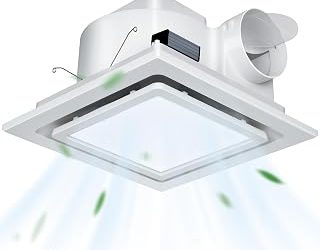
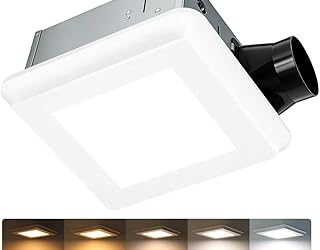
This is the most sleep-friendly fixture on the list: a genuinely sloped-specific canless design with anti-glare optics, 90 CRI, and five selectable color temperatures, so you can dial 2700K into a bedroom slope and forget about it. At 1000 lumens with IC rating and full dimming, it handles both general illumination and late-night wayfinding without ever putting a bare diode in your field of view.
Maxxima 5″ & 6″ Rotatable LED Retrofit Gimbal
If you already have existing cans on a pitch, this retrofit gimbal is the fastest fix available — it screws into the socket and rotates to bring the beam back to plumb. The black trim reduces perceived brightness at the aperture, which is a meaningful advantage when the ceiling angles down toward seating or a headboard.
Ensenior 4 Inch Gimbal LED Recessed Light (4 Pack)
With 90 degrees of tilt, 360 degrees of swivel, and dimming down to 5 percent, this four-pack is the most flexible value option for a loft or dormer. The damp and IC ratings mean a single set can serve a sloped bedroom ceiling and an adjoining bathroom without sourcing separate fixtures.
Industrial Black Semi Flush Mount Ceiling Light (2-Light)
For gentler pitches where recessed work is impractical, this two-light semi-flush fixture mounts cleanly and reads as intentional rather than compromised. Pair it with warm 2700K filament-style bulbs in a dining room or hallway; choose shades that direct light downward if the slope sits near eye level.
LED 2 Light Track Lighting Kit
Track is the strategist’s answer to a difficult slope: mount it along the pitch and aim both heads at walls or the ceiling peak for indirect, glare-free light. This compact black two-head kit is ideal for reading corners and small lofts, with the four-head white version scaling the same approach to open-plan attic rooms.
Frequently Asked Questions
Can I use standard recessed lights on a slanted ceiling?
Not well. A flat-ceiling housing installed on a pitch aims its beam at an angle, creating hot spots on walls and direct glare for anyone seated or lying down. Use a sloped-rated housing or a gimbal trim that can be tilted back to vertical.
What color temperature is best for a sloped bedroom ceiling?
Stay at 2700K or below for evening use. Warmer light carries less short-wavelength content, which reduces melatonin suppression in the hours before sleep. Selectable-CCT fixtures let you keep cooler settings available for daytime tasks.
How many lights does a sloped room need?
As a working rule, space 4-inch downlights roughly four feet apart along the slope, then reduce total output by dimming rather than by installing fewer fixtures. Multiple dim sources produce far less glare than one bright one.
Are canless fixtures safe in an insulated attic?
Yes, provided they are IC-rated, as the Maxxima sloped downlight is. IC rating permits direct contact with insulation, which is standard in most attic and cathedral ceiling assemblies.
Final Thoughts
For a sloped bedroom or loft where sleep quality is the priority, the Maxxima 4″ Canless Sloped Anti-Glare Downlight is the clear first choice thanks to its purpose-built geometry and shielded optics. Retrofitting existing cans is best handled by the Maxxima Rotatable Gimbal, while the Ensenior 4-Pack delivers the strongest combination of tilt range, deep dimming, and value for a full multi-room installation.