Key takeaways
- Center support, not just slat count: A king frame needs at least one center rail with its own legs running to the floor. Twenty slats mean little if the middle of the platform is unsupported — that’s where sag and the resulting hip-drop begin.
- Slat spacing under 3 inches: Foam and hybrid mattresses need gaps of roughly 2.5 to 3 inches to avoid bulging between slats, which voids most warranties and creates uneven pressure zones you’ll feel by morning.
- Noise control by design: Look for felt or rubber pads at every metal-to-wood contact point and bolted joints rather than hook-in brackets. Silence matters most for couples, where one partner’s movement shouldn’t register as sound in the other’s light-sleep cycle.
- Headboard height and surface: Upholstered panels around 40 to 45 inches support the head and neck comfortably for pre-sleep reading. Hard wood looks cleaner but needs pillows behind you; velvet and linen trap more warmth against the back of the neck.
- Clearance and extras that pull weight: Twelve inches or more beneath the frame turns dead space into storage for seasonal bedding. Built-in USB-C ports are genuinely useful — LED underglow, less so, unless dimmable enough not to disrupt melatonin production.
Most people shopping for a king bed frame are solving for looks first and sleep second — which is backward. A king mattress spans 76 inches, and every inch of that width needs even, unflexing support. When the center of the frame gives even slightly, the mattress follows, and your spine follows the mattress. Add a headboard that rattles against the wall each time you shift position, and you’ve built a bed that interrupts sleep architecture all night without ever fully waking you.
This guide looks at king frames with integrated headboards through a sleep-quality lens: how the slat system distributes load, whether the joinery stays silent after six months of use, how headboard height and padding affect the small rituals of reading or scrolling before lights out, and which storage and charging features actually earn a place in a bedroom rather than cluttering it. Below are six frames worth your attention in 2026, followed by a buying framework and reviews of the standouts.
Our top picks



As an Amazon Associate we earn from qualifying purchases at no extra cost to you. Ratings are shown as listed on Amazon.
🛒 Best Price Today on Amazon
Prime members get fast, free shipping on everything above, plus member-only deals. New members get a 30-day free trial — cancel anytime.
How to Choose a King Bed Frame With Headboard (2026)
- Center support, not just slat count: A king frame needs at least one center rail with its own legs running to the floor. Twenty slats mean little if the middle of the platform is unsupported — that’s where sag and the resulting hip-drop begin.
- Slat spacing under 3 inches: Foam and hybrid mattresses need gaps of roughly 2.5 to 3 inches to avoid bulging between slats, which voids most warranties and creates uneven pressure zones you’ll feel by morning.
- Noise control by design: Look for felt or rubber pads at every metal-to-wood contact point and bolted joints rather than hook-in brackets. Silence matters most for couples, where one partner’s movement shouldn’t register as sound in the other’s light-sleep cycle.
- Headboard height and surface: Upholstered panels around 40 to 45 inches support the head and neck comfortably for pre-sleep reading. Hard wood looks cleaner but needs pillows behind you; velvet and linen trap more warmth against the back of the neck.
- Clearance and extras that pull weight: Twelve inches or more beneath the frame turns dead space into storage for seasonal bedding. Built-in USB-C ports are genuinely useful — LED underglow, less so, unless dimmable enough not to disrupt melatonin production.
The Best King Bed Frames With Headboards (2026), Reviewed
GRUSIGN King Platform Bed Frame with Velvet Headboard
The adjustable-height legs are the quiet advantage here: you can run it low with a thick hybrid or raise it for storage clearance without swapping hardware. The velvet channel-tufted headboard is soft enough to lean against unaided, and the wooden slat deck accommodates a box spring if you’re keeping an older setup.
Novilla Linen Upholstered King Bed Frame
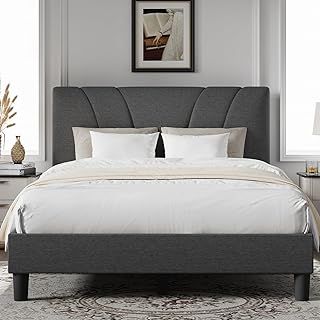
Novilla’s grey linen finish resists the heat retention that makes velvet feel clammy in warm bedrooms, and the heavy-duty feet with reinforced center support hold a king mattress flat without complaint. It’s the most bedroom-agnostic choice on this list — neutral enough to survive a redecoration.
Zinus Vivek Deluxe Wood Platform Bed
The slatted wood headboard gives this frame an airy, contemporary silhouette that doesn’t visually crowd smaller rooms, and Zinus’s slat-and-support engineering remains among the most consistently silent in this price bracket. Pair it with a pillow or two if you read in bed, since there’s no padding.
LIFEMENT Classic Wood Platform Bed, Walnut
A genuinely quiet frame with generous under-bed clearance and a warm walnut tone that reads more expensive than it is. The classic panel headboard is sturdy and flush-mounting, which eliminates the wall-tap noise that plagues cheaper metal designs.
LIKIMIO King Bed Frame with Storage Headboard and Charging Station
The bookshelf-style headboard absorbs the nightstand clutter that tends to accumulate around a king bed, and the integrated outlets keep charging cables off the floor. Assembly is straightforward, and the noise-free hardware holds up well through nightly movement.
Frequently Asked Questions
Do I need a box spring with these frames?
No. All six are platform designs with slat support engineered to carry a mattress directly. The GRUSIGN model will accept a box spring if you prefer the added height, but none of these frames require one.
Will a slatted headboard be uncomfortable to sit against?
For short periods it’s fine, but if you read or watch anything in bed nightly, an upholstered panel like the Novilla or GRUSIGN will be noticeably kinder to your cervical spine.
How much weight can a king frame hold?
Most quality king platforms in this class support 800 to 1,000 pounds total, which comfortably covers two adults plus a heavy hybrid mattress. Confirm the rating if you’re using a latex mattress, as those weigh substantially more.
Are LED lights on a bed frame a problem for sleep?
Only if you leave them on. Cool-toned light suppresses melatonin, so use frame lighting as a low-level navigation aid and switch it off well before you intend to fall asleep.
Final Thoughts
For most sleepers, the Novilla linen frame hits the best balance of silent construction, breathable upholstery, and understated styling. Choose the GRUSIGN if adjustable height and a plush velvet headboard matter more, or the LIKIMIO if you want the headboard to double as storage and a charging hub — a small change that clears a surprising amount of visual noise from the room.