Key takeaways
- Flex tolerance: Look for pocketed coils or all-foam construction in the 10–14 inch range. Continuous-coil and traditional innerspring units resist bending and will fatigue at the hinge within a season or two.
- Comfort layer depth: Raising the head compresses the top layers under your lumbar and shoulders. At least two to three inches of responsive foam prevents that pinched, hammock-like sensation at steep inclines.
- Heat management: Inclined sleeping reduces airflow beneath your back. Gel infusions, bamboo charcoal, and open-cell structures matter more here than they do on a flat platform.
- Split configuration: If you share the bed and disagree on positions — one reader, one snorer — split king is non-negotiable. Two independent decks and mattresses mean neither of you compromises.
- Feature substance: Zero gravity, anti-snore presets, and memory positions earn their keep. USB ports, night lights, and massage motors are pleasant extras; don’t let them outweigh the mattress underneath.
An adjustable base is only as good as the mattress lying on top of it. Every week I hear the same complaint from people who invested in a motorized frame: the head lifts, but the mattress buckles at the shoulders, the edges lose contact with the deck, and the whole thing creaks its way through the night. The culprit is almost always a slab that was engineered to sit flat on a box spring, not to hinge repeatedly at two or three break points without cracking its internal structure.
This guide looks at mattress-and-base bundles built to flex as one unit, which removes the guesswork of pairing components yourself. I’ve weighed them on the factors that actually govern sleep quality on an articulating frame — comfort layer depth, how the coils or foam behave at the bend, cooling performance in a raised position, split-king independence for couples, and whether the motor system does anything genuinely useful beyond novelty. Firmness notes are included throughout, since a base changes how a given feel reads under your body.
Our top picks




As an Amazon Associate we earn from qualifying purchases at no extra cost to you. Ratings are shown as listed on Amazon.
🛒 Best Price Today on Amazon
Prime members get fast, free shipping on everything above, plus member-only deals. New members get a 30-day free trial — cancel anytime.
How to Choose a Mattresses For Adjustable Bed Frames (2026)
- Flex tolerance: Look for pocketed coils or all-foam construction in the 10–14 inch range. Continuous-coil and traditional innerspring units resist bending and will fatigue at the hinge within a season or two.
- Comfort layer depth: Raising the head compresses the top layers under your lumbar and shoulders. At least two to three inches of responsive foam prevents that pinched, hammock-like sensation at steep inclines.
- Heat management: Inclined sleeping reduces airflow beneath your back. Gel infusions, bamboo charcoal, and open-cell structures matter more here than they do on a flat platform.
- Split configuration: If you share the bed and disagree on positions — one reader, one snorer — split king is non-negotiable. Two independent decks and mattresses mean neither of you compromises.
- Feature substance: Zero gravity, anti-snore presets, and memory positions earn their keep. USB ports, night lights, and massage motors are pleasant extras; don’t let them outweigh the mattress underneath.
The Best Mattresses For Adjustable Bed Frames (2026)s Reviewed
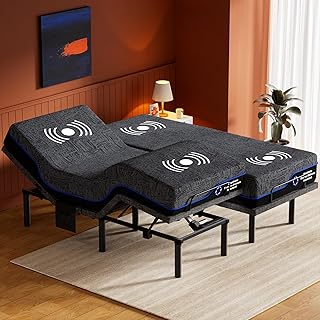
Split King Adjustable Bed Frame with 14″ Luxury Hybrid Mattress
The medium-soft hybrid build is the standout here: pocketed coils supply the segmented support that survives repeated articulation, while the app control and anti-snore preset make small hours adjustments possible without hunting for a remote. A strong choice for side sleepers who want cushioning at the shoulder without sinking through to the coil layer.
Amada Split King Adjustable Bed Frame and Mattress Set
Amada’s cooling gel memory foam runs medium-firm, which suits back sleepers and heavier body types who tend to bottom out in plusher foam once the head is raised. The wireless remote, USB ports, and under-bed lighting are well-implemented rather than tacked on, and assembly is genuinely manageable solo.
Serta Perfect Sleeper Hybrid 12″ with Adjustable Base
The most conventional feel of the group, and that’s a compliment — Serta’s medium hybrid reads like a quality traditional mattress that happens to bend, making it the easiest transition for anyone nervous about all-foam. At 12 inches it’s the thinnest profile reviewed, which improves flex response and keeps the bed from sitting uncomfortably tall.
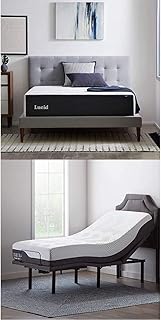
LUCID 14″ Mattress with L600 Adjustable Base
Bamboo charcoal in the plush gel foam addresses odor and moisture alongside temperature, a combination I rarely see at this price. The L600 base handles head and foot lift reliably, and the CertiPUR-US certification gives reassurance on foam emissions for anyone sensitive to off-gassing.
Celestial Aurora Adjustable Base with 12″ Gel Memory Foam Mattress
Programmable memory positions are the real draw: if you read at one angle and sleep at another, recalling them with a single press removes nightly fiddling. The medium-soft 12-inch mattress pairs neatly with the base’s zero-gravity preset for anyone managing reflux or lower-back tension.
Frequently Asked Questions
Can I put my existing mattress on an adjustable base?
Only if it’s all-foam, latex, or a pocketed-coil hybrid under roughly 14 inches. Traditional innersprings, pillow-tops with rigid borders, and anything with a bonded steel perimeter will resist the bend and eventually break down.
Do I still need a box spring?
No. The adjustable base replaces the foundation entirely, and adding a box spring on top defeats the articulation while raising the sleep surface to an unsafe height.
Is split king worth the extra cost?
For couples, almost always. Independent decks let one partner elevate for snoring or congestion while the other stays flat, and motion transfer between the two halves is effectively eliminated.
How long do these mattresses last on a moving base?
Expect seven to ten years from a well-built foam or hybrid model, comparable to flat use. Rotating head-to-foot every few months evens out compression at the hinge points and extends that window.
Final Thoughts
For most shoppers, the Amada split king set offers the best balance of supportive medium-firm foam and genuinely useful base features, while the Serta Perfect Sleeper Hybrid is the safest pick for anyone who wants a familiar traditional feel that still flexes properly. Couples chasing programmable positions and true independence should look hardest at the Celestial Aurora split king — it solves the compromise problem better than anything else on this list.