Key takeaways
- Best Overall for Side Sleepers: Contour Legacy Leg and Knee Foam Support Pillow
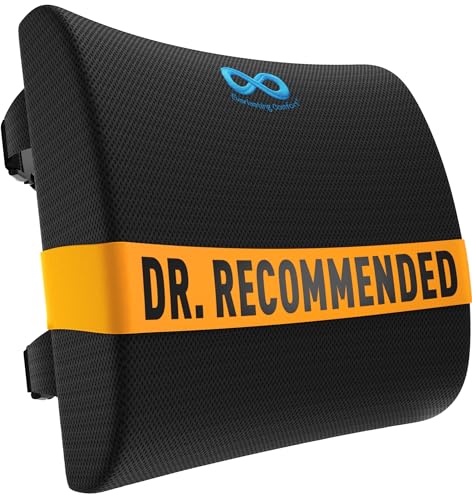
- Best for Back Sleepers: Everlasting Comfort Under Knee Pillow
- Best Lumbar Pad for Bed: vamorry Lumbar Pillow for Sleeping
- Best Contour Head Pillow: Royal Therapy Memory Foam Contour Pillow (24 x 14 x 5 inches)
- Best Brand-Name Value: Sealy Dreamlife Contour Memory Foam Pillow
- Best Adjustable Incline: Bedluxe Wedge Pillow Set (9 and 12 inch)
The best pillow for a bad back is usually not a head pillow at all but a set of supports for your hips and knees, and it should match how you sleep. Back sleepers tend to do well with a bolster under the knees, and side sleepers with a pillow between the knees. For those, our top pick is the Contour Legacy Leg and Knee Foam Support Pillow for side sleepers, with the Everlasting Comfort Under Knee Pillow as the pick for back sleepers. If your head pillow is the problem, the Royal Therapy contour memory foam pillow is a solid choice for supporting the neck, which sits at the top of the same spine.
A quick, honest note: a pillow is a comfort product. It can reduce pressure points and help keep your hips, spine and neck in a more even line, but it cannot diagnose or treat back pain. If your pain is severe, new, constant, wakes you at night or comes with numbness, weakness or trouble with bladder or bowel control, see a doctor promptly. This guide is about everyday comfort and sleep set-up.
This guide is research-based. We did not personally use these pillows. We compared seller listings and maker descriptions and cross-checked general sleep-position advice from health organizations named in the Sources section. Where a spec is not stated, we write “not listed”. Prices appear as tiers (Budget, Mid-range, Premium), not amounts.
Our top picks



As an Amazon Associate we earn from qualifying purchases at no extra cost to you.
Top Picks at a Glance
- Best Overall for Side Sleepers: Contour Legacy Leg and Knee Foam Support Pillow
- Best for Back Sleepers: Everlasting Comfort Under Knee Pillow
- Best Lumbar Pad for Bed: vamorry Lumbar Pillow for Sleeping
- Best Contour Head Pillow: Royal Therapy Memory Foam Contour Pillow (24 x 14 x 5 inches)
- Best Brand-Name Value: Sealy Dreamlife Contour Memory Foam Pillow
- Best Adjustable Incline: Bedluxe Wedge Pillow Set (9 and 12 inch)
Comparison Table
| Product | Best for | Key specs (from listing) | Watch for | Price tier |
|---|---|---|---|---|
| Contour Legacy Leg and Knee Pillow | Side sleepers with hip or back discomfort | Foam leg spacer; marketed for back, hip, knee and joint comfort | Strap and size details not in title | Mid-range |
| Everlasting Comfort Under Knee Pillow | Back sleepers | Memory foam half-moon bolster; thoracic support noted | Not for side sleeping | Mid-range |
| vamorry Lumbar Pillow for Sleeping | Gap at the waist or lower back | Memory foam; washable cover; side and back sleepers | Thickness not in title | Budget |
| Royal Therapy Contour Pillow | Neck alignment for back and side sleepers | 24 x 14 x 5 inches; queen; contour cervical shape | Contour shape needs adapting | Mid-range |
| Sealy Dreamlife Contour Pillow | Easy-care contour with a warranty | Standard; removable machine-washable cover; 1 year limited warranty | Fill details limited | Budget |
| Bedluxe Wedge Pillow Set | Raising the head or legs | Adjustable 9 and 12 inch wedges; set; neck and lumbar support noted | Takes up bed space | Mid-range |
1. Contour Legacy Leg and Knee Foam Support Pillow: Best for Side Sleepers
- Foam pillow designed to sit between the knees
- Marketed for side sleepers and for back, hip and joint comfort
- Contoured shape to follow the legs
- Dimensions and foam density: not listed in the title
Best for: side sleepers whose top leg drops forward and twists the lower back. Skip if: you only sleep on your back.
When you lie on your side without support, your top knee tends to slide forward and down. That twists the pelvis and pulls on the lower back. A pillow between the knees fills the space between your thighs, keeps your hips stacked and reduces that twist. The Contour Legacy is a long-standing design in this category, with a shaped profile that fits between the legs rather than a plain rectangle.
Fit matters more than any feature. If the pillow is too thick, it spreads your legs and rotates the hips the other way. A good rule is that the space between your knees, with your legs relaxed and parallel, should match the thickness. For many adults, that is around 4 to 6 inches at the knees, though it varies with hip width. If you have wide hips, look for a thicker pillow; if narrow, a thinner one.
Check whether the pillow stays in place. Strapless designs can slip out of position as you move. Some people tuck the pillow between the knees and bend the lower knee slightly, which gives the pillow more grip.
Pros:
- Contoured shape fits the legs
- Known design in the category
- Helps keep hips level
Cons:
- Size details not in the title
- May shift during the night
2. Everlasting Comfort Under Knee Pillow: Best for Back Sleepers
- Memory foam half-moon bolster
- Designed to sit under the knees while lying on your back
- Listing mentions back pain and thoracic support
- Dimensions: not listed in the title
Best for: back sleepers who feel their lower back pulling away from the mattress. Skip if: you usually sleep on your side or stomach.
Lying flat with straight legs can tilt the pelvis and increase the curve of the lower back for some people. A bolster under the knees bends the hips and knees gently, which can let the back rest closer to the mattress. For many back sleepers, this is one of the simplest changes to make. A half-moon shape is stable and keeps the knees in a slight bend.
The right height is a gentle bend, not a high lift. If the pillow is too tall, your heels may feel strained and the bolster can slip out. Everlasting Comfort is a recognizable support-pillow brand, which helps if you value consistent materials and a clear return process.
Pros:
- Easy to use
- Stable half-moon shape
- Pairs well with a lumbar pad
Cons:
- Back sleepers only
- Can slide out as you shift
3. vamorry Lumbar Pillow for Sleeping: Best Lumbar Pad
- Memory foam lumbar pillow for bed
- For side and back sleepers
- Washable cover
- Marketed for lower back support; dimensions not listed in the title
Best for: people with a visible gap between the lower back and the mattress. Skip if: you sleep on your stomach.
A lumbar pad is a small foam cushion that fills the hollow between your waist and the bed. Lie on your back and slide a flat hand under your lower back. If your whole hand fits easily, a thin pad can help. If only fingertips fit, you may not need one. Place it in the small of your back, not under the ribs or hips.
The pad should feel like a light support, not a push. If you feel your stomach pushed forward or your hips tipped, it is too thick. Pair it with a knee pillow only after you have tried each on its own so you can see which one helps.
Pros:
- Small, light and inexpensive
- Washable cover
- Useful for side and back sleepers
Cons:
- Thickness not in the title
- Can shift on slick sheets
4. Royal Therapy Memory Foam Contour Pillow: Best Contour Head Pillow
- Contour cervical shape, queen size
- 24 x 14 x 5 inches
- Memory foam
- For side, back and stomach sleepers, per the listing
- Foam density: not listed
Best for: back and side sleepers whose neck and upper back feel strained. Skip if: you dislike a pronounced neck curve.
Your neck and back are one chain. When the head sits too high or too low, the neck tilts and the upper back follows. A contour pillow has a lower center for the head and a raised edge for the neck. On your back, the lower dip cradles the head and the roll supports the neck. On your side, the taller edge fills the neck gap. Because it measures 5 inches at its highest, it suits average to broad shoulders for side sleeping, while back sleepers may use the lower side.
Give a contour pillow a week before judging it. Your body needs time to adjust to a new shape, and many people feel an odd tension at first. Do not use the high side if you feel your chin pushed toward the chest.
Pros:
- Stated dimensions
- Two heights from the contour
- Supports back and side sleeping
Cons:
- Takes time to adapt
- Foam density not listed
5. Sealy Dreamlife Contour Memory Foam Pillow: Best Brand-Name Value
- Standard size contour memory foam pillow
- Removable, machine-washable cover
- Surface guard technology described in the title
- 1 year limited warranty
- Dimensions: not listed in the title
Best for: shoppers who want a recognizable mattress brand and an easy-care cover. Skip if: you need a very tall pillow.
Sealy is a mattress brand that also sells bedding, and this pillow offers a middle-of-the-road contour with a washable cover and a limited warranty. A removable cover is a practical feature, because a pillow near your face collects oils. A one-year limited warranty is modest, but it gives you a path if the foam fails early.
If your back is the main concern, think of this as the head-and-neck piece of your set-up, to be paired with a knee or lumbar pillow.
Pros:
- Recognizable brand
- Machine-washable cover
- Limited warranty
Cons:
- Limited specs in title
- Standard size may be small for broad shoulders
6. Bedluxe Wedge Pillow Set: Best Adjustable Incline
- Two wedges, adjustable 9 and 12 inch heights
- Orthopedic bed wedge set
- Listing names neck and lumbar support, acid reflux and after-surgery use
- Foam density and cover material: not listed in the title
Best for: people who need to raise the head, legs or both. Skip if: you share a small bed.
A wedge set is more flexible than a single pillow. You can use one under the knees to elevate the legs, or place one behind the back for a reclined reading position. If your doctor suggested elevating your legs or upper body, a wedge makes that possible. The 9 and 12 inch options give two angles, though the length decides the actual slope. A 12 inch wedge that is 24 inches long rises about 27 degrees, which is steep for sleeping, while 9 inches over 24 inches is about 22 degrees.
The listing mentions after-surgery use. If you are recovering from surgery, follow your surgeon’s instructions on positioning, not a product listing. Wedges can also slide, so consider a non-slip layer under them.
Pros:
- Two wedges for flexible use
- Two height options
- Useful for several positions
Cons:
- Bulky on a small bed
- Steep angles may feel uncomfortable
Also Consider
NextSleep Back Sleeper Pillow
A pillow designed for back sleepers, with a satin case included and a 100 night sleep trial named in the listing. Useful if you want a risk-free trial window; check the trial terms.
Osteo Cervical Pillow
A hollow-design memory foam cervical pillow with a cooling case, marketed as adjustable for side and back sleepers. A mid-range pick if you want a neck-focused pillow.
5 STARS UNITED Knee Pillow for Back Sleeping
A half-moon bolster that competes with the Everlasting Comfort model. A good alternative if the first is out of stock.
EGOHOME Adjustable Contour Memory Foam Pillow
A wave-shaped pillow with three adjustable layers for side and back sleepers. Check the thickness range before buying.
How We Chose
We began with the exact search intent: a pillow that helps someone with a bad back sleep more comfortably. Because back discomfort relates to the whole body, we included knee, lumbar, head and wedge supports. We pulled real, currently sold products from a product database and compared stated sizes, materials, covers and how clearly each seller described the intended use. We also read general sleep-position guidance from sources such as the Sleep Foundation and the Cleveland Clinic.
This guide is research-based. We did not personally use these products and we did not measure them. We marked unknowns as “not listed”, capped each brand at two entries, and used cost tiers instead of prices. We avoided any claim that a pillow treats or cures back pain.
Buying Guide
Start with your sleeping position
Your position decides which support helps. The table summarizes where to start.
| Sleep position | Where your back tends to strain | First support to try |
|---|---|---|
| Back | Lower back arches off the bed | Pillow under the knees, thin lumbar pad |
| Side | Top leg drops and twists the pelvis | Pillow between the knees, plus a head pillow matched to shoulder width |
| Stomach | Lower back arches, neck twists | Thin or no head pillow, thin pad under the pelvis |
Match each support to a measurement
For a knee pillow between the legs, aim for a thickness that keeps your thigh bones parallel to the mattress, often 4 to 6 inches. For a bolster under the knees, 4 to 6 inches also works, as long as your knees stay softly bent, not high. For a lumbar pad, use the hand check: if you can fit a flat hand under your lower back with room to spare, a pad 1.5 to 3 inches thick is a reasonable start. For the head pillow, back sleepers usually need 3 to 4 inches of settled height, and side sleepers 4 to 6 inches depending on shoulder width.
Think about your mattress
A firm mattress leaves more gaps for supports to fill, while a very soft mattress may let your hips sink and cause its own back strain. A pillow cannot fix a worn-out mattress. If your mattress sags in the middle, a new one may help more than any pillow.
Foam, cover and care
Memory foam softens with heat, conforms to your shape and is the common material for support pillows. Look for a removable, washable cover and for certifications such as CertiPUR-US if odors or materials concern you. Air new foam for a day before use.
Build the set-up one piece at a time
Buy one support first and use it for a week. If it helps, keep it. If you need more, add the next piece. Adding several at once makes it hard to tell which helped, and it can crowd the bed.
Fitting Supports Into Your Bed: Space and Layout
Support pillows take real room, and bed size decides how many you can use comfortably. A knee pillow between the legs adds about 5 to 8 inches of width when you sleep on your side. A bolster under the knees takes about 8 inches of length at the foot of your body. A wedge set stacked for a 12 inch rise can take up 24 inches or more of mattress length, which matters if the bed is short.
| Bed size | Mattress width | Practical set-up for one person | Shared-bed note |
|---|---|---|---|
| Twin | 38 inches | One knee or lumbar support plus a head pillow | Not suited to sharing |
| Full | 54 inches | Knee pillow plus lumbar pad | Tight for two with wedges |
| Queen | 60 inches | Any single support, or a wedge set on your side | Each person gets about 30 inches |
| King | 76 inches | Full set-up: wedge, knee pillow, lumbar pad | Each person gets about 38 inches |
Headboard design matters for wedges and reclined positions. A flat, upright headboard lets a wedge sit snug against the wall, while a slatted or curved headboard can leave a gap that lets the wedge slide away. If you often read in bed, check whether the headboard has padding, since it will rub against any wedge you place against it. If your bed frame has a gap between the mattress and the headboard, a wedge can slip into it, and a thin non-slip mat under the wedge can help.
A Five-Night Way to Judge a New Support
Back-related sleep changes take time to judge, because muscles adapt slowly. On night one, use only the new pillow and keep everything else as it was. Write one line in your phone each morning about how your back and hips feel when you first stand up, not what you remember from the middle of the night. On night three, change one small thing, such as moving the pillow an inch or choosing a different orientation. By night five, compare the notes. If the mornings were no better or got worse, return the product while the return window is open.
Avoid stacking changes. If you buy a knee pillow, a lumbar pad and a new head pillow in the same week, you cannot tell which one helped. Add one product at a time and give each a fair trial. Remember that your mattress, daily activity and stress all affect how your back feels in the morning, so one good or bad night proves little.
One last practical point is washing and rotation. Support pillows live close to your skin for hours, so plan to launder removable covers every few weeks and to air the foam core between uses. If you own two covers for the same pillow, you can always have a clean one ready. Check care tags before washing, never put foam cores in a machine, and let covers dry completely so no moisture is trapped against the foam.
Common Mistakes
- Buying a thick head pillow and ignoring the knees and hips.
- Using a knee pillow that is too tall, which pushes the hips out of line.
- Placing a lumbar pad under the ribs instead of the waist.
- Expecting a pillow to correct a sagging mattress.
- Ignoring red-flag symptoms such as numbness, weakness or night pain.
Frequently Asked Questions
What is the best pillow for a bad back?
It depends on your sleeping position. Side sleepers often do best with a pillow between the knees, back sleepers with one under the knees, and everyone benefits from a head pillow that fits their neck.
What is the best pillow for bad back and neck?
A contour pillow such as the Royal Therapy can support the neck, paired with a knee or lumbar support for the back. Keep the head pillow height matched to your shoulder width.
Should I sleep with a pillow under my knees for back pain?
Many back sleepers find it comfortable, because it bends the hips gently and lets the lower back rest closer to the mattress. If it feels uncomfortable, stop and ask a clinician.
Where should I put a pillow between my legs?
Place it between your thighs and knees, and keep your legs relaxed so the thighs are parallel to the mattress. If it pushes your top knee upward, the pillow is too thick.
Are pillows for bad backs worth it?
They can make sleep more comfortable for some people, but results vary. They are inexpensive compared with a mattress, which makes them a reasonable first step. They are not a treatment.
Is a wedge pillow good for back pain?
A wedge can help you elevate your legs or upper body, which some people find comfortable. Choose a modest angle, and follow any positioning advice from your doctor.
When should I see a doctor about back pain?
See a doctor if the pain is severe, follows an injury, lasts more than a few weeks, wakes you at night or comes with numbness, weakness or bladder or bowel changes.
Which One Should You Buy?
- Side sleeper: Contour Legacy Leg and Knee Pillow.
- Back sleeper: Everlasting Comfort Under Knee Pillow.
- Gap at the waist: vamorry Lumbar Pillow.
- Neck also bothers you: Royal Therapy or Sealy contour pillow.
- Need to raise legs or torso: Bedluxe Wedge Set.
If you are unsure, start with the support that matches your sleeping position, give it five nights, and add a second piece only if you need it. If symptoms persist, talk to a doctor or physical therapist.
Sources
- Brand product listings for Contour Legacy, Everlasting Comfort, vamorry, Royal Therapy, Sealy and Bedluxe
- Sleep Foundation, sleep position and pillow guidance
- Cleveland Clinic, back pain overview
- CertiPUR-US program standards for flexible foam
Last updated: October 2026