Key takeaways
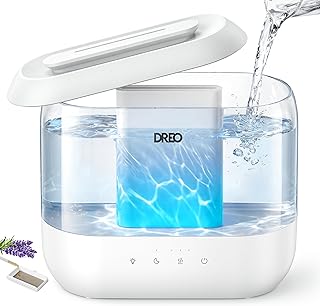
- Openings you can fit a hand into: The single best predictor of long-term cleanliness is whether you can physically scrub the entire interior surface. Narrow-necked tanks force you to swirl vinegar and hope. Top-fill designs with a wide mouth, or tanks rated dishwasher-safe, remove the excuse to skip a cleaning.
- A real humidistat, not just fan speeds: Running a machine at full mist in a closed bedroom pushes humidity past 60%, which is where dust mites thrive and condensation collects on window frames. Choose a unit that reads the room and cycles itself to hold a target between 40% and 50%.
- Cool mist for bedrooms, no compromise: Evaporative and ultrasonic cool-mist units carry no scald risk and use a fraction of the electricity of a warm-mist boiler. Reserve heated units for supervised daytime use only, especially with toddlers or pets in the household.
- Sound floor under 30 dB: Intermittent noise is what fragments sleep, not steady noise. A machine rated in the low-to-mid 20s stays below the threshold where a pump click or fan surge pulls you out of slow-wave sleep, and it lets you leave it running all night rather than switching it off at bedtime.
- Runtime that matches your sleep window plus margin: A tank that empties at 4 a.m. gives you three dry hours during REM-heavy early morning. Look for 30 hours minimum at a mid setting; larger 6L to 9L tanks buy you multiple nights between refills, which also means fewer chances to top off a tank you never emptied.
What's inside
Most people who buy a humidifier are trying to solve a sleep problem. The scratchy 3 a.m. throat, the nosebleeds that only happen in January, the cough that lingers three weeks past the cold — all of it traces back to bedroom air that has dropped below roughly 30% relative humidity. Add moisture back and sleep continuity improves, often within a night or two. The trouble is what happens next: the tank sits warm and still all day, biofilm forms on the plastic, and by week three the machine is quietly aerosolizing the very thing you were trying to breathe less of. Anyone who has lifted a lid and met that sour, basement smell knows the feeling.
No humidifier is literally incapable of growing mold — that claim is marketing. What exists is a category of machines engineered so that cleaning takes ninety seconds instead of forty minutes, which is the only variable that reliably predicts whether a unit stays sanitary six months in. This guide looks at the models that actually earn that description: wide top-fill openings you can reach into, dishwasher-safe tanks, smooth interior geometry without crevices, and humidistats that shut the mist off before your walls reach dew point. Below are the picks worth your money in 2026, followed by the buying criteria I use when evaluating units for clients with allergies, asthma, or infants in the room.
As an Amazon Associate we earn from qualifying purchases.


🛒 Best Price Today on Amazon
Prime members get fast, free shipping on everything above, plus member-only deals. New members get a 30-day free trial — cancel anytime.
How to Choose a Mold-Free Humidifier (2026)
- Openings you can fit a hand into: The single best predictor of long-term cleanliness is whether you can physically scrub the entire interior surface. Narrow-necked tanks force you to swirl vinegar and hope. Top-fill designs with a wide mouth, or tanks rated dishwasher-safe, remove the excuse to skip a cleaning.
- A real humidistat, not just fan speeds: Running a machine at full mist in a closed bedroom pushes humidity past 60%, which is where dust mites thrive and condensation collects on window frames. Choose a unit that reads the room and cycles itself to hold a target between 40% and 50%.
- Cool mist for bedrooms, no compromise: Evaporative and ultrasonic cool-mist units carry no scald risk and use a fraction of the electricity of a warm-mist boiler. Reserve heated units for supervised daytime use only, especially with toddlers or pets in the household.
- Sound floor under 30 dB: Intermittent noise is what fragments sleep, not steady noise. A machine rated in the low-to-mid 20s stays below the threshold where a pump click or fan surge pulls you out of slow-wave sleep, and it lets you leave it running all night rather than switching it off at bedtime.
- Runtime that matches your sleep window plus margin: A tank that empties at 4 a.m. gives you three dry hours during REM-heavy early morning. Look for 30 hours minimum at a mid setting; larger 6L to 9L tanks buy you multiple nights between refills, which also means fewer chances to top off a tank you never emptied.
The Best Mold-Free Humidifiers (2026), Reviewed
Levoit NeoClassic 650S
The strongest overall choice for a primary bedroom: a 6.2L dishwasher-safe tank, 26 dB operation, and 62 hours of runtime, paired with app control that lets you set a humidity target and forget it. Being able to put the tank through a dishwasher cycle weekly is the feature that keeps this unit sanitary long after enthusiasm fades.
DREO HM524 (6L)
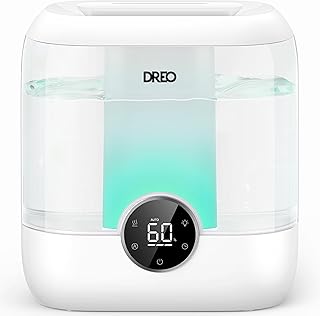
Precise humidity control at 28 dB with a genuinely generous refill opening, making this the pick for anyone who wants set-and-forget accuracy without a phone app. The 60-hour runtime means a large bedroom or nursery goes two full nights between visits to the sink.
Feekaa Stainless Steel Humidifier (4L)
Stainless steel is the material answer to the mold problem — nonporous, unstained by minerals, and hostile to biofilm in a way that textured plastic never is. At 4L it suits a standard bedroom or nursery, and the dishwasher-safe construction makes weekly maintenance nearly effortless.
Levoit NeoClassic 450 (4.2L)
At 21 dB this is the quietest unit here, which makes it my recommendation for light sleepers and anyone placing a humidifier on a nightstand. Top-fill, dishwasher-safe, and 42 hours of runtime in a footprint that fits a small room without dominating it.
KZF 9L Smart Humidifier
The volume specialist: 9L covers open-plan bedrooms, converted lofts, and plant collections that would drain a smaller tank nightly. App and remote control plus three mist modes give you fine adjustment, though its size means you should commit to a real cleaning routine rather than relying on infrequent refills to force one.
Frequently Asked Questions
How often does a humidifier actually need cleaning?
Empty and dry the tank daily, and do a full descale with white vinegar or a dishwasher cycle once a week during heavy use. Standing water older than 24 hours is where bacterial growth begins, regardless of how new the machine is.
Does distilled water prevent mold?
It prevents mineral scale and the white dust that ultrasonic units scatter on furniture, which matters, but it does not sterilize anything. Mold arrives from room air and settles in any water left sitting, distilled or not.
What humidity level should a bedroom hold overnight?
Between 40% and 50%. Below 30% you get mucosal drying and disrupted breathing; above 60% you invite dust mites, and cold-weather condensation on windows and exterior walls can seed mold in the room itself.
Is a filter-based evaporative unit safer than ultrasonic?
Evaporative wicks trap minerals and release less particulate matter, but the wick itself becomes a growth surface if it is not replaced on schedule. A well-maintained ultrasonic unit with a scrubbable tank is the more realistic choice for most households.
Final Thoughts
For most bedrooms, the Levoit NeoClassic 650S is the right buy — dishwasher-safe, near-silent, and accurate enough to hold a healthy range without supervision. Choose the Feekaa Stainless Steel unit if you want the most hygienic material available and are willing to refill a little more often, or the DREO HM524 if you prefer physical controls and a wide tank opening over app-based setup. Whichever you pick, the machine that stays clean is the one you find easy to clean.