Key takeaways
- Runtime that outlasts your night: Look for 25 hours or more on a low setting. Ocular surface dryness peaks in the final hours of sleep, so a unit that empties at 3 a.m. protects you during the period you need it least.
- Verified low noise: Anything at or under 28 dB sits below the threshold at which most sleepers register intermittent sound. Pay attention to the character of the noise too — irregular bubbling wakes people that steady white noise does not.
- Humidistat control, not just fan speeds: A built-in sensor that targets a set percentage prevents overshoot. Pushing a bedroom past 55% trades dry eyes for dust mite and mould conditions, which is a poor swap for allergy-prone sleepers.
- Top-fill and wide-mouth cleaning access: If you cannot reach the inside of the reservoir with a hand and a cloth, biofilm will win. Weekly cleaning is realistic only when it takes two minutes.
- Light discipline: Choose a model whose nightlight fully switches off, or that dims to a warm amber. Blue-white indicator LEDs suppress melatonin at surprisingly low intensity.
What's inside
Waking with eyes that feel gritty, stinging, or glued shut is one of the most common complaints sleep specialists hear during heating season — and it is rarely a problem with the eyes themselves. Overnight, blink rate drops to almost nothing, the tear film thins, and any moisture left on the ocular surface evaporates into the room. When indoor relative humidity slides below roughly 30%, which is routine in a closed bedroom with forced-air heat, that evaporation accelerates dramatically. The result is a slow dehydration of the cornea over seven or eight hours, followed by that raw, sandy sensation at 6 a.m. Add a ceiling fan, a CPAP mask leak, or contact lenses worn slightly too long, and the effect compounds.
The fix is environmental rather than medical for most people: hold bedroom humidity in the 40–50% band all night, quietly enough that sleep architecture is not disturbed. That is a narrower brief than “buy any humidifier,” because a machine that runs dry at 2 a.m., gurgles every few minutes, or throws a bright blue glow across the room can cost you more sleep than it saves your eyes. Below, we’ve assessed the current crop of bedroom-scale cool mist units specifically against overnight endurance, measured noise, refill practicality, and how well each maintains a steady output rather than a wet-then-dry cycle. Every pick is a top-fill design, because tanks that must be flipped into a sink get cleaned less often — and a neglected tank is a genuine irritant risk in its own right.
As an Amazon Associate we earn from qualifying purchases.



How to Choose a/an Humidifier For Dry Eyes (2026)
- Runtime that outlasts your night: Look for 25 hours or more on a low setting. Ocular surface dryness peaks in the final hours of sleep, so a unit that empties at 3 a.m. protects you during the period you need it least.
- Verified low noise: Anything at or under 28 dB sits below the threshold at which most sleepers register intermittent sound. Pay attention to the character of the noise too — irregular bubbling wakes people that steady white noise does not.
- Humidistat control, not just fan speeds: A built-in sensor that targets a set percentage prevents overshoot. Pushing a bedroom past 55% trades dry eyes for dust mite and mould conditions, which is a poor swap for allergy-prone sleepers.
- Top-fill and wide-mouth cleaning access: If you cannot reach the inside of the reservoir with a hand and a cloth, biofilm will win. Weekly cleaning is realistic only when it takes two minutes.
- Light discipline: Choose a model whose nightlight fully switches off, or that dims to a warm amber. Blue-white indicator LEDs suppress melatonin at surprisingly low intensity.
The Best Humidifier For Dry Eyes (2026)s Reviewed
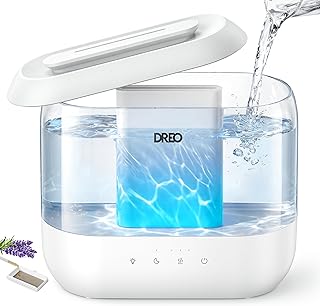
DREO 4L HM311 Humidifier
With a 4L reservoir and a claimed 36-hour runtime at 28 dB, this is the most confident choice for anyone who wants to fill once every two nights and forget about it. The oversized tank opening makes the weekly wipe-down genuinely quick, which matters more for long-term eye comfort than any single spec.
Homvana 3.6L Top-Fill Humidifier
Rated at 23 dB, this is the quietest unit here, and the 3.6L tank covers roughly four nights of light use. The dual-function oil diffuser is a nice extra, though we’d advise leaving it empty if your eyes are already irritated — aerosolised essential oils can aggravate a compromised tear film.
DREO 3L Humidifier
The precise humidity control is the reason this model earns its place: set 45% and it holds there rather than saturating the room. The 360° nozzle lets you aim mist away from bedding, and 30 hours of runtime clears a full night with margin.
Levoit 2.5L Top Fill Humidifier
A well-judged compact option for smaller bedrooms, with 25-hour endurance, 28 dB operation, and auto shut-off when the tank empties. Levoit’s tank geometry is among the easiest to clean thoroughly, which we weigh heavily.
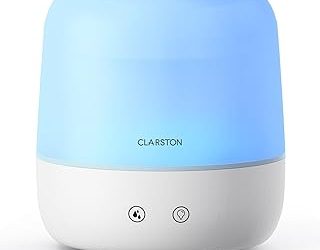
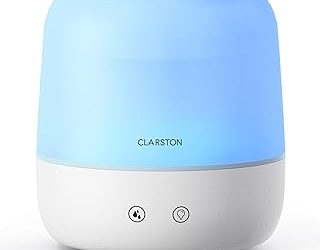
Clarston 2L Cool Mist Humidifier
At 24 dB and 25 hours, this is a strong value pick for light sleepers who don’t need to humidify a large space. The nightlight is dimmable and the 360° nozzle helps direct output toward the head of the bed without dampening the sheets.
Frequently Asked Questions
What humidity level helps dry eyes most?
Aim for 40–50% relative humidity. Below 30%, tear film evaporation speeds up noticeably; above 55%, you invite mould and dust mite growth, which triggers a different kind of eye irritation.
Cool mist or warm mist for overnight use?
Cool mist, in almost every case. It uses less energy, poses no burn risk, and the temperature of the water vapour makes no meaningful difference to the moisture your eyes receive once it disperses into the room.
Should I add essential oils if my eyes are dry?
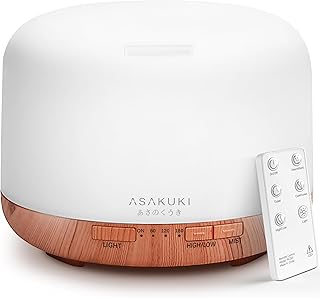
Generally no. Fragrance compounds suspended in mist are a known ocular irritant for sensitive people. If you want aromatherapy elsewhere in the home, a dedicated unit like the ASAKUKI 500ML diffuser is a better place for it than your bedside.
How close should the humidifier sit to the bed?
Roughly three to six feet away, at a height near mattress level, with the nozzle angled away from you. Too close and you dampen linens; too far and the mist dissipates before it reaches your breathing zone.
Final Thoughts
For most bedrooms, the DREO 4L HM311 is the pick we’d make first — the runtime removes the nightly refill habit that causes most people to abandon humidifiers by February. Light sleepers should look hard at the Homvana 3.6L for its 23 dB rating, while anyone in a compact room who values easy maintenance will be well served by the Levoit 2.5L.