Key takeaways
- Match capacity to the room, not the house: Pint ratings assume specific temperature and humidity conditions, so treat them as ceilings rather than promises. A 20–25 pint unit handles a typical bedroom or 1,500 sq ft of finished space; damp basements over 2,000 sq ft need 50 pints or more to avoid running nonstop.
- Insist on a published decibel figure: “Quiet” is marketing; ≤30 dB is a specification. Anything above 45 dB will be audible during light-sleep stages, and compressor units cycle on and off in a way the brain notices more than steady white noise.
- Check tank size against overnight runtime: A 95–102 oz reservoir generally clears a full night in moderate humidity. In a wet basement, skip tanks entirely and use a continuous drain hose to a floor drain or sump.
- Look for automatic humidity control: A built-in humidistat that targets a set percentage prevents the classic combo failure — over-drying a room in winter or over-humidifying in summer. Auto shut-off protects the compressor and stops the unit before a full tank overflows.
- Decide how much you want the lights: Color-cycling LEDs are pleasant in a nursery and disruptive in an adult bedroom. Confirm the display and light ring can be dimmed or switched off independently of operation.
What's inside
Most people troubleshoot bad sleep by changing their mattress or their bedtime. Far fewer look at the air itself — and yet humidity is one of the few bedroom variables that quietly governs whether you wake up refreshed or wake up at 3 a.m. with a dry throat and a stuffed nose. Below roughly 30% relative humidity, nasal passages dry out and coughing fragments sleep. Above 60%, dust mites and mold thrive, and the sticky, heavy feeling in the room keeps your body from cooling down the way it needs to as you drift off. The comfortable window is narrow, and in most homes it moves twice a year: bone-dry during heating season, swampy from June to September.
That seasonal swing is why single-purpose machines end up in the closet six months out of twelve. A combination unit — or a well-matched pairing of a strong dehumidifier and a quiet humidifier — keeps you inside that 40–55% window year-round without rearranging your bedroom every spring. This guide covers what actually matters when shopping in 2026: honest capacity ratings, measured noise levels, drainage that doesn’t require a 2 a.m. trip to the tub, and the sleep-friendly details that separate a device you’ll keep running from one you’ll unplug in week three. Recommendations span compact bedside units to whole-basement workhorses, plus a no-power option for closets and crawlspaces.
As an Amazon Associate we earn from qualifying purchases.




🛒 Best Price Today on Amazon
Prime members get fast, free shipping on everything above, plus member-only deals. New members get a 30-day free trial — cancel anytime.
How to Choose a Humidifier Dehumidifier Combo (2026)
- Match capacity to the room, not the house: Pint ratings assume specific temperature and humidity conditions, so treat them as ceilings rather than promises. A 20–25 pint unit handles a typical bedroom or 1,500 sq ft of finished space; damp basements over 2,000 sq ft need 50 pints or more to avoid running nonstop.
- Insist on a published decibel figure: “Quiet” is marketing; ≤30 dB is a specification. Anything above 45 dB will be audible during light-sleep stages, and compressor units cycle on and off in a way the brain notices more than steady white noise.
- Check tank size against overnight runtime: A 95–102 oz reservoir generally clears a full night in moderate humidity. In a wet basement, skip tanks entirely and use a continuous drain hose to a floor drain or sump.
- Look for automatic humidity control: A built-in humidistat that targets a set percentage prevents the classic combo failure — over-drying a room in winter or over-humidifying in summer. Auto shut-off protects the compressor and stops the unit before a full tank overflows.
- Decide how much you want the lights: Color-cycling LEDs are pleasant in a nursery and disruptive in an adult bedroom. Confirm the display and light ring can be dimmed or switched off independently of operation.
The Best Humidifier Dehumidifier Combos (2026) Reviewed
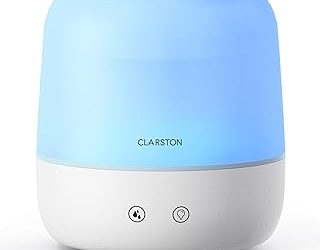
2-in-1 Humidifier Dehumidifier Combo, 102 oz Tank
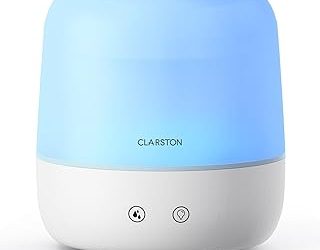
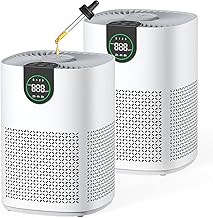
The most practical true combo for a single bedroom: a 102 oz reservoir means you can run either mode through the night, and the dedicated sleep mode silences alerts while dimming the seven-color LED to a faint glow. Auto shut-off makes it safe to leave running unattended, which matters more than any other feature in a unit that lives next to your bed.
4-in-1 Dehumidifier, Humidifier, Purifier & Diffuser
At a stated ≤25 dB, this is the quietest option here by a meaningful margin, and the automatic humidity control does the thinking for you across both seasons. The replaceable filter and aroma diffuser are genuine additions rather than padding, though the modest capacity keeps it firmly in bedroom-and-nursery territory.
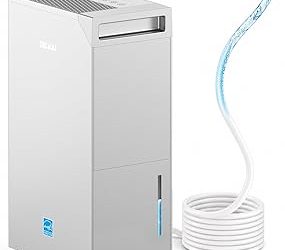
Midea 22 Pint Dehumidifier
Energy Star certification and continuous drainage make this the sensible choice for a finished basement or bedroom you’d rather not think about again — set your target humidity, run the hose, and let Wi-Fi and Alexa handle adjustments. The reusable air filter also spares you a recurring consumable cost.
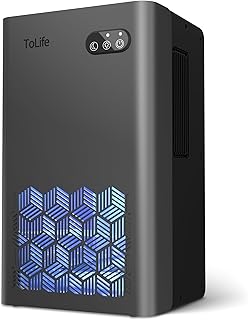
ToLife Dehumidifier, 1,000 Sq Ft, 95 oz Tank
A well-judged bedroom unit with a proper sleep mode, generous tank, and auto shutoff, covering up to 1,000 sq ft without dominating a nightstand. The seven-color LED is a nice touch for kids’ rooms and switches off cleanly for grown-up ones.
AIRPLUS 70 Pint Dehumidifier (AP2103)
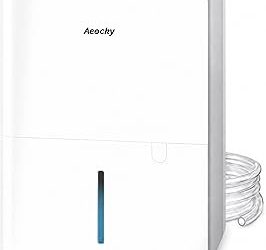
When the problem is a genuinely wet 3,000–4,500 sq ft basement, smaller units simply lose the fight. The included drain hose, auto shut-off, and serious 70-pint extraction rate make this the unit that protects the rest of your home’s air — including the bedroom above it.
Frequently Asked Questions
What humidity level is best for sleep?
Aim for 40–50% relative humidity in the bedroom, with 55% as an upper limit in warm weather. A cheap hygrometer placed at mattress height tells you far more than the reading on the appliance itself.
Can one machine really humidify and dehumidify?
Yes, but not simultaneously — combo units switch between modes, usually triggered by a humidistat reading. Their dehumidifying capacity is typically lower than a dedicated compressor unit’s, which is why large basements still call for a single-purpose machine.
Do I need a drain hose or is a tank enough?
Tanks are fine for bedrooms and bathrooms, where you’ll be emptying once a day at most. For basements, crawlspaces, or anywhere humidity stays above 65%, continuous drainage is the difference between a working system and a chore.
Are moisture absorbers worth using alongside a unit?
For closets, wardrobes, and enclosed spaces without an outlet, a reusable absorber like the DampRid tablet system pulls down excess moisture and neutralizes musty odors with no power draw. Treat it as a supplement, never a replacement for a bedroom unit.
Final Thoughts
For most bedrooms, the 4-in-1 combo is the strongest all-round pick — near-silent operation plus automatic humidity control means you set it once and stop managing it. If you want a larger reservoir and a straightforward sleep mode, the 102 oz 2-in-1 combo is the better value, and anyone fighting a genuinely damp basement should pair either one with the AIRPLUS 70 pint unit downstairs. Get the humidity right and you’ll notice it in the mornings, not the evenings.