Key takeaways
- Species density: Acacia, hard maple, and white oak sit high on the Janka hardness scale and resist the dents that make a surface feel tired within two years. Birch and bamboo are lighter but far more stable than softwoods, and bamboo’s tensile strength rivals oak.
- Finish chemistry: Look for water-based, non-toxic, or hardwax-oil finishes rather than heavy solvent lacquers. If a table arrives with a lingering chemical smell, air it in a garage for a week before it lives near sleeping spaces.
- Kiln-dried, not air-dried: Kiln drying stabilizes moisture content so panels don’t cup or split when your heating system dries the room each winter. Manufacturers who state this are telling you something real.
- Leg geometry and clearance: Aim for roughly 29–30 inches of table height and at least 24 inches of width per diner. Cross-braced or heavy-duty legs eliminate the micro-wobble that makes people finish eating fast and leave.
- Slab thickness: Anything at or above 1 inch reads as substantial and dampens noise. Thinner tops around 0.7 inch are fine for desks and lighter dining use, but need a rigid base beneath them.
What's inside
Most people shopping for a dining table think about seating capacity and whether the finish matches the floor. As someone who spends my working life studying sleep architecture and the daily rhythms that shape it, I’d argue there’s a quieter consideration worth adding: the table where you eat dinner is one of the strongest circadian anchors in your home. Consistent, unhurried evening meals help stabilize the timing cues your body uses to release melatonin. A wobbly, cramped, or unpleasant table gets abandoned — people drift to the couch with a plate, screens on, and the meal stops functioning as a signal at all.
Hardwood matters here in practical ways. Dense species stay silent under elbows and cutlery instead of transmitting rattle and vibration, which keeps evening conversation low-stimulus. Low-VOC or oil-based finishes matter because bedroom-adjacent off-gassing is a genuine irritant for light sleepers. And solid stock lasts long enough that the ritual outlives the furniture cycle. Below I break down the species and construction details worth paying for, then review five solid-wood tables and tabletops I’d recommend to clients building a better evening wind-down.
As an Amazon Associate we earn from qualifying purchases.




🛒 Best Price Today on Amazon
Prime members get fast, free shipping on everything above, plus member-only deals. New members get a 30-day free trial — cancel anytime.
How to Choose a Hardwood For Dining Table (2026)
- Species density: Acacia, hard maple, and white oak sit high on the Janka hardness scale and resist the dents that make a surface feel tired within two years. Birch and bamboo are lighter but far more stable than softwoods, and bamboo’s tensile strength rivals oak.
- Finish chemistry: Look for water-based, non-toxic, or hardwax-oil finishes rather than heavy solvent lacquers. If a table arrives with a lingering chemical smell, air it in a garage for a week before it lives near sleeping spaces.
- Kiln-dried, not air-dried: Kiln drying stabilizes moisture content so panels don’t cup or split when your heating system dries the room each winter. Manufacturers who state this are telling you something real.
- Leg geometry and clearance: Aim for roughly 29–30 inches of table height and at least 24 inches of width per diner. Cross-braced or heavy-duty legs eliminate the micro-wobble that makes people finish eating fast and leave.
- Slab thickness: Anything at or above 1 inch reads as substantial and dampens noise. Thinner tops around 0.7 inch are fine for desks and lighter dining use, but need a rigid base beneath them.
The Best Hardwood Dining Tables (2026), Reviewed
Pemberly Row Solid Acacia Wood Dining Table
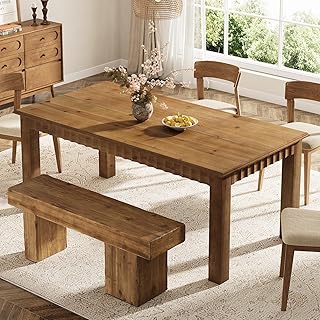
Kiln-dried acacia with crossed angular legs — this is the pick I’d hand to someone who wants a table that survives a family of five without visible regret. At 79 inches it seats six comfortably, and acacia’s natural oil content means minor spills don’t stain if you wipe within a minute or two.
Plank+Beam Classic 72 Inch Dining Table
The non-toxic finish is the headline for my purposes: no solvent haze in a room that often opens onto a bedroom hallway. The pecan wirebrush texture also hides everyday scuffing, which quietly reduces the household friction of “be careful with the table.”
63-Inch Solid Wood Farmhouse Dining Table
Heavy-duty legs and a dark brown finish make this the most forgiving option here for smaller dining rooms and busy weeknights. Six seats at 63 inches is snug but workable, and the mass of the base keeps the surface genuinely quiet.
BAKEVE Bamboo Dining Table for 4–6
FSC-certified bamboo is the sleeper choice — rapidly renewable, dimensionally stable, and lighter to reposition than any true hardwood at 47.2 inches. Ideal for apartments where the same surface handles breakfast, laptop work, and dinner.
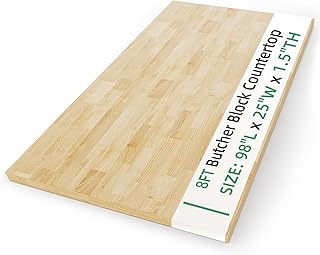
Butcher Block Countertop Wood Tabletop
An unfinished 98-inch birch plank at 1.5 inches thick, for anyone building a bespoke table or long kitchen-island eating bar. Because it ships raw, you control the finish entirely — I’d specify a hardwax oil and skip polyurethane altogether.
Frequently Asked Questions
Does a dining table really affect sleep?
Indirectly but meaningfully. Regular evening meals at a consistent time are a well-documented zeitgeber, helping align your internal clock. A comfortable table makes that habit sustainable; an unpleasant one erodes it.
Which hardwood is most durable for daily dining?
Acacia and white oak lead for hardness and moisture resistance. Maple is comparably dense with a tighter, more uniform grain if you prefer a cleaner look.
Should I worry about finish off-gassing?
If you’re a sensitive sleeper, yes. Volatile compounds from fresh solvent finishes can irritate airways for days to weeks. Choose water-based or oiled finishes, and ventilate new furniture thoroughly.
Is bamboo actually a hardwood?
Botanically it’s a grass, but engineered bamboo panels test as hard as or harder than red oak. For dining use, treat quality bamboo as a legitimate hardwood alternative.
Final Thoughts
For most households, the Pemberly Row acacia table is the strongest all-round investment — dense, kiln-dried, and sized for real family meals. The Plank+Beam Classic 72 is my pick where finish chemistry and air quality are priorities, and the BAKEVE bamboo table is the smart small-space option that still supports a consistent, sleep-friendly dinner routine.