Key takeaways
- Thermostat precision: A digital thermostat that adjusts degree by degree — the Tehanld 60″ offers a 60–99°F range — drifts far less than a simple high/low dial. Smaller temperature swings mean fewer micro-arousals you’ll never consciously remember but will feel in the morning.
- Noise character, not just volume: Steady broadband hum is far easier to sleep through than intermittent clicking or a fan that surges and fades. Infrared units such as the Dr. Infrared DR-991 generally run gentler than high-velocity ceramic blowers.
- Flame dimming and independent modes: Evening light exposure blunts melatonin release. Prioritize adjustable flame brightness, a dimmable or defeatable LED display, and a heat-without-flame option — the ZAFRO stove and the R.W.FLAME mantel both separate the two.
- Timer behavior: An 8–12 hour countdown lets you warm the room before bed and coast into the cooler small hours, which mirrors your natural temperature curve. The RealSmart 22″ freestanding stove and the Tehanld both handle this well.
- Safety and air quality: Look for ETL listing, overheat cutoff, tip-over shutoff, cool-touch surfaces, and a child lock. Forced-air heat also dries sinuses, so an integrated humidifier is a meaningful feature rather than a gimmick.
What's inside
Sleep starts with a temperature drop. In the couple of hours before you drift off, your body sheds core heat through the hands and feet, and the room you sleep in either cooperates with that process or works against it. Most home heating, unfortunately, is engineered for daytime comfort rather than nocturnal physiology: central systems overshoot the set point, kick on with a thump, and push dry air across the bed at precisely the wrong moment. A supplemental heater is the obvious remedy — until you open a shopping tab and meet four hundred nearly identical stoves and wall panels, every one of them advertising lifelike flames and not one of them telling you how quietly it holds a temperature at 3 a.m.
This guide cuts through that. I’ve evaluated the 2026 field of electric fireplace heaters against the variables that genuinely shape sleep quality: thermostat accuracy and cycling behavior, the sound signature of the blower, how far the flame effect dims after dark, timer logic, and the tip-over and overheat protections that make a unit defensible in an occupied bedroom. Atmosphere is a pleasant side effect. A stable, quiet, 65-degree room is the objective.
As an Amazon Associate we earn from qualifying purchases.


How to Choose an Electric Fireplace Heater (2026)
- Thermostat precision: A digital thermostat that adjusts degree by degree — the Tehanld 60″ offers a 60–99°F range — drifts far less than a simple high/low dial. Smaller temperature swings mean fewer micro-arousals you’ll never consciously remember but will feel in the morning.
- Noise character, not just volume: Steady broadband hum is far easier to sleep through than intermittent clicking or a fan that surges and fades. Infrared units such as the Dr. Infrared DR-991 generally run gentler than high-velocity ceramic blowers.
- Flame dimming and independent modes: Evening light exposure blunts melatonin release. Prioritize adjustable flame brightness, a dimmable or defeatable LED display, and a heat-without-flame option — the ZAFRO stove and the R.W.FLAME mantel both separate the two.
- Timer behavior: An 8–12 hour countdown lets you warm the room before bed and coast into the cooler small hours, which mirrors your natural temperature curve. The RealSmart 22″ freestanding stove and the Tehanld both handle this well.
- Safety and air quality: Look for ETL listing, overheat cutoff, tip-over shutoff, cool-touch surfaces, and a child lock. Forced-air heat also dries sinuses, so an integrated humidifier is a meaningful feature rather than a gimmick.
The Best Electric Fireplace Heaters of 2026, Reviewed
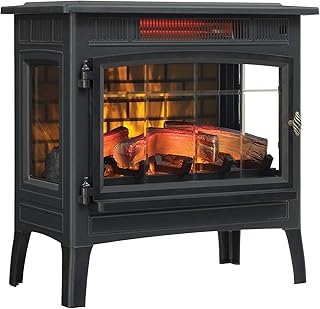
duraflame Freestanding Electric Fireplace Stove
Rated for spaces up to 1,000 square feet, this cast-iron-style stove delivers warmth broadly and evenly rather than in a concentrated jet, which suits a bedroom where you don’t want air moving directly across the bed. The 3D flame runs independently of the heating element, so it can serve as a low, warm-spectrum night light long after the heat cycles off.
Dr. Infrared DR-991 with Humidifier
The built-in humidifier is what elevates this one for overnight use: infrared heat warms objects and bodies without stripping moisture from the air, and the reservoir offsets the throat and nasal dryness that wake so many light sleepers. It’s also among the quieter 1500W units I’ve tested, with a remote and timer that mean you never have to switch on a lamp to adjust it.
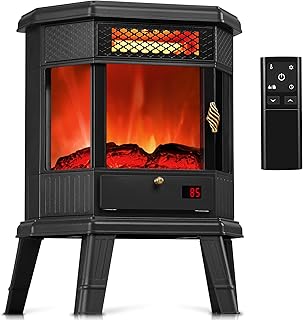
ZAFRO Electric Fireplace Stove
The dual 1000W/1500W settings matter more than they appear to — the lower stage lets a small bedroom reach target temperature without the aggressive cycling that a single high-output element produces. Flame-only mode and a built-in thermostat make it a sensible pick for anyone who wants ambiance in the shoulder seasons and real heat in January.
R.W.FLAME 43″ Fireplace Mantel and TV Stand
For studio apartments and bedrooms where the television lives, consolidating the media console and the heat source removes a floor unit and a cord from the room entirely. The adjustable LED flame dims usefully low, and the 750W setting is the one you’ll want for sustained overnight operation.
Tehanld 60″ Ultra-Thin Recessed Fireplace
Wall-mounted or recessed installation is the quietest configuration available, since the unit is out of the traffic path and can’t be knocked over by a sleepy foot. The 60–99°F thermostat, 12-hour timer, and child lock make this the most controlled option here — the right choice for a primary bedroom or a nursery-adjacent space.
Frequently Asked Questions
Is it safe to run an electric fireplace heater all night?
With an ETL-listed unit that has overheat and tip-over protection, yes — but I’d still recommend a timer. Letting the room cool slightly after midnight aligns with your circadian temperature dip and typically improves sleep depth.
What temperature should I set for sleeping?
Most adults sleep best between 60 and 67°F. Set the thermostat toward the lower end of your comfort range and add bedding rather than heat; a warm room with a cool ambient set point is the combination that works.
Will the flame effect keep me awake?
A bright, blue-tinted display can interfere with melatonin production, but the warm amber flames on these models are low-intensity and mostly benign. If you’re sensitive, choose a unit with dimmable flames and turn the LED display off.
Do electric fireplaces dry out the air?
Any heater lowers relative humidity by warming the air. Infrared models are gentler than convection heaters, and the Dr. Infrared DR-991’s onboard humidifier addresses the problem directly — otherwise, run a small humidifier alongside.
Final Thoughts
If sleep quality is your priority, the Dr. Infrared DR-991 is the most complete package here, pairing quiet infrared warmth with humidification that protects your airways through the night. For a permanent bedroom installation with genuinely fine thermostat control, the Tehanld 60″ recessed unit is worth the mounting effort, while the duraflame freestanding stove remains the easiest, most forgiving choice for anyone who wants effective heat and a soft glow without touching a wall.