Key takeaways
- Load rating with margin: Rated capacity is tested under ideal conditions, so choose a ladder rated well above the heaviest adult who will use it. A 350 lb rating suits light family use; 500–600 lb models are the safer default for adults climbing out with gear, wet clothing, or a child on one hip.
- Step width and surface: Narrow rungs bite into tired arches. Look for pedals at least 4 inches deep with molded nonslip mats or knurled treads — 20-inch-wide steps are noticeably kinder to bare feet and to anyone with balance concerns.
- Material and water type: Marine-grade aluminum is light and fine for freshwater. For salt or brackish conditions, 316 stainless steel is worth the premium; 304 and coated steel will pit and streak within a few seasons.
- Mounting and removability: Decide before you buy whether you want a bolt-down stationary unit, a flip-up design that clears ice and debris, or a fully removable ladder you can pull for winter storage. Retrofits are far more annoying than getting it right the first time.
- Reach below the waterline: A ladder should extend at least two submerged steps in normal water levels so you are never hauling yourself up from a dead hang. Adjustable-height models earn their keep on docks with seasonal fluctuation.
What's inside
Most people shopping for a dock ladder are not thinking about hardware at all. They are thinking about the last hour of daylight — the swim after work, the towel on warm boards, the slow walk back to the house. As someone who spends a lot of professional time on what actually helps people wind down, I can tell you that lake and dockside evenings are one of the most underrated recovery rituals available: cool water lowers core temperature, natural light exposure at dusk anchors the circadian clock, and the whole ritual pulls attention out of screens. The thing that quietly ruins it is a bad ladder. A wobbly rung, a hot metal step, or a rear-entry climb that requires a wrestling match turns a restorative habit into a hazard you avoid after dark.
This guide looks at dock ladders through that lens — comfort, footing, and confidence in low light — alongside the practical stuff that matters to homeowners: load ratings, corrosion resistance, mounting style, and whether the ladder can be lifted clear of the water at season’s end. Below you’ll find our current picks for 2026, a short buying framework, and answers to the questions we hear most often from lakefront and pontoon owners.
As an Amazon Associate we earn from qualifying purchases.




🛒 Best Price Today on Amazon
Prime members get fast, free shipping on everything above, plus member-only deals. New members get a 30-day free trial — cancel anytime.
How to Choose a Dock Ladder (2026)
- Load rating with margin: Rated capacity is tested under ideal conditions, so choose a ladder rated well above the heaviest adult who will use it. A 350 lb rating suits light family use; 500–600 lb models are the safer default for adults climbing out with gear, wet clothing, or a child on one hip.
- Step width and surface: Narrow rungs bite into tired arches. Look for pedals at least 4 inches deep with molded nonslip mats or knurled treads — 20-inch-wide steps are noticeably kinder to bare feet and to anyone with balance concerns.
- Material and water type: Marine-grade aluminum is light and fine for freshwater. For salt or brackish conditions, 316 stainless steel is worth the premium; 304 and coated steel will pit and streak within a few seasons.
- Mounting and removability: Decide before you buy whether you want a bolt-down stationary unit, a flip-up design that clears ice and debris, or a fully removable ladder you can pull for winter storage. Retrofits are far more annoying than getting it right the first time.
- Reach below the waterline: A ladder should extend at least two submerged steps in normal water levels so you are never hauling yourself up from a dead hang. Adjustable-height models earn their keep on docks with seasonal fluctuation.
The Best Dock Ladders (2026) Reviewed
VEVOR Removable Dock Ladder, 4 Steps
A sensible entry point for freshwater docks and pontoons, with 4-inch-wide steps, nonslip mats, and a 350 lb rating that covers typical family use. The removable design is the real selling point — pull it in autumn and the ladder skips a winter of ice damage entirely.
4-Step Stainless Telescoping Dock Ladder
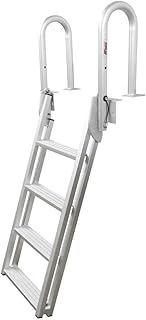
The 600 lb capacity and welded stainless construction make this the most reassuring climb on the list, and the wide anti-slip pedals with full handrails are exactly what you want for a dusk exit when depth perception is poor. Rear-entry geometry suits pontoons best; confirm your transom clearance before ordering.
VEVOR Dock Stairs, 4 Steps, Adjustable Height
Adjustable height is the standout feature here, letting you tune the ladder to shifting water levels rather than living with an awkward first step. Widened nonslip pedals and dual handrails give it a genuine staircase feel — the easiest option for older swimmers or anyone with knee sensitivity.
RecPro Marine 4 Step Flip Up Swim Ladder
Those 20-inch-wide steps are the most comfortable underfoot of anything we tested, and the flip-up action keeps the ladder out of the water when not in use, which slows algae growth and biofouling. A strong choice for permanent dock installations.
Heavy Duty 316 Stainless Pontoon Ladder
All-welded 316 stainless with reinforced joints puts this in serious saltwater territory — no pitting, no seasonal re-tightening, no drama. It costs more than the aluminum options and it should: this is a buy-once ladder for coastal and brackish docks.
Frequently Asked Questions
How many steps should a dock ladder have?
Four steps suits the majority of residential docks, giving roughly two rungs below the waterline at typical levels. Very high docks or reservoirs with large seasonal swings may need five or six steps, or an adjustable-height model.
Is aluminum or stainless steel better?
Aluminum is lighter, cheaper, and perfectly adequate for lakes and ponds. Choose 316 stainless if your dock sits in salt or brackish water, or if you would rather never think about corrosion again.
Can I leave a dock ladder in over winter?
In freezing climates, no. Ice expansion bends rails and shears fasteners, so pull removable ladders or flip up fixed ones and store them dry. Rinse salt-exposed hardware before storage.
Are rope ladders a reasonable alternative?
They serve a different purpose. A rope ladder like the 4-step reinforced polyester model is excellent as a packable backup for kayaks, inflatables, and small motorboats, but it flexes underfoot and should not replace a rigid ladder on a permanent dock.
Final Thoughts
For most lakefront homes, the VEVOR Adjustable Height Dock Stairs offer the best balance of comfort, capacity, and adaptability to changing water levels, while the RecPro 20-inch Flip Up Ladder is the most pleasant climb for barefoot daily swimmers. If your dock sees salt water, skip straight to the 316 Stainless Pontoon Ladder and buy it once — a ladder you trust in fading light is what keeps the evening swim a habit rather than an occasional risk.