Key takeaways
- Noise floor above all: In a shared room, decibels beat every other spec. Look for units rated at or below roughly 30 dB — the 28 dB class is genuinely quieter than a ceiling fan and disappears into the background once you’re horizontal. Peltier designs have no compressor, which is why they can hit these numbers.
- Tank size versus emptying habits: A 35 oz reservoir is fine if you’ll dump it every morning alongside your coffee run. If you’re the type who forgets, step up to 58 oz or 95 oz so you’re not tripping the full-tank shutoff halfway through the night and losing the benefit.
- Coverage that matches the actual room: Most doubles land between 150 and 250 sq ft. A unit rated for 215–280 sq ft is the sweet spot; a 1,000 sq ft model is worth it only for suite-style layouts, lofts with high ceilings, or basement-level housing where moisture load is heavier.
- Light control, not just light options: Color-changing ambient lights are pleasant, but for sleep hygiene you want the ability to dim fully or switch off. Models offering multiple brightness levels let you use warm amber as a low-stimulation nightlight and go dark when it’s time to sleep — blue-heavy LEDs left glowing all night suppress melatonin.
- Timers, auto shutoff, and auto defrost: A timer lets you run the unit for two or three hours before bed and stop, which is often enough. Auto shutoff prevents overflow, and auto defrost keeps the cooling plate working when your room dips cold overnight — a real issue in older buildings with erratic heat.
What's inside
Dorm rooms are humidity traps by design. You’ve got cinder-block walls that sweat, a radiator you can’t control, a roommate who showers at midnight, damp towels drying over a chair back, and a single window that campus facilities would prefer you keep shut. The result is air that sits heavy on your chest at 2 a.m., pillows that never quite feel dry, and that unmistakable musty smell creeping out of the closet by mid-semester. From a sleep-wellness standpoint this matters more than most students realize: the body needs to shed both heat and moisture to initiate deep sleep, and when relative humidity climbs past roughly 60%, evaporative cooling stalls. You end up tossing, waking, and blaming the mattress.
A compact dehumidifier is one of the highest-leverage sleep upgrades you can make in a small room, but dorm living adds constraints: strict outlet limits, roommates who wake at any noise above a whisper, no floor space to spare, and RA rules about appliances. This guide focuses on ultra-quiet Peltier (thermoelectric) units in the 35–95 oz range that suit 200–1,000 sq ft, run cool, and won’t trip a breaker. Below you’ll find what specs actually matter, honest reviews of the strongest options for 2026, and answers to the questions students ask most.
As an Amazon Associate we earn from qualifying purchases.


🛒 Best Price Today on Amazon
Prime members get fast, free shipping on everything above, plus member-only deals. New members get a 30-day free trial — cancel anytime.
How to Choose a Dehumidifier For Dorm Rooms (2026)
- Noise floor above all: In a shared room, decibels beat every other spec. Look for units rated at or below roughly 30 dB — the 28 dB class is genuinely quieter than a ceiling fan and disappears into the background once you’re horizontal. Peltier designs have no compressor, which is why they can hit these numbers.
- Tank size versus emptying habits: A 35 oz reservoir is fine if you’ll dump it every morning alongside your coffee run. If you’re the type who forgets, step up to 58 oz or 95 oz so you’re not tripping the full-tank shutoff halfway through the night and losing the benefit.
- Coverage that matches the actual room: Most doubles land between 150 and 250 sq ft. A unit rated for 215–280 sq ft is the sweet spot; a 1,000 sq ft model is worth it only for suite-style layouts, lofts with high ceilings, or basement-level housing where moisture load is heavier.
- Light control, not just light options: Color-changing ambient lights are pleasant, but for sleep hygiene you want the ability to dim fully or switch off. Models offering multiple brightness levels let you use warm amber as a low-stimulation nightlight and go dark when it’s time to sleep — blue-heavy LEDs left glowing all night suppress melatonin.
- Timers, auto shutoff, and auto defrost: A timer lets you run the unit for two or three hours before bed and stop, which is often enough. Auto shutoff prevents overflow, and auto defrost keeps the cooling plate working when your room dips cold overnight — a real issue in older buildings with erratic heat.
The Best Dehumidifier For Dorm Rooms (2026)s Reviewed
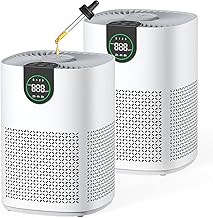
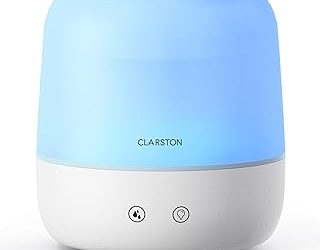
35 OZ Small Dehumidifier with Auto Shut Off & Auto Defrost
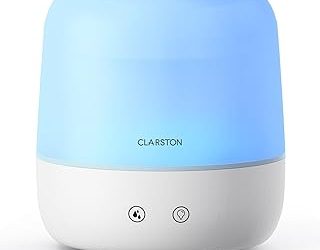
This is the archetypal dorm unit: palm-sized footprint, whisper-level operation, auto defrost for cold rooms, and a colorful light you can leave on or kill entirely. It’s the one I’d hand a first-year student who mainly needs to keep a closet and a corner of the room from turning damp.
35 OZ Quiet Dehumidifier for Bedroom & RV (White, 280 Sq.Ft)
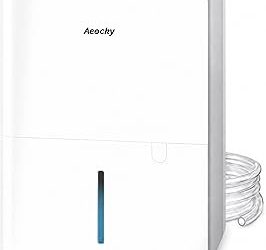
The 28 dB rating is the headline here, and it earns it — this is about as close to inaudible as a moving-air appliance gets, which makes it the standout pick for light sleepers and shared rooms. Coverage up to 280 sq ft gives it real margin in a standard double.
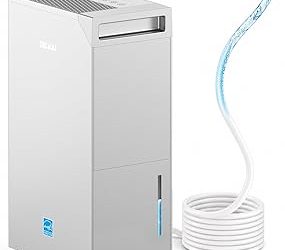
95 OZ Dehumidifier for Home, 1000 sq ft
When your housing is a garden-level room, a converted basement, or a suite with a connected bath, the smaller tanks simply can’t keep pace. The 95 oz reservoir means fewer interruptions, and it still runs quietly with a dimmable seven-color ambient light for nighttime use.
44 OZ Dehumidifier with 5 Timers & 3 Modes
This is the control-freak’s choice, in the best sense: five timer presets, three operating modes, ten light colors, and three brightness levels let you build a genuine wind-down routine rather than just leaving a box running. Auto off and defrost round out a well-rounded 260 sq ft performer.
58 OZ Dehumidifier with 10 Color Lights & 5 Timers
A smart middle ground — noticeably more capacity than the 35 oz class without a meaningful jump in size or noise, plus the same generous timer and lighting controls. Rated for 230 sq ft, it’s a strong fit for a warm room with a lot of laundry drying in it.
Frequently Asked Questions
Will a dehumidifier actually help me sleep better?
Indirectly but meaningfully. Falling asleep depends on a small drop in core body temperature, which you achieve largely by evaporating moisture from your skin. In muggy air that process slows, so you feel clammy and surface into lighter sleep more often. Holding your room around 45–55% relative humidity removes that obstacle, and as a bonus it suppresses the dust mites and mold spores that drive nighttime congestion.
Are these units allowed in dorms?
Almost always, yes. Thermoelectric dehumidifiers draw modest power, generate no open heat, and have no compressor — which puts them in a very different category from banned items like space heaters or hot plates. Still, check your housing handbook, and never run one on a daisy-chained power strip.
How often do I need to empty the tank?
It depends entirely on your room’s moisture load. In a dry winter dorm a 35 oz tank might last two or three days; in a humid September week with wet towels on the radiator, expect daily emptying. Sizing up to 58 or 95 oz is the simplest fix if the routine annoys you.
Should I run it while I’m asleep or before bed?
Either works. Running it for two to three hours before lights-out via a timer pre-conditions the room and eliminates any chance of noise or light disturbance. If your room is persistently damp, overnight operation on the quietest mode is fine — just switch the LED off first.
Final Thoughts
For most students in a standard double, the 35 OZ Quiet Dehumidifier for Bedroom & RV is the pick to beat — its 28 dB operation and 280 sq ft coverage hit the exact balance that dorm life demands. If you want more control over your wind-down routine, the 44 OZ model with five timers and three brightness settings is the more thoughtful buy, while anyone in a basement-level or suite-style room should go straight to the 95 OZ unit and stop worrying about the tank.