Key takeaways
- Continuous drainage with a pump: Gravity hoses are useless in an attic because there is nothing below the unit to drain into. An integrated condensate pump lets you route a slim line up over a joist and out a soffit vent or down an existing plumbing chase, which means the machine runs unattended for months rather than days.
- Verified low-temperature operation: Many bargain units stall below 60°F because the coil ices over. Look for explicit auto-defrost and a stated minimum operating temperature; without it your dehumidifier quits precisely during the damp spring and autumn weeks when attic condensation peaks.
- Capacity matched to air volume, not floor area: Square-footage claims assume eight-foot ceilings and normal furnishing. A vaulted, uninsulated attic with exposed sheathing behaves like a much larger space, so size up one bracket from whatever the box suggests and let the humidistat cycle the unit down.
- Sound output and structural coupling: Compressor vibration transmits straight through joists into the ceiling below. Prioritize units rated under roughly 50 dB for living-adjacent attics, and set any machine on a rubber mat or closed-cell foam pad to decouple it from the framing.
- Sealed enclosure and dust tolerance: Attic air carries fiberglass fibers, cellulose dust, and blown-in debris that clog coils fast. Washable pre-filters and an accessible intake are non-negotiable if you want the unit to survive more than two seasons.
What's inside
An attic that runs damp doesn’t announce itself politely. It shows up as a faint musty note in the hallway below, as insulation that has gone flat and gray, as rafters that feel cool and slightly tacky to the touch in August. From a sleep-wellness perspective the stakes are higher than most homeowners realize: the air in your bedroom is largely borrowed air, drawn upward through the house and exchanged with the cavity above it. When that cavity sits at 70% relative humidity, the mold spores and dust mite allergens it cultivates don’t stay politely upstairs. They settle into the room where you spend a third of your life, and they show up as 3 a.m. congestion, a dry-throat waking pattern, and the kind of shallow, fragmented rest that no mattress upgrade will fix.
Attics are also the hardest room in the house to dehumidify well. Temperatures swing violently, access is awkward, drainage is rarely near a floor drain, and nobody wants to climb a pull-down ladder twice a day to empty a bucket. This guide focuses on machines built for exactly those constraints: units with onboard condensate pumps that can push water uphill and out, low-temperature auto-defrost that keeps them working through shoulder seasons, and noise profiles quiet enough that running one directly above a bedroom ceiling doesn’t cost you the sleep you were trying to protect. Below are the models worth your money in 2026, plus the specifications that actually predict performance up there.
As an Amazon Associate we earn from qualifying purchases.



🛒 Best Price Today on Amazon
Prime members get fast, free shipping on everything above, plus member-only deals. New members get a 30-day free trial — cancel anytime.
How to Choose a Dehumidifier For Attic (2026)
- Continuous drainage with a pump: Gravity hoses are useless in an attic because there is nothing below the unit to drain into. An integrated condensate pump lets you route a slim line up over a joist and out a soffit vent or down an existing plumbing chase, which means the machine runs unattended for months rather than days.
- Verified low-temperature operation: Many bargain units stall below 60°F because the coil ices over. Look for explicit auto-defrost and a stated minimum operating temperature; without it your dehumidifier quits precisely during the damp spring and autumn weeks when attic condensation peaks.
- Capacity matched to air volume, not floor area: Square-footage claims assume eight-foot ceilings and normal furnishing. A vaulted, uninsulated attic with exposed sheathing behaves like a much larger space, so size up one bracket from whatever the box suggests and let the humidistat cycle the unit down.
- Sound output and structural coupling: Compressor vibration transmits straight through joists into the ceiling below. Prioritize units rated under roughly 50 dB for living-adjacent attics, and set any machine on a rubber mat or closed-cell foam pad to decouple it from the framing.
- Sealed enclosure and dust tolerance: Attic air carries fiberglass fibers, cellulose dust, and blown-in debris that clog coils fast. Washable pre-filters and an accessible intake are non-negotiable if you want the unit to survive more than two seasons.
The Best Dehumidifier For Attic (2026)s Reviewed
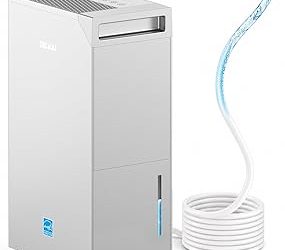
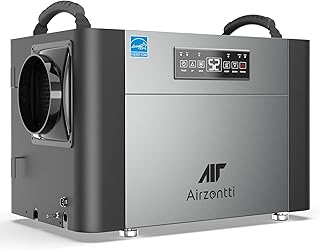
155 Pint Commercial Dehumidifier with Pump and Drain
This is the machine for a genuinely wet attic — one with a history of roof leaks, ice damming, or a bathroom fan venting into the space rather than through it. The 155-pint capacity and Energy Star certification are an unusual pairing at this size, and the built-in pump means you can commit to a permanent drain route on day one.
75 Pints Crawl Space Dehumidifier with Pump and Drain Hose
Designed for crawl spaces, which makes it accidentally perfect for attics: it tolerates unconditioned temperatures, moves around 200 CFM without a large footprint, and covers up to 4,000 square feet. It’s the most sensible default choice for a typical unfinished attic above a two-story home.
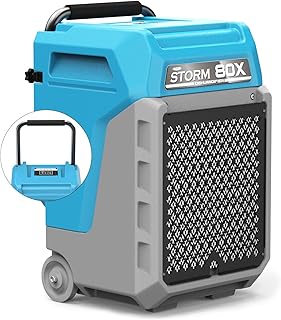
ALORAIR Storm 80X 170 PPD Commercial Dehumidifier
An LGR unit built for restoration crews, meaning it pulls moisture at low grain depressions where ordinary dehumidifiers give up. Overkill for maintenance duty, but if you’re drying out sheathing after water damage and want a six-year warranty behind the purchase, this is the professional-grade answer.
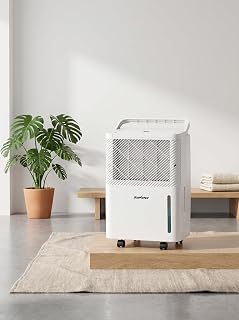
KNKA Energy Star 80 Pint Dehumidifier
The sleep-conscious pick. Smart humidity control holds a tight setpoint instead of short-cycling, and the dedicated sleep mode drops fan speed and dims the display — worth a great deal when the machine sits above a bedroom. Coverage runs to 4,500 square feet with hose-out drainage.
Hisense 50-Pint Portable Dehumidifier
Quiet, efficient, and appropriately modest for a partially conditioned or finished attic that only needs seasonal help. Hisense’s compressor tuning keeps it genuinely unobtrusive, and 50 pints is plenty once the space is insulated and air-sealed.
Frequently Asked Questions
What humidity level should I target in an attic?
Aim for 45–55% relative humidity. Below 40% you’re spending energy for no additional protection; above 60% mold becomes viable on wood and paper-faced insulation within days under warm conditions.
Will an attic dehumidifier make my bedroom air better?
Usually yes, indirectly. Reducing spore and mite reservoirs above the ceiling plane lowers the allergen load migrating downward, which for congestion-prone sleepers often translates to fewer nighttime awakenings within a few weeks.
Can I run one year-round?
In humid climates, yes — but only with a model rated for low-temperature operation. In cold winters most attics dry out naturally through ventilation, so a humidistat that idles the unit is more useful than continuous running.
Does a dehumidifier fix the underlying moisture problem?
No. It manages symptoms while you find the cause: blocked soffit vents, a bath fan terminating in the attic, missing air sealing at ceiling penetrations, or a slow roof leak. Treat it as protection, not a diagnosis.
Final Thoughts
For most homes, the 75 Pint Crawl Space Dehumidifier hits the right balance of capacity, temperature tolerance, and pump-based drainage for an unfinished attic. If the space sits directly above bedrooms and quiet operation matters as much as moisture removal, the KNKA 80 Pint with its dedicated sleep mode is the smarter buy — and for attics recovering from real water damage, the ALORAIR Storm 80X is the tool that will actually finish the job.