Key takeaways
- Match pints to conditions, not just square footage: Manufacturer pint ratings are measured in warm, saturated lab air. A crawl space at 60°F will pull far less moisture, so size up — a 100-pint unit in a damp 1,500 sq. ft. crawl is more realistic than an 80-pint one at its paper limit.
- Insist on a condensate pump with real lift: Crawl spaces rarely have a floor drain below the unit. A built-in pump that can push water 15–16 feet vertically lets you route condensate to a sump, exterior grade, or laundry standpipe without babysitting a bucket.
- Confirm hot-gas auto defrost: Coils frost over below roughly 55°F, and cheap units simply stall. True auto defrost keeps the compressor cycling through winter, which is exactly when stagnant, spore-laden air migrates upstairs into heated bedrooms.
- Weigh the duty cycle against your power bill: These machines run near-continuously. ENERGY STAR certification and an accurate onboard humidistat that shuts the unit down at setpoint are worth more over five years than a low sticker price.
- Check memory restart and warranty length: After a power flicker, the unit should resume its last setting unattended. Pair that with a five- or six-year warranty, since a crawl space appliance is one you’ll rarely lay eyes on.
What's inside
Most people troubleshoot bad sleep from the mattress up. They swap pillows, dim the lights, chase magnesium supplements — and never think about the four-foot void beneath the floor joists. Yet in a typical home, somewhere between a third and a half of the air you breathe in bed started its journey in the crawl space, drawn upward by the stack effect as warm air escapes through the roof. When that space sits above 60% relative humidity, it becomes a nursery for dust mites, mold spores, and the volatile compounds behind that faintly sour “old house” smell. The result upstairs is nasal congestion at 3 a.m., a scratchy throat on waking, and the kind of shallow, fragmented sleep no blackout curtain can fix.
A properly sized crawl space dehumidifier is one of the few home upgrades that quietly improves respiratory comfort every single night. Below, I’ve broken down what actually matters when specifying a unit — pint rating versus real-world coverage, pump reach, low-temperature performance — and reviewed the models worth your attention in 2026, whether you’re drying out a compact 900-square-foot vented crawl or conditioning a fully encapsulated footprint under a large home.
As an Amazon Associate we earn from qualifying purchases.



How to Choose a Crawl Space Dehumidifier (2026)
- Match pints to conditions, not just square footage: Manufacturer pint ratings are measured in warm, saturated lab air. A crawl space at 60°F will pull far less moisture, so size up — a 100-pint unit in a damp 1,500 sq. ft. crawl is more realistic than an 80-pint one at its paper limit.
- Insist on a condensate pump with real lift: Crawl spaces rarely have a floor drain below the unit. A built-in pump that can push water 15–16 feet vertically lets you route condensate to a sump, exterior grade, or laundry standpipe without babysitting a bucket.
- Confirm hot-gas auto defrost: Coils frost over below roughly 55°F, and cheap units simply stall. True auto defrost keeps the compressor cycling through winter, which is exactly when stagnant, spore-laden air migrates upstairs into heated bedrooms.
- Weigh the duty cycle against your power bill: These machines run near-continuously. ENERGY STAR certification and an accurate onboard humidistat that shuts the unit down at setpoint are worth more over five years than a low sticker price.
- Check memory restart and warranty length: After a power flicker, the unit should resume its last setting unattended. Pair that with a five- or six-year warranty, since a crawl space appliance is one you’ll rarely lay eyes on.
The Best Crawl Space Dehumidifiers (2026) Reviewed
Waykar 125 Pint Crawl Space Dehumidifier with Pump
The most versatile pick here: 125 pints of extraction in a chassis compact enough to slide through a standard access hatch, with a pump and drain hose included out of the box. Its generous coverage claim makes it a sensible choice for sprawling or partially encapsulated crawls where a smaller unit would run flat out and never reach setpoint.
AlorAir Sentinel HD55
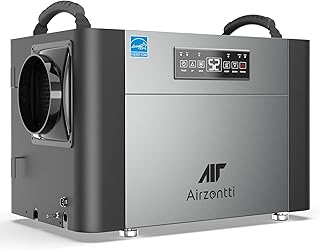
AlorAir builds for restoration contractors, and it shows — the HD55’s hot-gas auto defrost and rugged, ducting-friendly housing make it the unit I’d specify for a cold northern crawl that dips into the 40s. The conservative 1,200 sq. ft. rating is honest rather than optimistic, and the six-year warranty is the longest in this group.
100 Pint Smart Dehumidifier with Pump (5,000 Sq. Ft.)
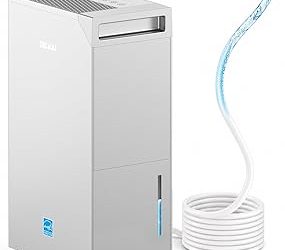
ENERGY STAR 2024 certification plus three drainage options and a 16.4-foot pump lift make this the efficiency play for homeowners who plan to leave it running year-round. The smart humidity control holds setpoint tightly, which keeps the compressor from short-cycling and keeps nighttime noise transmission through the subfloor to a minimum.
CADPXS 80 Pints Crawl Space Dehumidifier
Best suited to tight, low-clearance crawls under 1,000 sq. ft., where its slim footprint and quiet operation are genuine advantages. Auto defrost, memory restart, and a timer come standard — an unusually complete feature set at this capacity.
155 Pint Commercial Dehumidifier with Pump and Drain
The heavyweight of the lineup, and the right answer after flooding, a plumbing failure, or in a whole-house crawl with chronic groundwater intrusion. ENERGY STAR certification keeps operating costs defensible despite the industrial extraction rate.
Frequently Asked Questions
What humidity level should I target?
Aim for 45–55% relative humidity. Dust mites — the most common bedroom allergen — cannot maintain their water balance below roughly 50%, and mold growth stalls in the same range. Going drier wastes energy and can shrink timber framing.
Can a crawl space really affect my sleep?
Indirectly but meaningfully. Airborne allergens and mold VOCs rising from below inflame nasal passages, and even mild nighttime congestion increases arousals and reduces slow-wave sleep. Many clients report clearer mornings within two to three weeks of installation.
Do I need to encapsulate first?
A vapor barrier over exposed soil dramatically reduces the moisture load and lets a smaller unit succeed. Full encapsulation with sealed vents is ideal, but even a taped 10-mil ground barrier is a worthwhile prerequisite.
Where should I position the unit?
Centrally, elevated on blocks or hung from joists, with clear intake and exhaust paths and the condensate line pitched toward its discharge point. Avoid parking it directly beneath a bedroom if floor vibration is a concern.
Final Thoughts
For most homes, the Waykar 125 Pint strikes the best balance of capacity, pump reach, and value. Choose the AlorAir Sentinel HD55 if your crawl space runs cold and you want contractor-grade durability, or the 155 Pint Commercial unit if you’re recovering from water damage. Whichever you pick, set it to 50%, walk away, and judge the results by how you feel at sunrise.