Key takeaways
- Match seat height to counter height: Standard counters run 34–36 inches, so a 24–26 inch seat leaves the 10–12 inches of thigh clearance you need. Guessing here is the single most common return reason.
- Protect your walkway: Leave at least 24 inches of width per stool and 30–36 inches of clearance behind them. Slim saddle seats and stools that tuck fully under the overhang preserve the traffic lane.
- Decide backless or backed honestly: Backless stools disappear under the counter and visually open a room. But if you linger for an hour or more, a low back or barrel shell supports the lumbar curve and spares you the evening stiffness that follows you to bed.
- Insist on a footrest: Dangling feet load the hamstrings and pelvis. A rung or ring lets you shift weight, which matters far more for comfort than cushion thickness alone.
- Check the quiet details: Floor-protecting feet, welded joints, a stated weight capacity, and simple assembly separate a stool that lasts five years from one that develops a wobble by spring.
What's inside
Small kitchens ask a lot of their furniture. When the counter doubles as your breakfast table, your laptop desk, and the place you unwind with a cup of tea at 9 p.m., a stool stops being decor and becomes a piece of equipment. Most shoppers focus on style and color, then discover the real problems a week later: the seat sits too high for the counter, the backless design forces a slumped spine, or the footprint eats the walkway so completely that the room feels smaller than before the stools arrived.
I spend most of my working life studying how home environments shape rest and recovery, and seating is a quietly underrated variable. Where you sit in the evening influences how tense your hips and lower back feel at bedtime, and whether your kitchen reads as a calm wind-down zone or a cramped obstacle course. This guide covers the measurements that actually matter in tight rooms, the ergonomic details worth paying for, and six counter stools that earn their square footage in a small apartment or galley kitchen.
As an Amazon Associate we earn from qualifying purchases.



🛒 Best Price Today on Amazon
Prime members get fast, free shipping on everything above, plus member-only deals. New members get a 30-day free trial — cancel anytime.
How to Choose Counter Stools for Small Spaces (2026)
- Match seat height to counter height: Standard counters run 34–36 inches, so a 24–26 inch seat leaves the 10–12 inches of thigh clearance you need. Guessing here is the single most common return reason.
- Protect your walkway: Leave at least 24 inches of width per stool and 30–36 inches of clearance behind them. Slim saddle seats and stools that tuck fully under the overhang preserve the traffic lane.
- Decide backless or backed honestly: Backless stools disappear under the counter and visually open a room. But if you linger for an hour or more, a low back or barrel shell supports the lumbar curve and spares you the evening stiffness that follows you to bed.
- Insist on a footrest: Dangling feet load the hamstrings and pelvis. A rung or ring lets you shift weight, which matters far more for comfort than cushion thickness alone.
- Check the quiet details: Floor-protecting feet, welded joints, a stated weight capacity, and simple assembly separate a stool that lasts five years from one that develops a wobble by spring.
The Best Counter Stools for Small Spaces (2026), Reviewed
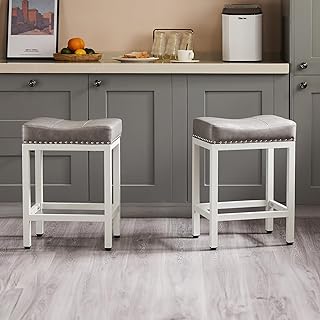
Compact 24 Inch Faux Leather Saddle Stools
A textbook small-space solution: the scooped saddle seat cradles the pelvis without the bulk of a backrest, and the narrow metal legs slide neatly under a counter overhang. The 15-minute assembly claim held up in practice, and the brown faux leather wipes clean after breakfast spills.
Sweetcrispy 24 Inch PU Leather Counter Stools
These strike an unusually good balance between padding and profile — enough cushion to sit through a long dinner, slim enough that two of them barely register in a galley kitchen. The footrest is positioned well, which is exactly what keeps your legs from going numb halfway through a conversation.
HOOBRO 23.6 Inch Industrial Saddle Stools
The best pick for renters who want warmth without weight: a rustic wood-look seat over a black steel frame reads solid but lifts easily for cleaning or rearranging. At 23.6 inches, it’s ideal for counters closer to 34 inches than 36.
Ashley Skempton Counter Height Stool
An 18.5-inch foam-cushioned saddle seat on a distressed wood frame makes this the most genuinely comfortable backless option here — the wider seat spreads pressure instead of concentrating it. Farmhouse styling suits open-plan apartments where the kitchen is visible from the sofa.
Nalupatio Adjustable Swivel Bar Stools
Adjustable height plus a full swivel is the most flexible configuration for a household with mixed counter heights or different-sized users. The low back offers real lumbar contact, making these my recommendation if the counter is where you actually sit and work.
26″ Barrel Counter Stools with Arms
The upholstered barrel shell with arms turns a functional stool into something closer to an armchair, and the 450-pound rating speaks to serious construction. Best for slightly taller counters and rooms where you want one comfortable perch rather than three squeezed-in seats.
Frequently Asked Questions
What stool height works with a 36-inch counter?
A 24–26 inch seat height. Aim for roughly 10–12 inches between the seat and the countertop underside so your thighs clear comfortably.
Are backless stools bad for posture?
Not inherently — for short sits they encourage active core engagement. For sessions longer than 45 minutes, choose a back or a barrel shell.
How many stools fit a small island?
Allow 24 inches of counter width per person. A 48-inch island comfortably seats two; squeezing in a third creates elbow conflicts.
Do swivel stools take more space?
The footprint is the same, but rotation needs clearance behind. Reserve about 30 inches of open floor for comfortable entry and exit.
Final Thoughts
For most small kitchens, the Sweetcrispy 24-inch stools are the safest all-round choice — comfortable, slim, and easy to tuck away. Choose the Ashley Skempton set if you want the most supportive backless seat available, or the Nalupatio swivel stools if your counter serves as a workspace where lumbar support and adjustability will pay you back every evening.