Key takeaways
- Tunable color temperature: Look for models offering both a warm setting near 3000–4000K and a daylight setting around 6000–6500K. Use the cool mode for daytime detail work and switch to warm in the hours before bed — the difference in how alert you feel afterward is genuinely noticeable.
- A genuinely low low-end: Maximum lumens get all the marketing attention, but the useful spec is how far down the dimmer goes. A light that only drops to 700 lumens is still a small sun in a dark bedroom. Stepless or multi-stage dimming beats a single “high/low” toggle every time.
- Diffusion over raw punch: Frosted panels and multi-head designs spread light across a surface instead of firing a hotspot into your retinas. Bare-lens spotlights are superb for outdoor distance work and miserable for indoor assembly.
- Battery capacity and honest runtime: An 8AH or 12000mAh pack should carry you through an evening at mid-brightness. Check runtime at the setting you’ll actually use, not at the lowest one, and prefer USB-C recharging so you aren’t hunting a proprietary brick.
- Stand height and stability: Light coming from above your shoulders casts fewer shadows on your work than light beside it. Telescoping stands in the 67–75 inch range hit the sweet spot; make sure the tripod detaches so the head can also sit on a shelf or clamp magnetically to steel.
What's inside
Anyone who has spent an evening assembling a bed frame under a single overhead bulb knows the frustration: shadows fall exactly where your hands are, the fine print on the hardware bag blurs, and by the time the last bolt is torqued you feel wired, gritty-eyed, and strangely unable to wind down. As someone who spends most of my working life talking to people about sleep, I’ve come to see portable lighting as a bedroom-adjacent purchase rather than a garage-only one. The wrong beam at 10 p.m. floods your eyes with short-wavelength light and quietly pushes your body clock later; the right one lets you finish the job and still fall asleep on schedule.
This guide looks at cordless work lights through two lenses at once. First, the practical stuff: runtime, brightness, build quality, whether the stand actually stays upright on carpet. Second, the part most roundups skip — color temperature control, dimming range, and glare management, all of which matter enormously if your projects happen after dark in the same rooms where you sleep. Below are the models I’d point a friend toward in 2026, followed by the criteria I use to judge them.
As an Amazon Associate we earn from qualifying purchases.


🛒 Best Price Today on Amazon
Prime members get fast, free shipping on everything above, plus member-only deals. New members get a 30-day free trial — cancel anytime.
How to Choose a Cordless Work Light (2026)
- Tunable color temperature: Look for models offering both a warm setting near 3000–4000K and a daylight setting around 6000–6500K. Use the cool mode for daytime detail work and switch to warm in the hours before bed — the difference in how alert you feel afterward is genuinely noticeable.
- A genuinely low low-end: Maximum lumens get all the marketing attention, but the useful spec is how far down the dimmer goes. A light that only drops to 700 lumens is still a small sun in a dark bedroom. Stepless or multi-stage dimming beats a single “high/low” toggle every time.
- Diffusion over raw punch: Frosted panels and multi-head designs spread light across a surface instead of firing a hotspot into your retinas. Bare-lens spotlights are superb for outdoor distance work and miserable for indoor assembly.
- Battery capacity and honest runtime: An 8AH or 12000mAh pack should carry you through an evening at mid-brightness. Check runtime at the setting you’ll actually use, not at the lowest one, and prefer USB-C recharging so you aren’t hunting a proprietary brick.
- Stand height and stability: Light coming from above your shoulders casts fewer shadows on your work than light beside it. Telescoping stands in the 67–75 inch range hit the sweet spot; make sure the tripod detaches so the head can also sit on a shelf or clamp magnetically to steel.
The Best Cordless Work Lights (2026) Reviewed
Aluminum 67″ Rechargeable LED Work Light with Stand
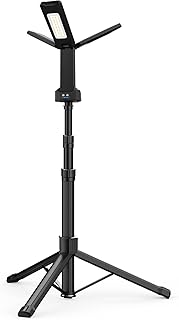
The 500-lumen floor on this one is what earns it my top spot: it’s the rare work light you can run in a bedroom at night without wrecking your melatonin, then push to 2500 lumens for daytime detail work. The aluminum pole feels reassuringly rigid at full extension, and the carrying bag keeps the tripod from scratching finished furniture.
GoGonova Cordless Work Light with Triple LED Lamps
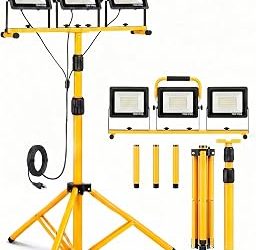
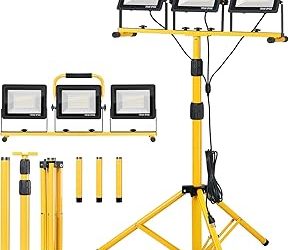
Three separate lamp heads mean you can aim light at a workpiece from multiple angles simultaneously, which all but eliminates the shadow-under-the-hand problem when you’re driving screws into a dark cabinet interior. The 4000K setting is pleasant enough to leave running through an evening build.
DEWALT 20V MAX LED Work Light (DCL050)
If you already own DEWALT 20V batteries, this pivoting-head light is the cheapest sensible thing you can add to the collection — bare tool, no charger, no fuss. It’s a task light rather than an area light, so treat it as a companion to a tripod model rather than a replacement.
12000mAh Camping Light with Adjustable Stand (3 Heads)
The magnetic base is the underrated feature here, letting you stick the head to a metal bed frame or shelf bracket and free both hands. Generous battery capacity and a wide dimming range make it my pick for power outages as well as projects.
12000mAh Work Light with 74.8″ Stand
Nearly 75 inches of height puts this above almost anyone’s eyeline, so the light rakes down across your work instead of glaring back at you. The three-step color range from 3000K to 6000K is the most flexible on this list for anyone who works late.
Frequently Asked Questions
Does using a bright work light at night really affect sleep?
Yes, measurably. Bright, blue-rich light in the evening suppresses melatonin release and shifts your circadian timing later, which is why a 2500-lumen daylight panel at 10 p.m. can leave you lying awake at midnight. Switching to a warm setting at a lower brightness substantially reduces that effect.
How many lumens do I need for furniture assembly?
Around 1000–1500 lumens spread across a room is plenty for most indoor work. Higher outputs are useful outdoors or in large garages, but indoors they mostly produce glare and eye fatigue.
Is a corded light better for long projects?
Corded lights win on unlimited runtime, but they tether you to an outlet and leave a trip hazard across the floor. Modern 8AH and 12000mAh packs comfortably cover an evening, and most recharge overnight.
Can these double as emergency or camping lights?
The tripod models absolutely can, and the ones with magnetic bases and USB output are especially useful during outages. A warm, dimmed setting also makes a far better nightlight for a dark house than a harsh flashlight.
Final Thoughts
For most people building furniture after work, the Aluminum 67″ Rechargeable LED Work Light is the best all-rounder thanks to its low dimming floor and solid build, with the 74.8″ 12000mAh model a close second if you want maximum height and the widest color-temperature range. Add the DEWALT DCL050 as an inexpensive handheld companion if you’re already in the 20V ecosystem, and you’ll be equipped for late-night projects without paying for them the next morning.