Key takeaways
- Spreader bar or gathered end: Spreader bars keep the bed flat and open, which suits back sleepers and easy in-and-out entry, but they sit higher and tip more readily. Brazilian-style gathered ends cocoon around you, cradle side sleepers, and are far more stable — choose based on how you actually rest, not how the photo looks.
- Length before capacity: A 450 lb rating tells you nothing about comfort. What matters is having roughly two feet of bed longer than your height so your body lies on a shallow diagonal instead of folding at the hips. A 9 ft stand suits most adults up to about 6 ft.
- Stand footprint and sag: Freestanding models need a proper curve in the suspension. If the hammock is strung drum-tight between two uprights, you will feel every pressure point. Look for adjustable chain or hook positions so you can dial in a deep, relaxed arc.
- Fabric and thermal behavior: Woven cotton rope breathes beautifully in humid heat but imprints skin and lets cool air through; solid cotton or polyester beds hold warmth and feel smoother, which matters for genuine napping rather than lounging.
- Head and neck support: Most hammock discomfort is cervical, not lumbar. An included pillow or a built-in headrest is not an upsell — it is the difference between dozing and dozing off. Budget for one if it is not in the box.
What's inside
Most people shopping for a hammock are not really shopping for rope and fabric — they are shopping for a nap. And that is where things quietly go wrong. From a sleep-wellness standpoint, the horizontal rest you get outdoors is genuinely valuable: gentle lateral rocking has been shown to help people drift off faster and settle into deeper, less fragmented sleep, and daylight exposure in the late morning or early afternoon helps anchor your circadian rhythm rather than blur it. But a hammock that sags in the wrong places, pinches your shoulders, or wobbles every time you shift will do the opposite. Instead of a restorative twenty minutes, you get a stiff neck and a lower back that complains until dinner.
This guide looks at Best Choice Products hammocks and a few closely comparable freestanding models through that lens: not just “will it hold me,” but “will my spine be neutral, will my head be supported, and will I actually fall asleep in it?” I cover spreader bars versus Brazilian-style gathered ends, why stand geometry matters more than stand weight rating, and where each model earns its place. Whether you have two mature trees, a bare concrete patio, or a spare corner indoors, there is a configuration here that works.
As an Amazon Associate we earn from qualifying purchases.



🛒 Best Price Today on Amazon
Prime members get fast, free shipping on everything above, plus member-only deals. New members get a 30-day free trial — cancel anytime.
How to Choose a Best Choice Products Hammock (2026)
- Spreader bar or gathered end: Spreader bars keep the bed flat and open, which suits back sleepers and easy in-and-out entry, but they sit higher and tip more readily. Brazilian-style gathered ends cocoon around you, cradle side sleepers, and are far more stable — choose based on how you actually rest, not how the photo looks.
- Length before capacity: A 450 lb rating tells you nothing about comfort. What matters is having roughly two feet of bed longer than your height so your body lies on a shallow diagonal instead of folding at the hips. A 9 ft stand suits most adults up to about 6 ft.
- Stand footprint and sag: Freestanding models need a proper curve in the suspension. If the hammock is strung drum-tight between two uprights, you will feel every pressure point. Look for adjustable chain or hook positions so you can dial in a deep, relaxed arc.
- Fabric and thermal behavior: Woven cotton rope breathes beautifully in humid heat but imprints skin and lets cool air through; solid cotton or polyester beds hold warmth and feel smoother, which matters for genuine napping rather than lounging.
- Head and neck support: Most hammock discomfort is cervical, not lumbar. An included pillow or a built-in headrest is not an upsell — it is the difference between dozing and dozing off. Budget for one if it is not in the box.
The Best Choice Products Hammocks (2026) Reviewed
Best Choice Products 2-Person Double Cotton Rope Hammock
This is the classic tree-hung setup: woven cotton rope with spreader bars, a 450 lb capacity, and a carrying case for transport. It is the most breathable option here and ideal for hot, still afternoons, though the open weave means you will want a throw or thin pad underneath if you plan to stay past sunset.
Best Choice Products Double Hammock with Steel Stand — Desert Stripes
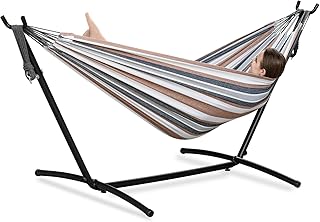
The Brazilian-style gathered ends make this the strongest sleep performer in the lineup: the fabric wraps your shoulders, side sleeping is comfortable, and the stability is reassuring for anyone nervous about tipping. Because it is self-supporting, it moves indoors for winter without modification.
Best Choice Products Hanging Curved Chaise Lounge Swing
Not a hammock in the traditional sense, but worth considering if getting up from floor level is difficult. The curved steel frame holds a fixed ergonomic recline, the built-in pillow supports the neck properly, and the removable canopy blocks the harsh overhead light that tends to interrupt daytime rest.
Lazy Daze Portable Hammock with Stand
A well-executed 9 ft freestanding kit with a pillow and carrying bag included, and the assembly is genuinely straightforward. The spreader-bar bed sits flat and wide, making it the friendliest choice for reading or working outdoors rather than sleeping deeply.
Double Hammock with Stand (Coffee) — Space-Saving Steel Frame
The narrower footprint is the draw here, fitting balconies and small decks where a standard stand simply will not go. Capacity and length match the larger models, so you compromise on floor space, not on fit.
Frequently Asked Questions
Is sleeping in a hammock bad for your back?
Not if it is set up correctly. Lie diagonally across the bed rather than straight down the middle, and allow a deep sag so your spine follows a gentle curve. Problems arise from over-tight suspension and hammocks that are too short.
How long should a hammock nap be?
Twenty to thirty minutes, ideally early in the afternoon. That length lets you gain alertness without slipping into deep sleep, which is what causes grogginess afterward and can push back your bedtime.
Do I need trees for a Best Choice Products hammock?
No. The stand-included models are fully self-supporting and work on patios, decks, lawns, or indoors. Only the rope hammock requires two anchor points roughly 13 to 15 ft apart.
Can two adults really use a double hammock?
Comfortably for lounging, yes. For sleeping, two people tend to roll toward the center, so most couples find a double more pleasant for one occupant with room to stretch.
Final Thoughts
If your goal is real, restorative rest, the Best Choice Products Double Hammock with Steel Stand in Desert Stripes is the pick — the gathered-end design supports the body far better than any spreader bar, and it works indoors and out. Choose the 2-Person Double Cotton Rope Hammock if you have trees and want maximum airflow, and the Lazy Daze Portable Hammock with Stand if you want a flat, stable bed with a pillow included straight out of the box.