Key takeaways
- Reach that matches your actual ceiling: Measure from the floor to the underside of your blades, then subtract your comfortable overhead arm reach — roughly 24 inches above your height. A 48-inch pole handles standard eight-foot ceilings; vaulted bedrooms and stairwell fixtures need telescoping poles in the 90- to 110-inch range.
- A sleeve that wraps rather than wipes: U-shaped or pocket-style heads sandwich the blade and clean top, bottom, and leading edge in one pass. Flat pads push dust off the top surface and into the air — the opposite of what you want in a sleeping space.
- Genuine dust capture, not redistribution: Split-fiber microfiber and chenille hold particles electrostatically. Feather-style heads look the part but tend to fling fine dust, which then resettles overnight.
- Weight at full extension: A pole that feels light on the floor becomes a lever overhead. Anything under a pound at maximum reach lets you work slowly and deliberately instead of jabbing at the blade.
- Washable, and honestly so: Look for sleeves rated for machine washing and multi-packs of replacements. A duster you can’t fully clean becomes a reservoir that reintroduces last season’s dust every time you use it.
What's inside
Most people think of ceiling fan blades as a cosmetic problem — a gray fringe you notice only when afternoon light hits at the wrong angle. From a sleep-wellness perspective, they are something more consequential. A fan running above an unmade bed at 2 a.m. is a small, tireless distribution system, lifting settled dust off the blade edge and circulating it through the exact cubic meter of air you breathe for seven or eight hours. Clients who tell me they wake congested, dry-throated, or vaguely unrested often have immaculate sheets and a blade coated in six months of accumulation.
The obstacle is almost never willingness. It’s access. Blades sit eight to eleven feet up, they flex under pressure, and the standard approach — a ladder, a rag, and a leap of faith — is awkward enough that most of us postpone it indefinitely. This guide covers the tools that remove the ladder from the equation: what to look for in reach, head design, and blade-gripping ability, plus reviews of the strongest options available in 2026 and answers to the questions I hear most often about cleaning cadence and technique.
As an Amazon Associate we earn from qualifying purchases.



How to Choose a Ceiling Fan Duster (2026)
- Reach that matches your actual ceiling: Measure from the floor to the underside of your blades, then subtract your comfortable overhead arm reach — roughly 24 inches above your height. A 48-inch pole handles standard eight-foot ceilings; vaulted bedrooms and stairwell fixtures need telescoping poles in the 90- to 110-inch range.
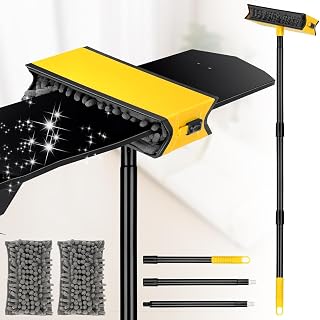
- A sleeve that wraps rather than wipes: U-shaped or pocket-style heads sandwich the blade and clean top, bottom, and leading edge in one pass. Flat pads push dust off the top surface and into the air — the opposite of what you want in a sleeping space.
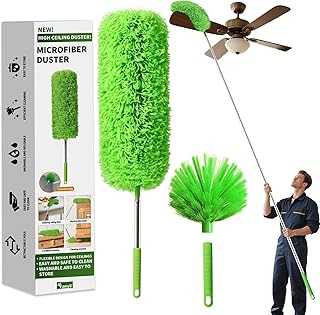
- Genuine dust capture, not redistribution: Split-fiber microfiber and chenille hold particles electrostatically. Feather-style heads look the part but tend to fling fine dust, which then resettles overnight.
- Weight at full extension: A pole that feels light on the floor becomes a lever overhead. Anything under a pound at maximum reach lets you work slowly and deliberately instead of jabbing at the blade.
- Washable, and honestly so: Look for sleeves rated for machine washing and multi-packs of replacements. A duster you can’t fully clean becomes a reservoir that reintroduces last season’s dust every time you use it.
The Best Ceiling Fan Dusters (2026) Reviewed
DRQ Ceiling Fan Cleaner Duster
The removable microfiber sleeve and 13-to-48-inch pole make this the most sensible default for standard-height bedrooms, and the U-shaped head grips the blade properly instead of skating across the top. It’s the one I recommend to people who want a tool they’ll actually reach for monthly rather than annually.
Eyliden 68″ Adjustable Ceiling Fan Duster
At three-quarters of a pound fully extended, this is the least fatiguing duster in the group, and the 360° dual-sided head means you’re cleaning on both the push and the pull. The 68-inch reach is the sweet spot for nine- and ten-foot ceilings without the wobble longer poles develop.
DELUX Microfiber Feather Duster
The 100-inch pole and bendable head solve the vaulted-ceiling problem that defeats most fan dusters, letting you approach a blade at an angle rather than straight up. Work slowly with this one — the reach is exceptional, but at that length gentle contact captures far more than vigorous sweeping.
CLDREAM Ceiling Fan Cleaner Duster
Chenille holds noticeably more dust than thin microfiber, which matters when blades haven’t been touched in a while and the first pass is doing real work. The three-foot pole keeps it maneuverable for anyone comfortable on a low step, and the pads wash and re-loft well.
12pcs Microfiber Dusters with Extension Pole
A stainless-steel pole spanning 30 to 100 inches plus a generous stack of washable heads makes this the best value for a whole-home rotation — fresh sleeve for the bedroom fan, a workhorse one for the garage. The rigidity of the steel also means less flex at full extension than fiberglass alternatives.
Frequently Asked Questions
How often should I clean a bedroom ceiling fan?
Every two to four weeks during months you’re running it, and once before you start the season. Bedroom fans warrant a tighter schedule than living-room fans simply because of the hours you spend breathing directly beneath them.
Should the fan be off?
Always, and give the blades a moment to stop completely. Cleaning a coasting fan risks bending the blade bracket, which produces the wobble and low hum that fragment light sleep long before you consciously notice them.
Dry or damp?
Dry first — always. Damp microfiber on a dust-laden blade creates a paste that smears rather than lifts. Once the loose layer is gone, a lightly dampened sleeve handles the greasy film that builds up on blades near kitchens.
How do I wash the sleeves?
Shake them out outdoors, then machine wash cold with detergent only. Skip fabric softener and dryer sheets entirely; both coat the fibers and destroy the electrostatic grab that makes microfiber work.
Final Thoughts
For most bedrooms, the DRQ duster is the practical pick — right length, right head shape, low enough friction that the job gets done. If your ceilings are tall or your shoulders object to overhead work, the ultralight Eyliden is worth the upgrade, and the DELUX with its 100-inch reach is the only realistic answer for vaulted spaces. Whichever you choose, the goal is the same: a fan that moves air across your bed without moving anything else.