Key takeaways
- Motor type: DC motors draw roughly 60–70% less power than comparable AC motors and, more importantly for sleepers, run with less electrical hum and offer six or more genuinely distinct speeds. An AC motor is perfectly serviceable in a living room; over a pillow, DC earns its premium.
- Blade span versus room area: Aim for 42–44 inches in rooms under 144 sq ft, 52 inches for typical 15×15 bedrooms and living rooms, and 60 inches or more for great rooms and covered patios. An oversized fan on a low speed is quieter than a small fan straining on high.
- Ceiling height and mount: Standard mount with a short downrod suits 8-foot-plus ceilings. Below that, choose a flush or low-profile mount and keep at least 7 feet of clearance from floor to blade — both for safety and to stop the airflow from feeling like a wind tunnel.
- Light color temperature: Fans with 3CCT selection (roughly 3000K/4000K/5000K) let you run warm amber in the evening and neutral white for cleaning or reading. Dimmability matters just as much; a fixed, non-dimming LED at full output is the single most sleep-hostile feature in this category.
- Controls and reversibility: Remote or app control means you can adjust speed without getting out of bed. A reversible motor lets you run the fan clockwise on low in winter to push warm air down without a draft, which keeps the fan useful twelve months a year.
What's inside
Most people shop for a ceiling fan the same way they shop for a light switch — by size, by finish, by whatever is on sale. Then they install it above the bed and discover the real problem at 2 a.m.: a faint mechanical hum that the ear refuses to ignore, a wobble that clicks against the downrod, a light kit that floods the room with 5000K daylight right when melatonin is trying to rise. Airflow is only half of what a bedroom fan does. The other half is whether it lets you sleep.
This guide looks at the current crop of well-reviewed indoor and covered-outdoor fans through a sleep-wellness lens: motor acoustics, whether the blades can move air at low speed instead of shouting at high speed, color-temperature control on the integrated LED, and how the thing is controlled once you are already horizontal. Below you will find the picks, followed by a buying framework, short expert notes on each fan, and answers to the questions readers ask most.
As an Amazon Associate we earn from qualifying purchases.



🛒 Best Price Today on Amazon
Prime members get fast, free shipping on everything above, plus member-only deals. New members get a 30-day free trial — cancel anytime.
How to Choose a/an Ceiling Fan Consumer Reports (2026)
- Motor type: DC motors draw roughly 60–70% less power than comparable AC motors and, more importantly for sleepers, run with less electrical hum and offer six or more genuinely distinct speeds. An AC motor is perfectly serviceable in a living room; over a pillow, DC earns its premium.
- Blade span versus room area: Aim for 42–44 inches in rooms under 144 sq ft, 52 inches for typical 15×15 bedrooms and living rooms, and 60 inches or more for great rooms and covered patios. An oversized fan on a low speed is quieter than a small fan straining on high.
- Ceiling height and mount: Standard mount with a short downrod suits 8-foot-plus ceilings. Below that, choose a flush or low-profile mount and keep at least 7 feet of clearance from floor to blade — both for safety and to stop the airflow from feeling like a wind tunnel.
- Light color temperature: Fans with 3CCT selection (roughly 3000K/4000K/5000K) let you run warm amber in the evening and neutral white for cleaning or reading. Dimmability matters just as much; a fixed, non-dimming LED at full output is the single most sleep-hostile feature in this category.
- Controls and reversibility: Remote or app control means you can adjust speed without getting out of bed. A reversible motor lets you run the fan clockwise on low in winter to push warm air down without a draft, which keeps the fan useful twelve months a year.
The Best Ceiling Fan Consumer Reports (2026)s Reviewed
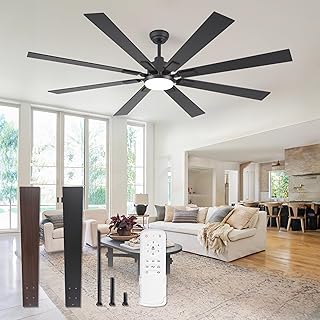
52″ Modern Ceiling Fan with Lights and Remote (DC, 3CCT)
This is the most complete bedroom package here: a reversible DC motor with a genuinely low bottom speed, a remote so you never have to stand up, and 3CCT lighting that can be dialed down to a warm evening glow. Indoor/outdoor rating makes it a sensible choice for a covered porch as well.
Hunter Builder Deluxe 52″ (New Bronze, 53091)
A traditional five-blade AC workhorse with Hunter’s WhisperWind motor and included bulbs — reliable, quiet enough at medium speed, and priced for whole-house outfitting. The pull chain is the trade-off; plan on a wall control if it is going over a bed.
Hunter Builder 42″ Low Profile Flush Mount (51091)
The pick for compact bedrooms, kitchens, and anything with a ceiling under 8 feet. Flush mounting preserves headroom while the 42-inch span still circulates a small room well, and the LED kit keeps it from needing a separate fixture.
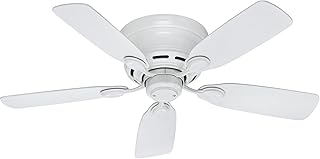
Hunter Low Profile IV 42″ (Snow White, 51059)
No light kit, no fuss — ideal for a nursery or guest room that already has ambient lighting and needs nothing more than gentle, consistent air movement. The absence of an LED also means nothing to glare, buzz, or flicker overhead.
ZMISHIBO 72″ High-CFM DC Fan (Damp Rated, Black)
Built for volume: 72 inches of span on a quiet DC motor moves serious air across a great room or covered patio without needing top speed. Damp-rated construction and dual-finish blades make it the standout for sheltered outdoor living areas.
Frequently Asked Questions
Does sleeping with a ceiling fan on cause problems?
For most people it helps — cooler skin temperature supports sleep onset, and steady low-level airflow masks intermittent noise. If you wake with a dry throat, congestion, or stiff shoulders, drop to the lowest speed, angle furniture out of the direct path, or run the fan in reverse.
How quiet is quiet enough for a bedroom?
Look for fans described as noiseless or WhisperWind-class and run them one or two speeds below maximum. Most audible fan noise is not the motor but blade turbulence at high speed, plus wobble from an unbalanced or loosely mounted assembly.
Do I need a remote, or is a pull chain fine?
Pull chains are fine for kitchens and hallways. In a bedroom, remote or app control is a meaningful upgrade, because it lets you adjust speed and dim the light without fully waking yourself.
Which direction should the blades turn?
Counterclockwise in warm months to create a downdraft and wind-chill effect; clockwise on low in cold months to circulate warm air near the ceiling without a direct breeze.
Final Thoughts
For a primary bedroom, the 52″ modern DC fan with remote and 3CCT lighting is the strongest all-round sleep choice thanks to its quiet low speeds and adjustable warm light. Tight or low-ceiling rooms are best served by the Hunter Builder 42″ Low Profile Flush Mount, while large open living areas and covered patios belong to the ZMISHIBO 72″ — a fan big enough to stay quiet precisely because it never has to work hard.