Key takeaways
- Ignore headline PSI, look at GPM: Water volume does the rinsing; pressure only loosens dirt. Anything in the 1.2–2.0 GPM range with 1,700–2,500 real PSI will wash a car beautifully, and marketing numbers above 4,000 PSI on a household plug-in unit are almost always peak or theoretical figures rather than sustained output.
- Foam cannon quality over foam cannon quantity: A thick, clinging snow-foam layer lifts grit before your mitt touches paint, which is how you avoid swirl marks. Look for a cannon with a metal adjustment knob and a wide fan spray rather than a narrow jet.
- Hose length and flexibility: Thirty feet or more lets you circle a sedan without repositioning the unit; stiff, coiled-memory hose is the single most common complaint across every price bracket, so flexible or reel-mounted hose is worth paying for.
- Noise and vibration: Induction-motor and anti-tip designs run noticeably smoother than bare-bones universal motors. If you wash early in the morning in a shared driveway, this matters more than an extra 300 PSI.
- Storage footprint: Onboard nozzle holders, a soap tank, and a wrap-around hose keeper are the difference between a tool you use monthly and one that stays buried behind the recycling bins.
What's inside
Nothing wrecks a Saturday morning quite like dragging a hose across the driveway, filling a bucket, and still ending up with a car that looks streaky under the afternoon sun. Most people don’t want a professional detailing setup — they want to spend forty minutes outside, get a genuinely clean vehicle, and go back indoors feeling like they accomplished something. The problem is that the pressure washer market is loud in every sense: inflated PSI claims on the box, mystery plastic fittings, and machines that scream loudly enough to make a weekend chore feel like construction work.
This guide cuts through that. As someone who writes mostly about rest, recovery, and the small household rituals that make a home feel calm, I’ve come to judge outdoor tools by a slightly unusual standard: does using this thing leave you relaxed or rattled? Below you’ll find what actually matters when choosing a car wash pressure washer in 2026 — real pressure versus marketing pressure, noise, hose length, foam quality, and storage footprint — followed by honest notes on the models worth your attention.
As an Amazon Associate we earn from qualifying purchases.




🛒 Best Price Today on Amazon
Prime members get fast, free shipping on everything above, plus member-only deals. New members get a 30-day free trial — cancel anytime.
How to Choose a/an Car Wash Pressure Washer (2026)
- Ignore headline PSI, look at GPM: Water volume does the rinsing; pressure only loosens dirt. Anything in the 1.2–2.0 GPM range with 1,700–2,500 real PSI will wash a car beautifully, and marketing numbers above 4,000 PSI on a household plug-in unit are almost always peak or theoretical figures rather than sustained output.
- Foam cannon quality over foam cannon quantity: A thick, clinging snow-foam layer lifts grit before your mitt touches paint, which is how you avoid swirl marks. Look for a cannon with a metal adjustment knob and a wide fan spray rather than a narrow jet.
- Hose length and flexibility: Thirty feet or more lets you circle a sedan without repositioning the unit; stiff, coiled-memory hose is the single most common complaint across every price bracket, so flexible or reel-mounted hose is worth paying for.
- Noise and vibration: Induction-motor and anti-tip designs run noticeably smoother than bare-bones universal motors. If you wash early in the morning in a shared driveway, this matters more than an extra 300 PSI.
- Storage footprint: Onboard nozzle holders, a soap tank, and a wrap-around hose keeper are the difference between a tool you use monthly and one that stays buried behind the recycling bins.
The Best Car Wash Pressure Washer (2026)s Reviewed
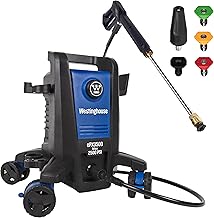
Westinghouse ePX3500
This is the balanced pick for most drivers: 2,500 max PSI at 1.76 GPM is genuinely enough for baked-on road film, and the anti-tipping base plus pro-style steel wand make it feel like a tool rather than an appliance. The onboard soap tank saves you from juggling a separate bottle mid-wash, which is a small thing that changes how often you actually bother.
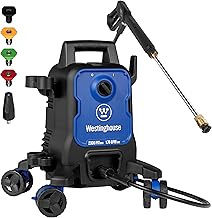
Westinghouse ePX3100
Mechanically the same platform as the ePX3500 with a slightly gentler 2,300 PSI ceiling, which honestly suits automotive paint and clear coat even better. If you’re washing cars first and driveways second, this is the smarter buy of the two.
CRAFTSMAN CMEPW1700
At 1,700 PSI and 1.2 GPM, this is the quietest and most compact option here, and it’s my recommendation for anyone in an apartment, condo, or small garage. Wash times run a bit longer, but the trade-off is a machine light enough to carry one-handed and store on a shelf.
Adjustable Electric Pressure Washer with 33FT Hose
The advertised 5,000 PSI figure is a peak rating rather than working pressure, so calibrate expectations — but the genuinely flexible 33-foot hose, adjustable pressure dial, and four-nozzle set make this a practical, well-equipped kit for full-vehicle work without repositioning.
Pressure Washer with 4 Quick Connect Nozzles and Foam Cannon
Quick-connect nozzles are the underrated feature here: swapping from 40-degree rinse to soap takes a second, which keeps the wash moving and the panels wet. A solid budget entry point, though the plastic fittings deserve a hand-tight touch rather than force.
Frequently Asked Questions
How much PSI is safe for car paint?
Stay between roughly 1,200 and 1,900 PSI at the nozzle for painted panels, and keep the tip at least a foot away. Higher-rated machines are fine as long as you use the wider 25- or 40-degree nozzle and never the red zero-degree tip on bodywork.
Do I still need a wash mitt?
Yes. Pressure washing plus foam removes most loose contamination, but bonded road film needs light mechanical contact. The pressure washer’s job is to make that contact safe.
Can I use dish soap in the foam cannon?
Avoid it — household detergents strip wax and sealant. Use a pH-neutral automotive snow-foam concentrate designed for cannon dilution.
Will an electric unit work in winter?
It will, but drain the pump and hose fully after each cold-weather wash. Trapped water freezing inside the pump head is the leading cause of premature failure in otherwise healthy machines.
Final Thoughts
For most people, the Westinghouse ePX3100 is the sweet spot — paint-friendly pressure, a real steel wand, and enough onboard storage that setup takes two minutes. Step up to the ePX3500 if you’re also cleaning fences and pavers, or choose the CRAFTSMAN CMEPW1700 if quiet operation and a small storage footprint matter more to you than raw speed.