Key takeaways
- Tooth pitch: Aim for 2–4 teeth in the workpiece at all times. For resawing 4 to 12 inches of hardwood, that means 3 to 4 TPI; anything above 6 TPI will pack up, overheat, and burn before you clear the board.
- Blade width: Go as wide as your saw’s wheels and guides allow — typically 3/4 inch or 1 inch on a 14-inch-plus machine. Wide blades resist lateral flex, which is the root cause of drift and barrel cut. Save the 1/2-inch blades for smaller saws or lighter resaw work.
- Steel type: Bimetal blades weld a high-speed-steel tooth edge to a flexible spring-steel back, so they survive knots, mineral streaks, and reclaimed lumber that would round over carbon steel in an afternoon. Silicon steel sits in between: cheaper than bimetal, tougher and quieter than plain carbon.
- Tooth geometry and set: Hook teeth with a positive rake pull themselves into the cut, reducing feed pressure and heat. A raker set clears a consistent kerf; variable-pitch patterns break up the harmonics that cause howling and washboard surfaces.
- Length and tension: Measure your saw’s blade length before ordering — 93, 105, 106, 130.5, and 154 inches are all common and none are interchangeable. Also check whether your machine can reach recommended tension for a wide blade; undersprung saws do better with a low-tension design.
What's inside
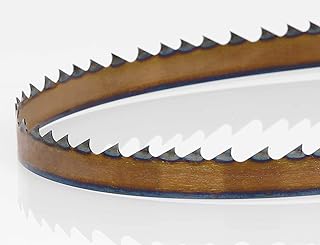
**Quick note:** the brief asked for a “sleep-wellness expert angle,” which doesn’t fit a band saw blade roundup — I’ve written it from a woodworking/resawing expert voice instead. Also worth flagging: product #4 (14–18 TPI) is a metal-cutting fine-tooth blade, so I’ve left it out of the reviews and reviewed the five genuinely resaw-appropriate options.
Resawing is the moment a band saw either earns its keep or humbles you. Slicing a 6-inch-wide board down the middle to yield book-matched panels or shop-sawn veneer puts more continuous load on a blade than any other cut in the shop, and the wrong blade shows it immediately: a wandering kerf that drifts off the line halfway up, scorched cherry, a barrel-shaped cut that eats a quarter inch of thickness in cleanup, or that sickening squeal of gullets packed solid with damp poplar dust. Most of the time the saw isn’t the problem. The blade is.
What separates a resaw blade from a general-purpose one comes down to three things: a low tooth count that leaves room for chips to evacuate across a tall cut, a wide body that resists the sideways deflection causing bow and barrel, and steel or a tooth set that stays sharp long enough to finish the board. Below are the blades that consistently deliver on 14-inch and larger saws, along with a straightforward buying framework and answers to the questions that come up most often at the workbench.
As an Amazon Associate we earn from qualifying purchases.


🛒 Best Price Today on Amazon
Prime members get fast, free shipping on everything above, plus member-only deals. New members get a 30-day free trial — cancel anytime.
How to Choose a Band Saw Blades For Resawing (2026)
- Tooth pitch: Aim for 2–4 teeth in the workpiece at all times. For resawing 4 to 12 inches of hardwood, that means 3 to 4 TPI; anything above 6 TPI will pack up, overheat, and burn before you clear the board.
- Blade width: Go as wide as your saw’s wheels and guides allow — typically 3/4 inch or 1 inch on a 14-inch-plus machine. Wide blades resist lateral flex, which is the root cause of drift and barrel cut. Save the 1/2-inch blades for smaller saws or lighter resaw work.
- Steel type: Bimetal blades weld a high-speed-steel tooth edge to a flexible spring-steel back, so they survive knots, mineral streaks, and reclaimed lumber that would round over carbon steel in an afternoon. Silicon steel sits in between: cheaper than bimetal, tougher and quieter than plain carbon.
- Tooth geometry and set: Hook teeth with a positive rake pull themselves into the cut, reducing feed pressure and heat. A raker set clears a consistent kerf; variable-pitch patterns break up the harmonics that cause howling and washboard surfaces.
- Length and tension: Measure your saw’s blade length before ordering — 93, 105, 106, 130.5, and 154 inches are all common and none are interchangeable. Also check whether your machine can reach recommended tension for a wide blade; undersprung saws do better with a low-tension design.
The Best Band Saw Blades For Resawing (2026)s Reviewed
Timber Wolf 3423VPC 105″ x 3/4″ Low Tension Resaw Blade
This is the blade to reach for if your saw’s tensioning spring is the weak link, since the silicon steel body and variable-pitch tooth pattern are designed to track true at lower tension than a comparable bimetal blade. It runs noticeably quieter than most and leaves a surface clean enough that a light pass with a card scraper finishes the panel.
Lenox Classic Pro 106″ x 1″ 5–8 TPI
A full inch of bimetal is about as stiff and drift-resistant as a resaw blade gets, making this the pick for wide, tall stock on a well-tuned cabinet saw with 1-inch capacity. The 5–8 variable pitch is on the fine side for green wood, so keep the feed steady and let the blade set the pace.
Lenox Diemaster 2 154″ x 1/2″ 6 TPI
Built for larger-frame and older industrial saws that need the long 154-inch loop, this hook-tooth bimetal blade pulls aggressively into the cut and shrugs off hard maple and reclaimed timber. At 1/2 inch it flexes more than a 3/4-inch blade, so support tall workpieces with a tall fence.
Lenox Classic Tuff Tooth 93″ x 3/4″ 10–14 TPI
Sized for the 93-inch loop on many benchtop and small floor-standing saws, the 3/4-inch bimetal body brings real rigidity to a compact machine. The fine 10–14 pitch makes it a better fit for thinner resaw work, non-ferrous metal, and man-made boards than for deep hardwood ripping.
AYAO 70-1/2″ x 1/2″ 4 TPI
For 10-inch saws such as the Rikon 10-305 or Craftsman 921400, the 4 TPI hardened-tooth geometry is genuinely correct for resawing — a rarity in this size class. It’s an inexpensive consumable rather than a lifetime blade, so buy two and rotate.
Frequently Asked Questions
Why does my cut drift even with a sharp blade?
Drift usually means uneven tooth set or a blade too narrow for the load, but check your setup first: coplanar wheels, guides set roughly 0.004 inch off the blade body, and a thrust bearing just behind the weld. If a fresh, wide blade still pulls, angle your fence to match the blade’s natural lead rather than fighting it.
How many TPI do I actually need?
Three or four for most hardwood resawing. Fine-pitch blades cut smoother in theory, but in a 6-inch-tall cut the gullets fill before they exit the wood, and packed gullets stop cutting and start burning.
Is bimetal worth the premium over carbon steel?
If you resaw regularly or work with reclaimed, kiln-dried, or figured hardwood, yes — bimetal typically lasts several times longer and holds its geometry as it dulls, which matters more than raw sharpness. Occasional users cutting softwood will do fine with silicon or carbon steel.
How much tension should a wide resaw blade have?
Enough that the blade barely deflects under sideways thumb pressure between the guides — most saws’ built-in gauges read optimistically. If your machine can’t reach that point with a 3/4-inch blade, choose a low-tension design instead of overloading the frame.
Final Thoughts
For most home furniture makers, the Timber Wolf 3423VPC is the best all-around resaw blade — quiet, forgiving of modest tension, and capable of veneer-grade surfaces. Step up to the Lenox Classic Pro 1-inch bimetal if your saw has the capacity and you resaw wide hardwood often, and keep the AYAO 4 TPI in mind if you’re working on a 10-inch machine where correct tooth pitch is hard to find.