Key takeaways
- Noise level in dBA: Anything at or below 60 dBA sits roughly where normal conversation does, which means it won’t cut through a closed bedroom window. Above 80 dBA you’re into lawnmower territory — fine for a shop bay, genuinely disruptive in a neighborhood before 9 a.m.
- Tank size versus recovery: A larger tank cycles the motor less often, and fewer cycles means fewer noise spikes. For continuous blowout work, 6 to 8 gallons keeps the pump quiet between refills; a 1-gallon tank will run almost constantly.
- Oil-free pump design: Oil-free units skip maintenance, tolerate being hauled around in a van, and eliminate any chance of oil mist contaminating a freshly polished panel. That last point matters more than most buyers realize.
- Real-world portability: Weight and wheels dictate whether you’ll actually carry the thing to the third stall of a parking garage. Aluminum tanks shave meaningful pounds off steel equivalents without sacrificing durability.
- Power source flexibility: A 120V unit needs a reliable outlet, which isn’t guaranteed on a driveway job. Cordless or 12V DC options fill the gap for inflation and light tasks where dragging an extension cord isn’t practical.
What's inside
Mobile detailing lives or dies on two things: consistent airflow and the goodwill of whoever lives in the house you’re parked in front of. Most detailers discover the second one the hard way — a 90-decibel pancake compressor cycling at 7:30 a.m. in a quiet cul-de-sac, and suddenly you’re the reason someone’s newborn is awake. As someone who spends most of my working life studying how ambient noise fragments sleep, I can tell you that the difference between a 60 dBA and an 85 dBA machine isn’t a spec-sheet footnote. It’s the difference between background hum and a genuine physiological startle response for anyone still in bed.
This guide looks at air compressors through both lenses at once: can it actually run a blowout nozzle, an air-powered polisher, or a set of interior tools through a full detail, and can it do that without turning every residential driveway into a complaint waiting to happen? Below you’ll find quiet oil-free units built for tight-tolerance noise environments, a couple of value-oriented pancake tanks, and two cordless inflators worth keeping in the van for tire pressure and quick tasks. Noise figures, tank capacity, portability, and duty cycle all get weighed.
As an Amazon Associate we earn from qualifying purchases.


🛒 Best Price Today on Amazon
Prime members get fast, free shipping on everything above, plus member-only deals. New members get a 30-day free trial — cancel anytime.
How to Choose a/an Air Compressor For Mobile Detailing (2026)
- Noise level in dBA: Anything at or below 60 dBA sits roughly where normal conversation does, which means it won’t cut through a closed bedroom window. Above 80 dBA you’re into lawnmower territory — fine for a shop bay, genuinely disruptive in a neighborhood before 9 a.m.
- Tank size versus recovery: A larger tank cycles the motor less often, and fewer cycles means fewer noise spikes. For continuous blowout work, 6 to 8 gallons keeps the pump quiet between refills; a 1-gallon tank will run almost constantly.
- Oil-free pump design: Oil-free units skip maintenance, tolerate being hauled around in a van, and eliminate any chance of oil mist contaminating a freshly polished panel. That last point matters more than most buyers realize.
- Real-world portability: Weight and wheels dictate whether you’ll actually carry the thing to the third stall of a parking garage. Aluminum tanks shave meaningful pounds off steel equivalents without sacrificing durability.
- Power source flexibility: A 120V unit needs a reliable outlet, which isn’t guaranteed on a driveway job. Cordless or 12V DC options fill the gap for inflation and light tasks where dragging an extension cord isn’t practical.
The Best Air Compressor For Mobile Detailing (2026)s Reviewed
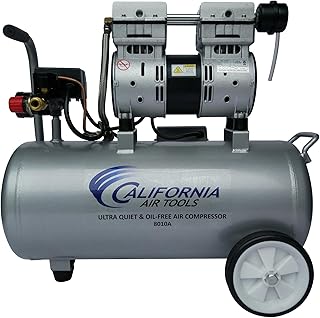
California Air Tools 8010A
At 60 dBA with an 8-gallon aluminum tank, this is the closest thing to a compressor you can run outside a bedroom window without consequences. The larger tank means longer stretches between motor cycles, which keeps both the noise profile and your air pressure impressively steady through a full interior blowout.
California Air Tools CAT-4610AC
The twin-tank layout gives you 4.6 gallons in a footprint that fits behind a van seat, with the same ultra-quiet oil-free pump as its larger sibling. It’s the sweet spot for detailers who need genuine capacity but can’t dedicate half a cargo area to a compressor.
California Air Tools CAT-1P1060S
At 56 dBA and roughly the weight of a full grocery bag, this is the quietest unit here by measurable margin — quiet enough that I’d run it in an apartment parking lot at dawn without hesitation. The 1-gallon tank and 0.6 HP motor limit you to blowguns and light tools, so treat it as a precision instrument rather than a workhorse.
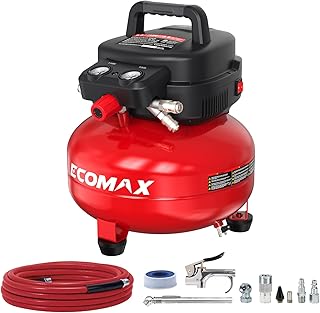
ECOMAX 6 Gallon Pancake
A conventional 150 PSI pancake tank that delivers strong value, especially with the ten-piece accessory kit included. It’s noticeably louder than the California Air Tools models, so save it for commercial lots and daytime jobs rather than early-morning residential work.
DEWALT DCC020IB Inflator
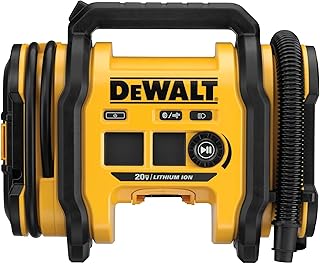
Not a detailing compressor, but a genuinely useful companion: 20V MAX cordless with automatic shut-off and an LED light for topping off tires at any hour without waking anyone. If you’re already on DEWALT batteries, it’s a straightforward addition to the van.
Frequently Asked Questions
How quiet does a compressor need to be for residential jobs?
Aim for 60 dBA or lower. Sleep research consistently shows that intermittent noise above roughly 45 dBA at the sleeper’s ear can trigger arousals even when someone doesn’t fully wake. A 60 dBA unit outdoors, attenuated by a wall and a closed window, generally lands below that threshold.
Is a 1-gallon tank enough for mobile detailing?
For blowing water out of panel gaps, mirrors, and emblems, yes. For air-powered polishers or extended interior work, the pump will run nearly continuously and you’ll be waiting on pressure — step up to 4.6 gallons or more.
Do I need an oil-lubricated compressor for durability?
Not for this application. Modern oil-free pumps handle detailing duty cycles fine, require no maintenance, and remove any contamination risk near finished paint.
Can I use a 12V inflator as my main compressor?
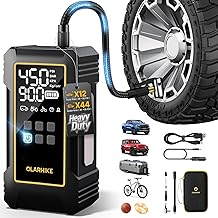
No. Units like the AstroAI dual-power inflator are excellent for tires and air mattresses but lack the CFM output to drive detailing tools. Carry one as a supplement, not a substitute.
Final Thoughts
For most mobile detailers, the California Air Tools 8010A is the defensible choice — enough capacity for a full day’s work at a noise level that keeps clients and their neighbors on your side. If space is tight, the CAT-4610AC delivers nearly the same quiet performance in a far more packable form, and the featherweight CAT-1P1060S is worth adding for the jobs where absolute silence matters more than airflow.