Key takeaways
- Measured noise, not marketing noise: Look for a published dBA figure from the manufacturer. Anything at or under 60 dBA sits roughly at conversation level and won’t carry through a shared wall; 70 dBA is noticeably louder, and above 80 dBA you’re in ear-protection and irritated-neighbor territory.
- CFM before PSI: Detailing air tools — blow guns especially — consume volume, not pressure. Aim for at least 2 CFM at 90 PSI for casual drying work, and 4 CFM or more if you plan to run a dedicated air dryer or spray equipment for extended stretches.
- Tank size matched to your workflow: A 1-gallon tank is fine for tire pressure and quick interior blowouts. Drying a full sedan without constant motor cycling really wants 6 to 8 gallons, which also reduces how often the pump kicks on — the single biggest factor in perceived noise annoyance.
- Oil-free means clean air and low maintenance: Oil-lubricated pumps run quieter historically, but modern oil-free designs have closed that gap and eliminate the risk of oil mist landing on freshly polished paint. They also skip annual oil changes entirely.
- Weight and mobility: If your compressor lives in a corner and gets dragged out weekly, wheels and a balanced handle matter more than spec sheets suggest. Under 40 pounds is genuinely portable; above 70 pounds you’ll want a permanent home for it.
What's inside
Anyone who has run a compressor in an attached garage at 7 a.m. knows the real cost of cheap air: a screaming pump that rattles the drywall and wakes everyone still asleep upstairs. As someone who spends most of my working life advising people on protecting their sleep environment, I’ve come to see garage equipment as a legitimate part of the conversation. Noise doesn’t respect property lines or bedroom doors, and a 90-decibel motor cycling on and off is precisely the kind of intermittent, unpredictable sound that fragments sleep most effectively — even in people who swear they slept through it.
This guide approaches air compressors for detailing through that lens: enough airflow to actually blow water from panel gaps, mirror housings, and lug nuts, without turning your home into an unlivable acoustic environment. I’ve weighted sound output, duty cycle, tank sizing, and portability, and I’ve flagged which machines suit apartment-adjacent garages versus detached shops where noise matters less. Below are the models worth your money, followed by the buying criteria I’d apply if I were shopping today.
As an Amazon Associate we earn from qualifying purchases.



🛒 Best Price Today on Amazon
Prime members get fast, free shipping on everything above, plus member-only deals. New members get a 30-day free trial — cancel anytime.
How to Choose a/an Air Compressor For Detailing (2026)
- Measured noise, not marketing noise: Look for a published dBA figure from the manufacturer. Anything at or under 60 dBA sits roughly at conversation level and won’t carry through a shared wall; 70 dBA is noticeably louder, and above 80 dBA you’re in ear-protection and irritated-neighbor territory.
- CFM before PSI: Detailing air tools — blow guns especially — consume volume, not pressure. Aim for at least 2 CFM at 90 PSI for casual drying work, and 4 CFM or more if you plan to run a dedicated air dryer or spray equipment for extended stretches.
- Tank size matched to your workflow: A 1-gallon tank is fine for tire pressure and quick interior blowouts. Drying a full sedan without constant motor cycling really wants 6 to 8 gallons, which also reduces how often the pump kicks on — the single biggest factor in perceived noise annoyance.
- Oil-free means clean air and low maintenance: Oil-lubricated pumps run quieter historically, but modern oil-free designs have closed that gap and eliminate the risk of oil mist landing on freshly polished paint. They also skip annual oil changes entirely.
- Weight and mobility: If your compressor lives in a corner and gets dragged out weekly, wheels and a balanced handle matter more than spec sheets suggest. Under 40 pounds is genuinely portable; above 70 pounds you’ll want a permanent home for it.
The Best Air Compressor For Detailing (2026)s Reviewed
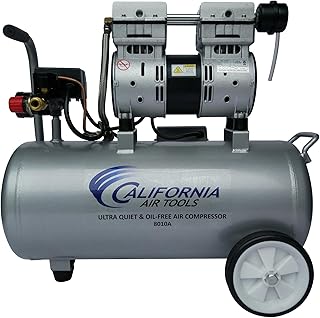
California Air Tools 8010A
This is my default recommendation for anyone detailing in an attached garage — an 8-gallon aluminum tank paired with a 60 dBA pump means you can work early without becoming the reason someone upstairs is awake. The tank capacity keeps cycling infrequent, which matters more for household peace than the raw decibel number alone.
California Air Tools CAT-4610AC
The twin 4.6-gallon aluminum tank configuration gives you a lower, wider stance and a shorter frame than the 8010A, making it easier to tuck under a workbench. Airflow is adequate for blow-drying and air tools, and the oil-free pump means no maintenance schedule to forget.
California Air Tools CAT-1P1060S
At 56 dBA and a single gallon, this is the quietest machine here and the one I’d point apartment dwellers toward. It won’t dry a whole vehicle without pausing, but for interior detailing, wheel wells, and tire pressure it’s remarkably unobtrusive.
8 Gallon Ultra Quiet 1.5HP Compressor
At 4.52 CFM, this is the strongest performer on airflow, which makes it the practical choice if you’re running spray equipment alongside detailing work. The 70 dBA rating is louder than the California Air Tools units — fine for a detached garage, less ideal directly beneath a bedroom.
BOSTITCH 6 Gallon Pancake Kit
A well-built pancake compressor with a 150 PSI ceiling and a bundled accessory kit, making it the best value entry point if you don’t already own hoses and fittings. It’s the loudest of the stationary picks, so plan on running it with the garage door closed and a bit of scheduling courtesy.
Frequently Asked Questions
Will a quiet compressor really keep from waking my family?
A 56 to 60 dBA unit is roughly the volume of a normal conversation and generally won’t penetrate a closed bedroom door meaningfully. The bigger variable is cycling — a larger tank that runs the motor once every few minutes disturbs far less than a small tank restarting constantly.
Do I need a compressor if I already have a leaf blower?
A blower moves volume but can’t reach into panel gaps, badge edges, or mirror seams where water hides and later drips onto dried paint. Compressed air through a narrow nozzle solves that problem specifically.
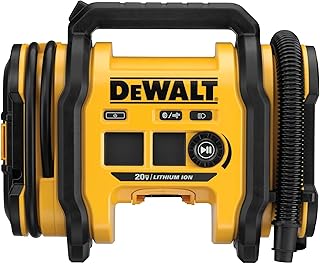
What about the DEWALT DCC020IB tire inflator?
It’s an excellent 20V MAX inflator with automatic shutoff and an LED light, but it’s a pressure device, not a volume device. Buy it for tires and portability, not for drying a vehicle.
Should I add a moisture separator?
Yes, if you’re spraying anything. Compressed air carries condensation, and a cheap inline separator prevents water spotting on surfaces you’ve just spent an hour perfecting.
Final Thoughts
For most people detailing at home, the California Air Tools 8010A is the right balance of capacity and genuine quiet, with the CAT-1P1060S as the pick for tight spaces and noise-sensitive households. If your priority is airflow for spray work and you have a detached garage where 70 dBA won’t reach anyone sleeping, the 8-gallon 1.5HP unit delivers the most usable CFM per dollar here.