For most new gaming and productivity PCs in 2026, the best 32GB RAM kit is a 2×16GB DDR5-6000 kit with CL30 or CL32 timings; DDR4-3200 CL16 remains the better value when upgrading an existing DDR4 system.
Our top picks
 CORSAIR Vengeance LPX DDR4 RAM 32GB
- Disclaimer: Maximum Speed requires overclocking/PC BIOS adjustments
- Hand-sorted memory chips ensure high performance with generous…
- VENGEANCE LPX is optimized for wide compatibility with…
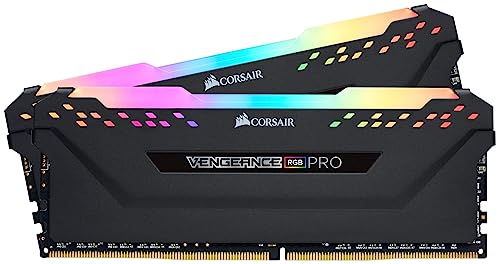 CORSAIR Vengeance RGB PRO DDR4 RAM 32GB
- Dynamic Multi-Zone RGB Lighting: 10 Ultra-bright RGB LEDs…
- Take control in CORSAIR iCUE software and synchronize…
- Custom Performance PCB provides the highest signal quality…
 【DDR4 RAM】 GIGASTONE Game PRO 32GB Kit
- [Capacity] 32GB Kit (2x16GB) UDIMM Compatible with Select…
- [Speed] PC Speed (PC4-25600), DDR4 3200MHz
- [Specification] ECC Type = Non-ECC, Form Factor =…
| Product | Key specs | |
|---|---|---|
| CORSAIR Vengeance LPX DDR4 RAM 32GB | Disclaimer: Maximum Speed requires overclocking/PC BIOS adjustments Hand-sorted memory chips ensure high performance with generous… VENGEANCE LPX is optimized for wide compatibility with… | Check price |
| CORSAIR Vengeance RGB PRO DDR4 RAM 32GB | Dynamic Multi-Zone RGB Lighting: 10 Ultra-bright RGB LEDs… Take control in CORSAIR iCUE software and synchronize… Custom Performance PCB provides the highest signal quality… | Check price |
| 【DDR4 RAM】 GIGASTONE Game PRO 32GB Kit | [Capacity] 32GB Kit (2x16GB) UDIMM Compatible with Select… [Speed] PC Speed (PC4-25600), DDR4 3200MHz [Specification] ECC Type = Non-ECC, Form Factor =… | Check price |
 Timetec 32GB KIT Timetec 32GB KIT | Capacity Specs Compatibility | Check price |
As an Amazon Associate we earn from qualifying purchases at no extra cost to you.
Best 32GB RAM Kits at a Glance
| Best for | Recommended type | Typical specification | Typical market range |
|---|---|---|---|
| New gaming PC | DDR5 performance kit | 2×16GB, 6000 MT/s, CL30–CL32 | Usually $90–$150 |
| AM5 gaming system | AMD EXPO DDR5 kit | 2×16GB, 6000 MT/s, CL30 | Usually $95–$160 |
| Intel LGA1700 or newer Intel system | Intel XMP DDR5 kit | 2×16GB, 6000–6400 MT/s, CL30–CL36 | Usually $90–$170 |
| Existing DDR4 PC | DDR4 value kit | 2×16GB, 3200 MT/s, CL16 | Usually $45–$80 |
| Low-profile air-cooler build | Low-height memory | DDR4-3200 or DDR5-6000, about 32–36mm tall | Usually $50–$140 |
DDR4 vs. DDR5: Which Platform Gives Better Value?
DDR4 is still the sensible choice when the motherboard and processor already support it. A 2×16GB DDR4-3200 CL16 kit delivers adequate bandwidth for most games, office applications, photo editing and everyday multitasking. Since DDR4 motherboards and kits are often inexpensive, upgrading an existing computer can cost far less than replacing the platform.
DDR5 is the better choice for a new build. DDR5-6000 is a particularly strong balance because it provides substantially more bandwidth than DDR4 without requiring the price or tuning of the fastest enthusiast kits. Modern processors benefit most when the memory runs as a matched two-stick kit rather than four mixed modules.
Memory speed is quoted in MT/s, not true clock frequency. DDR5-6000 operates at a 3000MHz memory clock but transfers data twice per cycle. This distinction does not change the buying decision: compare advertised MT/s, timings and platform compatibility.
| Kit type | Approximate data rate | Common CAS latency | Calculated CAS latency | Module voltage |
|---|---|---|---|---|
| DDR4-3200 CL16 | 3200 MT/s | 16 | 10.0 nanoseconds | 1.35V |
| DDR5-5600 CL36 | 5600 MT/s | 36 | 12.9 nanoseconds | About 1.25V |
| DDR5-6000 CL30 | 6000 MT/s | 30 | 10.0 nanoseconds | About 1.35V |
| DDR5-6400 CL32 | 6400 MT/s | 32 | 10.0 nanoseconds | About 1.40V |
The calculated CAS figure is useful, but it is not the complete performance story. DDR5 also improves bandwidth, memory-bank organization and capacity scaling. A DDR5-6000 CL30 kit is usually a more attractive all-round purchase than DDR5-5600 CL36, while DDR5-6400 may offer small gains at the cost of more demanding motherboard and processor settings.
Recommended 32GB Kits by Situation
Best value for an existing DDR4 computer
Look for a 2×16GB DDR4-3200 CL16 kit from established ranges such as Corsair Vengeance LPX, G.Skill Ripjaws V or Kingston FURY Beast. These kits are widely available in standard desktop DIMM formats and commonly use a 1.35V XMP profile.
Corsair Vengeance LPX is especially useful in compact systems because many versions use a low heat spreader around 33mm tall. G.Skill Ripjaws V and Kingston FURY Beast can also be good choices, but check the exact model height rather than relying on the product family name. A DDR4-3600 CL18 kit can be worthwhile on a compatible Ryzen system, although DDR4-3200 CL16 is the safer universal recommendation.
Best overall for a new gaming PC
Choose a 2×16GB DDR5-6000 kit rated at CL30 or CL32. G.Skill Flare X5 is a practical low-profile option for AMD systems, while G.Skill Trident Z5 Neo, Corsair Vengeance DDR5 and Kingston FURY Beast DDR5 offer alternatives with different heat spreader heights and lighting options.
For AMD AM5 systems, prioritize an EXPO-labeled kit. For Intel systems, prioritize an XMP-labeled kit, although some motherboards can use either profile. A 6000 MT/s CL30 kit is often the point where price, latency and setup simplicity meet. Paying substantially more for DDR5-7200 or faster is difficult to justify unless the workload benefits from memory bandwidth and the motherboard’s memory support is known to be strong.
Best for a large CPU air cooler
Choose low-profile memory without tall RGB diffusers. The G.Skill Flare X5 and many Corsair Vengeance versions are approximately 33–35mm tall, leaving more room beneath a large front CPU-fan overhang. Taller RGB designs can exceed 44mm and may force the fan upward, increasing the cooler’s total height.
| Memory height | Cooler-clearance consideration | Best use |
|---|---|---|
| About 32–36mm | Usually easiest beneath large tower coolers | Quiet air-cooled and compact builds |
| About 40–44mm | Often acceptable, but verify fan overlap | Most standard ATX builds |
| About 45mm or taller | May require raising the cooler fan | RGB-focused cases with generous CPU clearance |
Best for productivity and content creation
Start with 32GB if the computer is used for documents, programming, moderate photo work, browser-heavy multitasking or 1080p video editing. A 2×16GB DDR5-6000 CL30 kit is a strong general-purpose option.
Consider 64GB instead if you regularly edit high-resolution video, operate virtual machines, work with large 3D scenes, use scientific applications or keep several demanding creative programs open. Two 32GB modules are generally preferable to four 16GB modules because they place less electrical stress on the memory controller and leave two motherboard slots available for expansion.
Compatibility Checks Before Buying
- DDR4 and DDR5 are not interchangeable. Their slot notches and electrical designs differ, so the motherboard must explicitly support the selected generation.
- Buy a matched 2×16GB kit rather than combining two separate 16GB packages. Matching the part number does not guarantee that separate kits were validated together.
- Check the motherboard’s memory support list when choosing high-speed DDR5, particularly for four-slot boards and unusual processor combinations.
- Confirm whether the kit uses AMD EXPO, Intel XMP, or both. The advertised speed normally requires enabling the profile in UEFI rather than relying on default settings.
- Install two modules in the motherboard’s recommended paired slots, commonly the second and fourth slots from the processor socket. The manual takes priority.
- Check the exact module height against the CPU cooler specification and the case’s maximum cooler height.
- Do not pay extra for ECC or registered memory unless the workstation or server motherboard and processor specifically require it. Typical gaming and desktop systems use non-ECC unbuffered DIMMs.
Heat Spreaders, RGB and Real-World Durability
Aluminum heat spreaders protect the memory chips and distribute heat, but DDR4 and DDR5 desktop modules do not normally need extreme cooling at standard profiles. Heat spreaders primarily affect physical clearance and appearance. Tall metal shells and RGB diffusers can interfere with a CPU cooler without providing a meaningful gaming advantage.
Memory is usually a durable component, but installation is where damage most often occurs. Support the motherboard, align the notch carefully and press evenly at both ends until the latches close. Avoid touching the gold contacts. If a system fails to boot after enabling an aggressive memory profile, reset UEFI and try a lower speed or the board’s automatic profile.
For a computer that will be moved frequently, low-profile modules are less likely to collide with a cooler or side panel. Before transporting a tower, secure the case upright and avoid placing pressure on the CPU cooler. The RAM itself is rarely the part that wears first; fans, mechanical drives and case switches generally experience more physical aging.
What Should You Spend?
DDR4-3200 CL16 kits usually offer the lowest total upgrade cost, commonly around $45–$80 for 32GB. Mainstream DDR5-6000 kits generally cost about $90–$160, with RGB, premium heat spreaders and tighter timings raising the price. DDR5-6400 and faster kits often fall between $130 and $220, but their extra cost is best reserved for specialized workloads or enthusiast builds.
Do not choose a slower kit solely because its CAS number is lower. DDR5-5600 CL36 may have a higher calculated latency than DDR5-6000 CL30, while delivering less bandwidth. Compare the complete specification: generation, MT/s, primary timings, voltage, profile type, module height and motherboard compatibility.
Final Recommendation
Buy DDR4-3200 CL16 2×16GB if you are extending the life of an existing DDR4 computer. For a new system, choose DDR5-6000 CL30 or CL32 2×16GB, selecting an EXPO version for AMD AM5 or an XMP version for Intel. Pick a low-profile, non-RGB design when cooler clearance matters; otherwise, lighting and heat spreader style are cosmetic choices rather than performance upgrades.