Key takeaways
- Overnight sound signature: A quoted decibel figure tells you little; what matters is compressor cycling. Units that kick on and off abruptly create the sudden onset noise that pulls sleepers out of slow-wave sleep. Look for models with a genuine low-fan or sleep mode and a wide humidistat deadband.
- Coverage versus room reality: Ratings of 3,500 to 5,000 sq. ft. assume open airflow and moderate load. A cool, damp basement with poor circulation behaves like a much larger space, so size up rather than down if the room sits below grade.
- Drainage you never touch: A 0.8-gallon tank on a heavy-load night fills in hours. Gravity drain via hose works if you have a floor drain below the unit; an internal pump is worth the premium if you need to push water up into a sink or window.
- Humidistat precision: Aim for a machine that holds 45–50 percent RH within a few points. That band suppresses dust mites and mold while avoiding the dry-sinus discomfort of over-drying. Digital displays showing actual measured humidity beat vague “low/medium/high” dials.
- Efficiency and defrost: Energy Star certification matters most for units running eight hours nightly. In cooler basements, confirm the model has auto-defrost so coils do not ice over and stall extraction at 60°F.
What's inside
Anyone who has woken at 3 a.m. with a scratchy throat, damp sheets, and the faint mustiness of a room that never quite dries out knows that humidity is a sleep issue before it is a home-maintenance issue. The body sheds roughly a liter of moisture over a night’s rest, and it needs to offload that heat and vapor to drop into deep sleep. When indoor relative humidity climbs past the mid-60s, evaporation stalls, core temperature stays stubbornly high, and sleep fragments into shallow stretches. Add the dust mites and mold spores that thrive above 60 percent RH, and a humid bedroom quietly becomes a congestion machine.
A 50-pint unit is the sweet spot for most households: enough extraction capacity for a finished basement, a large primary bedroom above a crawlspace, or an open-plan floor that traps summer air, without the noise floor and energy draw of a commercial-grade machine. This guide looks at the models worth your money in 2026, evaluated the way a sleep specialist would evaluate them — decibel behavior overnight, humidistat accuracy, drainage that does not require you to wake up and empty a bucket, and whether the unit holds a setpoint or oscillates around it.
As an Amazon Associate we earn from qualifying purchases.



How to Choose a 50 Pint Dehumidifier (2026)
- Overnight sound signature: A quoted decibel figure tells you little; what matters is compressor cycling. Units that kick on and off abruptly create the sudden onset noise that pulls sleepers out of slow-wave sleep. Look for models with a genuine low-fan or sleep mode and a wide humidistat deadband.
- Coverage versus room reality: Ratings of 3,500 to 5,000 sq. ft. assume open airflow and moderate load. A cool, damp basement with poor circulation behaves like a much larger space, so size up rather than down if the room sits below grade.
- Drainage you never touch: A 0.8-gallon tank on a heavy-load night fills in hours. Gravity drain via hose works if you have a floor drain below the unit; an internal pump is worth the premium if you need to push water up into a sink or window.
- Humidistat precision: Aim for a machine that holds 45–50 percent RH within a few points. That band suppresses dust mites and mold while avoiding the dry-sinus discomfort of over-drying. Digital displays showing actual measured humidity beat vague “low/medium/high” dials.
- Efficiency and defrost: Energy Star certification matters most for units running eight hours nightly. In cooler basements, confirm the model has auto-defrost so coils do not ice over and stall extraction at 60°F.
The Best 50 Pint Dehumidifiers of 2026, Reviewed
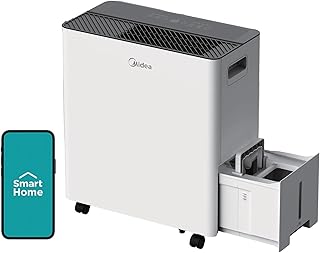
Midea 50 Pint Dehumidifier with Pump
This is the model I point people toward when the goal is set-it-and-forget-it bedroom air: the internal pump plus continuous drainage means no midnight bucket runs, and the Wi-Fi scheduling lets you ramp extraction during the day and drop to a quieter profile at bedtime. Energy Star certification keeps the running cost defensible for nightly use across 4,500 sq. ft.
Hisense 50-Pint Portable Dehumidifier
Hisense has built a reputation for stable compressor behavior, and it shows here — the unit holds its setpoint without the constant surging that makes cheaper machines audible from a bed six feet away. A strong pick for attics, garages, and upstairs hallways where you want moisture pulled from the whole floor rather than one room.
Manastin 5000 Sq.Ft Dehumidifier for Basement
The largest coverage rating in this group, with a humidity display, timer, and child lock that make it practical for a family home rather than just a utility space. Three operating modes plus hose drainage make it the most flexible option for a damp basement bedroom or a converted lower-level suite.
Whirlpool 50 Pint Dehumidifier
A compact, quiet, Energy Star unit that suits people prioritizing footprint and simplicity over app control. If your target is a single bedroom, bathroom, or living room rather than an entire lower level, this is the least fussy way to bring RH down into the healthy 45–50 percent band.
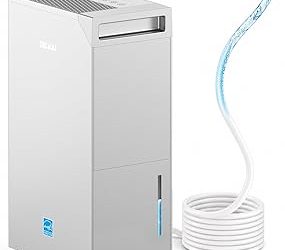
50 Pint/Day 3500 Sq.Ft Compressor Dehumidifier
The value entry, and a sensible one: intelligent humidistat, drain hose included, and quiet operation in a 3,500 sq. ft. package. The 0.8-gallon tank is modest, so plan on running it hose-out if you are treating a genuinely wet basement or RV.
Frequently Asked Questions
What humidity level is best for sleep?
Target 40–50 percent relative humidity. That range supports evaporative cooling from the skin, keeps airways comfortable, and sits below the 60 percent threshold where dust mites and mold populations expand.
Will a dehumidifier keep me awake?
A well-chosen unit produces steady broadband sound closer to white noise than to intrusive mechanical clatter. Problems arise from compressor start-stop cycling, so use a sleep or low-fan mode and place the unit several feet from the bed with clear airflow on all sides.Do I need a pump or is a hose enough?
Gravity drainage through a hose works whenever the drain point sits lower than the unit’s outlet. If you need to route water upward into a utility sink or out a window, choose a model with a built-in pump.
Should it run all night?
Yes, with a humidistat setpoint rather than a timer. The machine will cycle down once the room reaches target, which uses less energy and produces less noise than repeatedly bringing a re-humidified room back down each evening.
Final Thoughts
For most bedrooms and finished basements, the Midea 50 Pint with Pump is the strongest overall choice thanks to hands-off drainage and app-based scheduling. The Manastin 5000 Sq.Ft model is the better pick for genuinely damp lower levels that need maximum coverage and a child lock, while the Whirlpool 50 Pint remains the cleanest simple solution for a single room where quiet operation and a small footprint matter most.