Key takeaways
- Recline range and locking: Look for at least 120°, ideally 135°. Infinite or multi-stage locking matters more than raw degrees — a chair that only holds two positions forces your body into a compromise instead of the angle it actually wants.
- Footrest depth: A retractable footrest should extend far enough that your calves are supported, not just your heels. Shallow footrests create a pressure point behind the knee that restricts circulation, which defeats the purpose of resting at all.
- Thermal regulation: Core temperature drives alertness. A breathable mesh back keeps you cooler and sharper through the afternoon; padded leather or velvet feels more restful but traps heat, so match the material to your room, not the showroom photo.
- Adjustable lumbar and headrest: When you recline, the pressure map of your body changes entirely. Lumbar support that moves vertically and a headrest that pivots are what stop a reclined position from becoming a neck-strain position.
- Weight rating and base quality: A 300–400 lb capacity with a steel or reinforced nylon base isn’t just for larger users. Reclining puts leverage on the mechanism, and an underbuilt chair develops wobble and creak within a year.
What's inside
Most of us treat the office chair as a work tool and the bed as a rest tool, and never think about the traffic between them. But as a sleep-wellness practitioner, I spend a surprising amount of my consulting hours talking about chairs — because a spine that has been braced in one rigid position for nine hours does not simply switch off at 10pm. Muscular tension carries forward. So does the afternoon energy crash that comes from never once changing your posture, which is often the real reason someone lies awake at midnight feeling wired.
A reclining office chair is one of the few pieces of furniture that lets you shift load off the lumbar discs, elevate your legs, and take a genuine ten-minute reset without leaving your desk. That makes it a recovery device as much as a work one. Below, I’ve broken down what actually matters when choosing a recliner for daily use in 2026, then reviewed the models worth your attention — including big-and-tall builds, mesh options for warm rooms, and chairs with footrests deep enough to support a real rest break.
As an Amazon Associate we earn from qualifying purchases.


How to Choose a/an Reclining Office Chair (2026)
- Recline range and locking: Look for at least 120°, ideally 135°. Infinite or multi-stage locking matters more than raw degrees — a chair that only holds two positions forces your body into a compromise instead of the angle it actually wants.
- Footrest depth: A retractable footrest should extend far enough that your calves are supported, not just your heels. Shallow footrests create a pressure point behind the knee that restricts circulation, which defeats the purpose of resting at all.
- Thermal regulation: Core temperature drives alertness. A breathable mesh back keeps you cooler and sharper through the afternoon; padded leather or velvet feels more restful but traps heat, so match the material to your room, not the showroom photo.
- Adjustable lumbar and headrest: When you recline, the pressure map of your body changes entirely. Lumbar support that moves vertically and a headrest that pivots are what stop a reclined position from becoming a neck-strain position.
- Weight rating and base quality: A 300–400 lb capacity with a steel or reinforced nylon base isn’t just for larger users. Reclining puts leverage on the mechanism, and an underbuilt chair develops wobble and creak within a year.
The Best Reclining Office Chair (2026)s Reviewed
Ergonomic Office Chair with Footrest & 3D Massage Lumbar Support
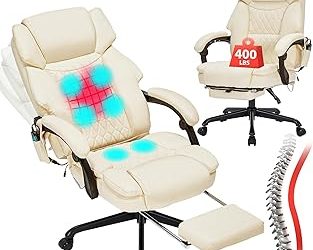
This is the most complete recovery setup on the list: adjustable seat depth, 4D armrests and headrest, a 400 lb frame, and a massage lumbar pad that’s genuinely useful for loosening the lower back before you stand up. If you sit for long uninterrupted stretches, the seat-depth adjustment alone justifies the pick.
Ergonomic Office Chair with Footrest — High Mesh Back
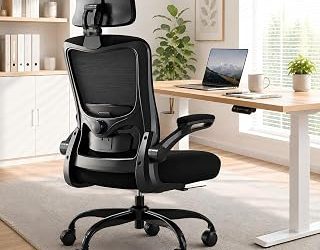
My default recommendation for anyone who works in a warm room or runs hot in the afternoon, thanks to a full mesh back that vents rather than insulates. The 135° recline plus thickened cushion makes it one of the few mesh chairs comfortable enough to actually nap in.
amseatec Big and Tall Office Chair with Footrest
The infinite lock between 90° and 135° is the standout feature here — you can dial in an angle rather than accept a preset, which is exactly what you want when transitioning between typing and resting. Twenty spring packs in the seat give it a supportive rather than sinking feel.
Big and Tall Office Chair with Flip Armrests
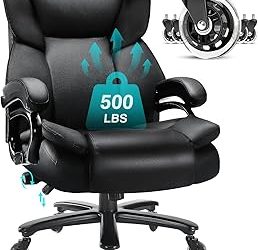
A wide crystal velvet seat and flip-up arms make this the most flexible option for cross-legged sitting or sharing space with a pet, both of which encourage the postural variety I’d rather see than perfect stillness. Choose it for softness and width; skip it if your workspace runs warm.
Executive Office Chair with Adjustable Lumbar Support
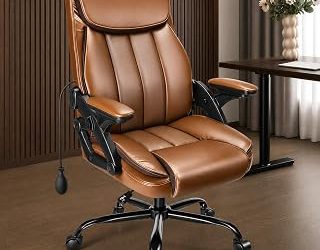
A well-judged budget entry: breathable mesh, flip-up armrests for desk tuck-in, height-adjustable lumbar support, and a 400 lb rating. Recline is more modest than the footrest models, so treat it as a strong all-day work chair with a useful lean rather than a full lounger.
Frequently Asked Questions
Is napping in an office chair actually good for you?
A 10–20 minute nap in a reclined chair can restore alertness without the grogginess of deeper sleep, and the semi-upright angle naturally limits how deep you go. Keep it before 3pm so it doesn’t erode your overnight sleep pressure.
What recline angle should I use for resting?
Around 130–135° takes meaningful load off the lumbar discs while keeping your airway open. For focused work, 100–110° is the better range — fully upright at 90° is more fatiguing than most people realize.
Mesh or leather for a reclining chair?
Mesh for airflow and long work sessions; padded leather or velvet for comfort during rest breaks. If you’re prone to overheating in the evening, prioritize mesh — trapped heat is a real contributor to afternoon slumps.
Do I still need to get up if my chair reclines?
Yes. Reclining redistributes pressure but doesn’t move your joints or pump your circulation. Aim to stand every 45 to 60 minutes; use the recline for the minutes in between.
Final Thoughts
If you want the fullest set of adjustments and a built-in way to decompress your lower back, the Ergonomic Office Chair with 3D Massage Lumbar Support is the strongest overall choice. Those working in warm rooms should look at the High Mesh Back model with footrest, while anyone who wants precise control over their recline angle will get the most from the amseatec Big and Tall — a chair that supports both your workday and your recovery from it.